
On this page: Summary · Watch or listen · Timestamps · Key takeaways · Show notes and references · Transcript
Summary
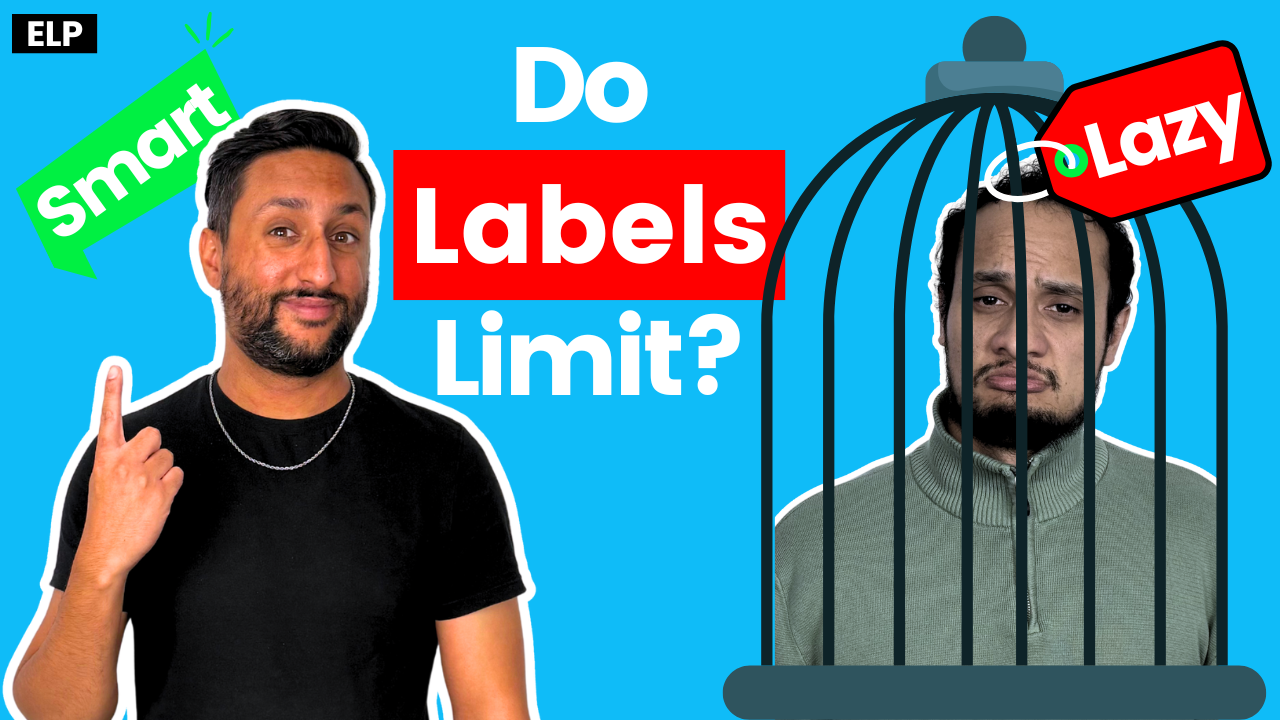
Labels can unlock support, better teaching strategies, and the right adjustments. But labelling can also shrink a child into a box, create self-limiting beliefs, and become an excuse if they are communicated badly.
In this episode, we explore where labels help, where they harm, and what a healthier middle ground looks like: labels that come with context, practical strategies, and a clear growth message.
Centres in Loughton and Seven Kings.
Book your free assessment: https://www.redbridgetuition.co.uk/11plus-course
Resources:
Redbridge Publishing Reasoning Books & Papers: https://tinyurl.com/5duchs8x
Watch or Listen


Timestamps
Show Timestamps
0:00 Labels can help or debilitate depending on how they are internalised
1:08 Why we are doing a full episode on labels
2:12 ADHD as both overdiagnosed and underdiagnosed
7:35 Selena and Neuro Inc, plus what diagnosis changes in practice
13:15 Why labelling exists and why it becomes risky with humans
19:24 When labels help teachers support learning
20:25 The removal, falling behind, removal cycle
24:16 When labels help the child and when they become an excuse
25:20 Disabilities, and whether the system is the real problem
31:16 Achievement, autism, and the “box” problem
35:37 What research suggests works best: effort praise and supportive labels
48:21 Environment vs child: the zoo analogy for school systems
56:36 Reintegration strategies to prevent reverting behaviours
58:24 Symptoms vs root cause, and why practical strategies matter
1:01:44 Wrap up and next month with Selena
Key Takeaways
Labels are tools. They can unlock support, but they can also limit identity if used carelessly.
Context matters. A label without explanation can become a box, not a pathway.
Teacher behaviour shifts outcomes. Knowing the “why” changes how adults respond to behaviour.
Avoid the removal cycle. Repeated isolation creates gaps, frustration, and reinforced behaviour.
Support without excuses. The goal is strategies and growth, not permission to opt out.
Effort praise protects confidence. Praising process beats praising ability for long-term resilience.
Systems can disable. Many “disabilities” worsen when environments are rigid and uniform.
Reintegration must be gradual. Clear routines and consistent expectations reduce reversion.
Practical beats theoretical. Children and teachers need “what to do next”, not just a label.
Diagnosis can help timing. Good identification can guide support and adjustments when needed.
Show Notes and References
Attention deficit hyperactivity disorder, diagnosis and management (NICE guideline NG87)
Effort praise vs intelligence praise research summary and findings (paper)
Transcript
Show Episode Transcript
Intro
In this sense, it’s putting an entire human being into a box.
Into a box. You can achieve a lot.
Achieve a lot or or it can debilitate you depending on how you how you’re labeled or how you internalize that label.
This child is stupid. This child is this. And I think that’s far more damaging as a label than saying, “Okay, this child has ADHD. We can work with this and support the child effectively.” They get taught strategies how to manage it which I think is a big thing. It might not be that useful for the individual themselves sometimes. I I think sometimes the other person knowing is more helpful. The way the teacher approaches that student can change.
But after seeing this event last week, I have actively tried to be more understanding and calm around both of you.
If it’s not communicated properly, then it could have the opposite effect of making a child use it as an excuse.
The Education Lounge podcast.
Why we are doing a full episode on labels
I’d say the topic of labels has come up like in passing in our other conversations. Yeah.
But we’ve never actually sat on a full episode on it.
Yeah. Um, and like you said before we hit record, there is quite a lot.
It’s quite a big topic. It’s quite a lot you can talk about.
Well, we were supposed to have a teacher from America got in touch with us through the podcast. Yeah.
Um, and we were supposed to record this episode with him, but he couldn’t do it in the end. Um, so we thought we’d record it anyway.
And um, seems like a good topic. So, initial thoughts. What are your initial thoughts on well basically children being labeled with learning differences and the tension between supporting that versus the overidentification of it?
ADHD as both overdiagnosed and underdiagnosed
Well, I think I was looking at someone else talking about this and he said autism and ADHD, especially ADHD.
Um, and buying by that’s not the only label we’re gonna go into. No, there’s plent plenty of plenty of labels.
Uh it’s both the most overdiagnosed. So ADHD is the most overdiagnosed and yet underdiagnosed thing.
Okay. Right.
So, it’s very easy for people with high intelligence to mask ADHD, but it’s also very easy to lead to conclusions um that your child has ADHD based on the fact they can’t concentrate, but they’ve never been sort of trained in focus.
So, so you you have two sort of issues.
You got under underdiagnosis especially in the adult population and then over diagnosis in the child population.
But is that not just because they’re at school? Like adults don’t don’t um Yeah. It’s hard to get a diagnosis. Yeah.
Yeah. Or they don’t seek out. They’re like, you know, I’ve lived this long with with it, without it, without knowing, whatever.
Yeah. So, um, you know, life reset at that point.
They Well, I think it’s is that they never really knew or think, oh, I had limitations in this regard, but they never really realized that it had something to do with ADHD. And to be honest in the past, it wasn’t really a thing. Like, it wasn’t a thing. People weren’t like, it was like a medical thing, but it existed. Yeah, it existed, but people didn’t really know much about it at all. There was no awareness. Yeah.
So, basically throughout the 80s, 90s, 2000s, and that’s all time, you’ve heard of it. Like, you would have you might have known a few people who were diagnosed with it. But I’ve I’ve known quite a few adults who lived through that time period and lived with it, but didn’t know they had it.
They just thought they just thought I’m forgetful. I’m I can’t focus. I can’t do this or whatever. Yeah.
And they never really My mom’s one of them.
Definitely. Like just I don’t know. It’s classic.
You never got diagnosed or whatever like you know she never classic case. Does she know?
She does now cuz me and my sister have said you have like Yeah.
very strong correlation with the the symptoms of it and stuff. So she’s very good at diet. She works really well. I’ve noticed as well like people on the spectrum work really well with kids on or other people who are also on the spectrum. Yeah.
And your mom’s like so good with kids that have like autism or ADHD, right?
She’s one of the best people that I’ve seen work with kids on on the spectrum. And I generally
think like that I’ve noticed as well like teachers who have ADHD traits are so good with kids that have ADHD cuz they they get it. They relate.
Yeah.
So, but I mean even just neurotypical kids, they’re kids, they’re going to be hyper and whatever. So, it’s harder to Yes. pinpoint at that stage.
It does. It does. Um that’s why result it does result in uh overdiagnosis.
Yeah, that’s what I’m trying to say is is when that’s why as well they don’t they don’t recommend people diagnose until later on.
Although what sort of age would you say?
Typically in primary school they they talk about sort of year four year three as seven eight like you can start to notice a meaningful difference because when they’re like five or six you won’t but they’re when we talk with Selena.
Yeah we’ll come on to that. I think she’ll be able to give more sort of what what do you look for in say a baby because you can tell for instance autism you can tell you can tell fairly early on like if it’s a severe case of autism then it’s pretty like I think it’s fairly obvious it might not be obvious to parents
do you know what the uh signs of that I don’t know what would the signs of that be they struggle struggle with eye contacts nonverbal lot babies are what age we think are we talking here cuz no they’re not vocalizing much
what age what age cuz babies are not no no as in they they they won’t even like really attempt to like vocalize
much just vocalizing not not actually talking but but what so what age are we talking here like like 0 to2 0 to three
bear in mind like everyone’s different and it’s quite wide I I think um if you got ashes
it’s less obvious um because there’s like different types of autism but bear in mind I’m not an expert like
yeah we’re just going off of what we’ve seen all the up so generally if it’s if it’s more severe form of autism like it will be fairly obvious like even very early on like it it starts to manifest but I think ADHD It’s hard hard to tell.
Seleena and Neuro Inc, plus what diagnosis changes in practice
Let’s go on to because you mentioned about uh Selena. So, we went to her event last week. Yeah.
Um and she should be on the on the podcast next next month and she runs Neuro Inc.
Neuro Inink. Neuro Inc. Not Neurolink. Neuro Inc.
And we went to her event. It was quite actually got quite emotional with everyone’s stories of Yeah.
Um because we well basically her eldest came to us. Yeah. To the tition center. Yeah.
And the younger one is coming. Oh. Did her trial two days ago. Okay. All right.
Um and we said, you know, do you want to talk about what you’re doing on the on the podcast? And she was really up for it. Yeah.
But following that event as our first uh inerson event or first event, you did a ADHD test a link thing and then you sent it to me. Yeah. As well. So we can link that down below.
Um yeah. Um you want to talk about the what the test does, the results of it, Neuro Inc. talk about Selena, although I guess we’ll talk about it properly next episode, but the diagnosis of ADHD is very or autism or whatever you’re doing.
Um, autism is hor like it’s I I think it’s more obvious when someone’s got autism and I’d say this of children generally like there’s some kids that I realized later on but I didn’t spot it at the time.
You’ve always been like I’ve got better at it because we’ve been doing this for a long time now. When we first started, even up until like five, six years ago, Yeah.
I struggled to spot autist autism or ADHD. Yeah.
I struggled to spot that. And uh I mean, I’d always come to you. You you’re like, “Yeah, they’ve they’re like this.” And you’d get it instantly. I never understood how you did it, but I kind of Yeah.
kind of get it now. But I’ve I’ve also helped like support parents when they’re like arguing for a diagnosis. Yeah. Yeah.
And that kind of thing like writing down evidence that I’ve spotted. Yeah.
But you can tell Yeah. They say people on the spectrum can tell more quickly cuz they they get on quite well with the child. I found that I work quite well with people with autism and ADHD. I think it’s is because
I’ve always had things to I’ve I’ve realized that so
many things that I didn’t understand make sense now that I’m I’m like okay now that you’re aware of
yeah I I I think I’m quite ADHD like there there’s a spectral thing um
you can getting you can get a high score or low score bearing in mind the spectrum is not like naugh to 100. It’s it’s it’s not
Yeah. It’s not like that. It’s different areas of the It’s just like if you go down a list and you’re like, “Okay, I do that. I do that. I do that. I do that.” And I know
like the the temptation is to take everything and say, “Oh, I’m this and this and this.” Yeah.
But I honestly think it’s very it’s kind of obvious with me. Like I
don’t know. outsiders generally. My parents wouldn’t want to believe it.
That’s probably something else we can talk about.
But I think you could tell uh now that I know what it is after like years of working with in with children, whatever. Like I can I know now.
Yeah. You can tell why I am the way that I am. Yeah. Yeah. Yeah. Yeah, you could say.
And honestly, honestly with you and and my mom, I’ve I get very impatient because I’m not
Yeah.
I’m not on the ADHD spectrum according to this test. No.
Um whereas you guys like you and you Zach and you have these conversations and um but I get on well with your mom.
Yeah. Cuz you both think in the same you both think in the same way.
Yeah.
So, but but after seeing this event last week, yeah, I have actively tried to be more
understanding and calm around both of you. Yeah.
Cuz we all work together. So, I’m trying to actively remind myself that people people are different. Not everyone is
cuz I’m I’m like Yeah. This this You’re very much straight lined.
Yeah. like a logical like and I like getting through things very quickly like this this this this this stuff.
Whereas there’s a lot of meandering in the conversations that tend to not be some bits don’t tend to be related but then sometimes they loop back in sometimes they don’t. Yeah.
So yeah, I’ve tried to be more understanding about
Yeah.
like being around people that um potentially have ADHD or autism or
Yeah. Yeah. But also I think in Selena’s event, I was the only neurotypical person in the room.
Oh, probably. Yeah. Um, it was Yeah, I found that quite emotional.
It did get very There was I mean, we won’t talk too much about it.
But like, yeah, I mean, you mean I did too, but it’s just It was very hot. Um, I we’re not going
to go too much into Sena’s thing because we’re going to leave her to talk about that. We’re actually recording with her in two days. Yeah.
Ready for What month are we in May? Ready for June’s episode. But let’s move on to the main topic, seeing as we’ve not even got there yet.
Yeah, like you said, it’s a lot of it’s a lot of stuff to unpack. So, yeah, the main topic is basically how children get labeled and where it starts. Now, we’ve kind of we’ve kind of touched on that already.
Why labelling exists and why it becomes risky with humans
Do you think there’s a systemic pressure to like categorize everything?
Um I think labeling is something that h I think language is is essentially labeling. So anything in language that you can communicate more quickly um is is by its nature a label
a label. So we we assign a label so we can understand and share a discourse sharing a conversation.
Now I think the the the problematic thing with this topic is it’s so so wide. It’s like what do you regard a label to be?
It’s like so well I see it as I see more of the the risks of labeling
which is going to talk about next but we can sort of merge them together. Um, so I see a label like like you said, I never really thought about that way, but yeah, it’s a way of getting conversations to happen more easily. You label this a chair, you label this a table, you label this a microphone, people know what you’re talking about. Yeah.
So that’s that makes sense. But I would say in this sense, it’s putting
an entire human being into a box into a box. limitation and it does trigger self-limiting
beliefs, victim mindsets, all of that stuff which I don’t agree with.
But you do get the benefit of having the help you needed because people know what you’re talking about.
Yeah, I don’t really agree with medicating this sort of stuff honestly, but that’s just me.
Depends I think on the effect severity of it. Yeah. But generally speaking, I would I I would I don’t agree with medication for most things, but it’s just me.
Um, so yeah, my my my idea of labeling is putting an entire human being with all their quirks and interests and like
Mhm. ADHD traits, non Aadh traits, they don’t they’re not not everything someone does is one thing, but you’re putting them into you are this type of human being and then it’s like that’s all you are.
Yeah, that’s my issue with it. I think I think it’s problematic from a so just the the concept of labeling
is sort of neutral in my view as in if you just say labeling is wrong that would be incorrect labeling right
better change your thumbnail then yeah so essentially essentially like
something so simple like a simple um understanding of it it doesn’t
really get across the nuance that that it requires. So what if somebody had
loads of little boxes that they got put into rather than just ADHD?
Um because I I think the thing that I found uh most useful for me and I know it’s
like maybe some people think it’s pseudocience or whatever but the MyersBriggs personality test
and reading now I was like this is the first thing I’ve ever read or heard that seems to understand who I am as a person. And I’ve done several different
ones. There’s like mybriggs the 16 personalities.com test. There’s neogs.
Um there’s numerology. There’s horoscopes. There’s all sorts. But that got me to understand myself more.
It changes though. Like you can change your your type. Yeah. Yeah, it does change.
Yeah, that’s the that’s the only thing is like I I I think for you at this at the very moment or whatever a test is a good
indication of you know it’s a bit like an financial balance sheet in a in a sense
uh you’re an audit of yourself. So you you answer questions and it gives you some indication about
some of your traits but it won’t necessarily give you how you could change or modify. So if people It does. It does. This one does anyway.
Yeah. Well, it tells you what you could.
Yeah. So when I’m saying loads of little boxes, I’m saying I’m thinking more like that sort of stuff. Are you more introvert or extrovert?
Ambervert depending on the situation.
That’s like three boxes with a spectrum there already. Are you more intuitive?
Are you more thinking or perceptive or sensory or feeling like all this sort of stuff? These are all little boxes that
you can use like those sorts of labels I would say are more useful
than what like so just being like this person is ADHD is AD um
I don’t think so but because ADHD is like a medical definition so um
yeah so I guess I’m I’m not trying to equate the two different things. So maybe I should clear that up. I’m not trying to equate the two different Yeah.
things. I’m saying if there was something like that where it’s more nuanced.
It’s more nuanced and there’s more gray areas than just you are ADHD or you are not ADHD. Well, there’s different types of ADHD.
There’s people who are share autistic and ADHD. So a you
sort of thing. um and probably other types that I will definitely be asking Selena about so she can give a full repertoire
for different different sorts.
When labels help teachers support learning
Um, but essentially I do think it’s it’s hard to
I wouldn’t say it’s it’s worse. It like for a teacher if if they know that a student has ADHD.
Um, it might not be that useful for the individual themselves. Sometimes I I think sometimes the other person knowing
is more helpful. So yeah, true. the way the teacher approaches that student can change. Like
how many times you’ve seen someone who maybe had AD like has ADHD but is just like a nightmare in in the classroom.
And yeah, and the teachers are just like like they they don’t know how to deal with it
because there’s no diagnosis or understanding.
Yeah. So, this was um one of the things I was going to talk about with this American teacher guy that was supposed to be on this episode.
I think it was to do with somebody um being a disruption in the class. Yeah. Being removed from that class.
Yeah.
The removal, falling behind, removal cycle
Um and then being put back in, having missed a lot of the stuff that they’ve taught. Yeah.
Which then makes them become a disruption again. Yeah.
And it’s just that it’s removal.
Yeah. Yeah, it’s that removal um cycle. Let me see if I can get this.
But that that was um one of the things um and isolation’s quite damaging for a child developing brain.
So it’s a cycle of removing falling behind which then reinforces that label of you’re not whatever whatever. Yeah.
Um and that label then gets internalized um which makes them think well why bother? See this is and then and then that like you said it
affects the social area of their life and they can they can either act out more because of this or they can withdraw even further.
Yeah.
When labels help the child and when they become an excuse
This is this is why medicalization is quite important because there’s all right the classic way a
child would get labeled if we didn’t have these medical definitions and understandings and psychological assessment
and testing is they’ just be going okay this child is can’t concentrate this child is stupid this child is this and I
think that’s far more damaging as a label than saying okay this child is ADHD HD we can work with this and
support the child effectively up to actually this month I was working with a a child you know um and he’s got
something that like makes it very difficult for him to remember like short-term memory or concentrate that kind of thing
but it’s not ADHD if I didn’t know that then imagine how you could be like how
you could understand You’d be you’d be you’d treat him as if he had the same Yeah. as a neurotypical.
Yeah. I’d just be like he’s he’s just being disobedient. He’s not like listening. He’s not focusing. Yeah. Like and that’s not fair.
Yeah.
So I think when you have when you have knowledge, it helps it helps you so much like Yeah.
So you think Yeah. So it basically helps the person working with that child more than Yeah. Yeah. And it makes you think be a bit more creative because you’ve got to
go okay like you have to access it in different ways, right?
Yeah. What strategy will work? Because maybe not everything has been tried. So yeah.
Um and it can’t be in school which is why they come to us to you know Yeah. Yeah. It this is this is one of the problems as well like with anything
to do with children. It’s like they’re they’re both moving targets so they’re getting older changing all the time.
Yeah. So any direct intervention works might work for a period of time but like as their brain develops or
changes then you know it might not work the same way and you got to be creative to keep up with that and then you’ve also got the
issue where it’s kind of ine unethical like with anything to do with children is is unethical to go let’s
label the child this and then see what happens. happens like Yeah, that’s my issue with it.
Yeah. No, no, but like as as in we don’t know whether it could have positive or or I think you’re right.
Yeah, I think you’re right. Then the positive nature of it is is uh helpful for the person working with that child.
Mhm.
Uh but the the internalization of the label is negative has negative effect to the child. And then the
positive nature is people people that they’re working with which helps them to whatever. But the negative aspect is the label becomes internalized.
It could work too it could work more than one way couldn’t it? Because you could have a child who, okay, they find
out, oh, okay, bro, ADHD, like, and then they get taught strategies how to manage it, which I think is a big thing. Like, it certainly is with me.
Like, ever since I’ve been like, okay, I suspect there’s something going on here.
I’ve done more research into how to manage it. Mhm.
I think that’s helped because I’m aware I need these alarms. I need these things. I need lists. I need stuff. And
and that is I mean it could also have the if if it’s not communicated properly then it could
have the opposite effect of of making a child um use it as an excuse
which is you know not what you want eventually or um I also kind of I struggle with this a little bit in that
there are some people who so ADHD and autism they’re regarded as disabilities.
Disabilities, and whether the system is the real problem
They’re classified as disabilities.
I see that the problem. Yeah, I can see I can see like in some it’s disabling in some ways because you you will have limits.
Um, but I think if you if you say everyone
who has ADHD and and or autism or something like that or is neurodyiverse is disabled, then
it really I don’t think it deals with the main problem, which is that settings aren’t
conducive to their life. So it’s a bit like um if you can’t walk
like you you have a wheelchair you you are physically disabled in some way but that that’s no that’s society has to work around that.
So install a ramp here and and that kind of thing. It’s it’s like that sort of stuff. And with ADHD or anything mental,
um, you’ve got to ask, is the system supportive to that type of mind?
Is the system dis as as a Neuro Inc. I think they had a post recently, the system’s disabled.
Yeah, it because it can’t cope with diverse sets of minds.
I think that’s always a problem with education. like it’s always been an issue with education especially I think it will be because everyone labels on or not everyone is different.
Yeah. And and yeah like as in I don’t think it’s ever just a case of oh you’ve got these types of people here these
types of people here. I think that’s why we operate well because we always think okay what’s what works well for the
particular child regardless of whether they have ADHD or autism or um they’re neurotypical. But I kind of think everyone’s a bit weird.
No, you find out that everyone’s really just weird.
So, we’ve talked a lot. We’ve kind of meandered around quite a bit. And I think in doing so, we’ve actually touched a lot a lot of the
psychological literature and the points that they’re making.
Yeah. So, in a very ADHD way.
Yeah. Yes. Exactly. So, like self-fulfilling prophecies, we’ve talked about that. So if you label a child, oh, you’re you’re really smart and that kind
of thing, then they invariably become a new physicist or whatever.
Was it Henry Henry Ford? Uh I think it’s Henry Ford maybe. Yeah. Um famous psychologist.
If you think if you think you can or you think you can’t, you’re right.
Yeah. Yeah. So, and I think what what your education educators believe in of the child is hugely
um it instills a self-belief. Yeah, it’s it’s very important for for the child um to have someone believe in them.
I found I’ve certainly found that I found that while I was at school.
So, we’ve got that problem. We’ve obviously got like if you label some some someone like stupid or whatever like that’s not a good clarify that or
or like um this this child is badly behaved like we’ve always kind of thought okay if if someone’s directly
called something then that’s not very good labeling you are this. All right.
Okay. So that kind of what it sort of uh
indicates is what might be a more helpful way to label someone.
What I like I wouldn’t say just slap a label on someone and be done with it, but there are more helpful ways of labeling
behaviors, uh, symptoms, syndromes,
um, medical disorders, so on that can actually be helpful because they can lead to support.
Any examples of of that? Well, for instance, if you just say this child has ADHD, that’s not particularly helpful
because how would you what would you do instead?
Well, I’d say first of all, this child has ADHD. This might lead to them doing this and this and this and this in the
classroom. Suppose I was talking to a teacher, whatever. I was a some sort of psychologist or whatever. you can
support their learning better by doing this, this, this, this, and this.
Um, because the label is still not the same.
Achievement, autism, and the “box” problem
The label is not the same, but well, is the same, but it’s is provided is it’s given more description,
but that’s given description to the person working with the child. What about the actual child or person? Oh, the label still be the label, right?
You’d have to give the context. Like I said, you something they brought up before was the child could just try to
fit into that box and and constantly bring it up as well. Um, which is problematic, but if it’s communicated to
them with enough depth and with the idea that actually this doesn’t take away from your like ability, you can do this and you can do this and you can do this.
See, but only if you approach in a sensible way in the right way.
So you’re doing it in a way that doesn’t you’re doing it in a way that encourages and keeps the growth
Yeah.
mindset. Yeah.
Rather than boxing them into a Yes. fixed Exactly. mindset thing.
It’s like we can think of Okay. Well, we can all think of individuals with
um who are autistic and they’ve achieved a lot. Like it’s so autism is no
or or it’s not necessarily a barrier to like achievement in many cases. In some cases it can be
so severe that it is actually completely disabling like isn’t isn’t Musk his Ash Burggers which is like held him
back is it like it depends how you look at it.
Yeah but depends how you take it and what you do with it. Asperger’s is typically and I mean I don’t know
correct me if I’m wrong but essentially people with Asperger’s they tend to be pretty high IQed.
Um that’s not always the case. They’re also I think typically slightly milder in terms of on the spectrum.
So they’re not not quite as like some some people it’s it’s like a real like they’re severely autistic and you know it can be very de debilitating.
Mhm.
And then you’ve got some some people who you know it it can be like a
superpower in a way cuz their brain is just difficult. They can spot patterns that other people can’t see. It’s a bit
like Michael Barry Michael Barry. No, I don’t think so. Ever seen The Big Short? Yep.
So, he was like reading through Oh, is that a guy? Yeah. Yeah, I know.
He’s by played by what’s his name? Oh, Batman. Huh? Batman. Where’s Andrew when you need him?
Yeah. Who’s here?
So he he was able to to see problems with the loan agreements that other people didn’t see.
Like he was like, “Okay, these are subprime. These are going to fail.” And he was able to calculate at what percent they’ll fail. Um will it cause a
complete meltdown of the financial system? So he predicted that and he was able to take out shorts on on those mortgage bonds. So,
you know, I I I don’t think it’s always a disadvantage. It’s but it definitely like limits something say in their their personal life.
So, is it Yeah. So, does that not line up with always home? It depends on how that label’s internalized and how
you’ve been, I don’t know, spoken to, treated by your teachers, by your peers, by friends, whatever it is, but it’s how it’s been
internalized. You can use it to you can achieve a lot achieve a lot or it can debilitate you
depending on how you how you’re labeled or how you internalize that label.
I think yeah I think it’s more how you your per your circumstances isn’t it?
You got to think about like the potential wealth background. This is another problem with a lot of studies on
psych children and their psychology is the major they they call them weird essentially. So the children are weird
western educated industrialized rich and democratic nations. They’re from those
places. So sampling bias
um like c you you can tell what the effect of something can be in one
particular place, but you don’t know whether that’s universal. But I think that’s always the problem with psychology cuz it’s like it’s kind of a
science, but it’s also and it definitely is a science. There’s there’s like studies, you got a brain that’s changing
and developing depending on the behavior or chemicals associated with it and that kind of thing, but it’s also very
complicated. And I don’t I don’t think we’ve got a real grasp on that complexity. So from reading all of the
literature, the basic in terms of what works or what seems to
What research suggests works best: effort praise and supportive labels
work, it’s praising effort above ability. That’s one important thing
which we’ve talked about many many times.
I think that’s the case for everybody really regardless of labels. um effort over outcome.
It’s labeling in a way that’s supportive and not, you know, essentially putting someone in box limiting. Mhm.
And I think that tends to be the the two big ones, right? So supportive but not limiting labels
and praising effort and not outcome outcome or ability.
Um I think if you do that then you can you know you you you’ll get good
outcomes generally but who knows the fact is is that we can’t really study it with you’d have to take
like essentially newborns and just like perform a psychological study on them and a large group as well.
Um, and we’re doing it in on many scales everywhere.
That that’s basically you’re just growing up children like they’re all experiments in a sense and the the parents are the main and and
the teachers surrounding them, the sport groups are them are the main uh scientists, but it’s not conducted like in in a lab, is it? It’s conducted in the real world.
So it’s hard to actually say anything for certain psychologically about how you should what creates the
best outcome. But seemingly in the academic literature that seems to be the I’d agree with it. Yeah.
Um I mean over outcome usually gets you more outcome, better outcome.
There’s also interesting um things that you can do with labels. So
you know like affirmations I am decisive or whatever you you say you say
that or you have a certain belief and again this is very you can’t tell cause and
effect in many cases it’s like if you’re if you say that I’m decisive then you
might suddenly start ga engaging in behavior the reverse. So, yeah. Yeah.
Yeah. I mean, it’s it’s a real thing. I know. It’s like, but the label does has the label actually caused that or is it just
is it is is it just like, okay, I want to be a certain way and I’m No, you’re telling your mind something. Yeah.
Like your mind can’t your mind can’t uh distinguish between what’s real and what’s not. Oh, I think I don’t know.
It can’t distinguish between negatives.
So, don’t think of a black cat. Yeah. What are you thinking of? Exactly.
Yeah. You can’t. The mind doesn’t know the word don’t or not. It only knows the main part of the sentence. What’s it called?
The the clause, whatever it is. But it it doesn’t it can’t do the don’t think about this because it has to think, oh, what is it? I’m not supposed to think about it’s that. Okay. So, your mind
can’t distinguish. It’s like um if you were to close your eyes and visualize something. Yeah, your mind still thinks it’s happening.
There’s studies of people that have gone to do workouts and people that have visualized lifting the weights and the
people that have visualized lifting the weights or you know they’ve increased their muscle mass not by the same amount as the person actually lifted the weights but they’ve just by thinking
about I’m going to the gym but even when we’re when we’re at the gym we isolate in our mind the muscle
we’re working on and that promotes growth. But you can see why you can’t study this.
Yeah. As in psychologically, it’s very I think there’s there’s correlation and I would argue it’s causation because
the in this study there’s people that didn’t do anything, people that did the visualization and people that actually went and did the thing.
The people that did nothing didn’t really gain anything. The people that visualized it gained something and the people that did the thing obviously gain the most.
I had a stupid dream recently I need to talk about. Okay. Sorry.
Is it related to this or is it like another Well, it’s kind of visualization. I had a dream.
Um I was in the gym and I was in strapped into this like I don’t know what it is. It’s like a back archy. I’ve never seen a machine like this in my
life. And then I went like that. I start flying around the gym.
I start flying around the gym like flapping like that and then I and every everyone’s kind of looking at me like oh
that’s not meant to happen like why is he flying and then eventually they got used to it and just like me flying around
it was completely unrelated to anything we were talking no it’s just the word apart from the word gym it was completely unrelated
visualization but I don’t think I I don’t think my abs or I didn’t grow wings unfortunately I couldn’t flyer.
Is this a dream about your personality?
People like after a while they start to understand who you are. Maybe. Yeah, probably. Yeah.
Dream interpretation. But but do you get what I mean? Like as in even the affirmation. Yeah.
Working out whether the affirmation actually causes the transformation is very cuz because you you’re likely I think it does. I think it does because
I think everything your mind creates your reality. Yeah. Yeah. Everything is from here downwards.
No, no, no. But what are you basing that on? Like it’s not science, is it?
Correlations, not causations, I guess.
But like like as in I don’t think I I I don’t think it’s possible to study it
scientifically and have, you know, not yet. I think it will be. I think it will be.
Um, with Neurolink, I don’t know. I I just I draw the line of that. But I do think a lot of the
woowoo stuff that I’m into is becoming more mainstream. It’s becoming like people will be studying this.
Yeah.
Will it will No, I mean I’m I’m that like it’s very much it’s the same as like um you know like herbal medicines.
Yeah.
And that sort of thing. Um they I think it’s quite likely that they have
that we’re at the very the uh in we we don’t understand the effects of them very well.
I think humans did and then we became this but but also and then now we rely on pharma to buy
our medicine or whatever but you can heal most things from Yeah. It’s like um you in order to most
you would agree the best way to decide whether something worked is with an actual study. Yeah.
But this isn’t like a medicine. It’s not like a Yeah.
in and out things. It’s there’s no but there’s no like money in that study in that if you think about it like for there’s no
because you can’t sell any medicine for it just but like I mentioned one the study just now about the uh the gym vis
visualization thing that’s the only kind of way you can do it really it’s like placebo effect isn’t it like
in a way yeah so so it’s is real it’s it’s certainly a resistance there was another study in Um
uh the book was called Feel the Yeah. Feel the fear and do it anyway. I read it like 10 years ago and
in that book there was a study of hotel maids. Yeah.
Uh and they they obviously do they do a lot of moving around and bed sheets and hoovering and whatever else. And they were split into two groups. One group
was told to just do a normal day like whatever. Maybe they didn’t even say anything. I don’t know. And the other
half was told um when you’re doing your job, think of it as a workout. So when you’re a number of steps you’re doing,
hoovering, mopping, cleaning, whatever it is, think of it as a workout. They had gains
and the other group didn’t. And they were both doing exactly the same thing. It’s strange.
They could, but they might be doing it subtly differently. I don’t know. Like it’s hard.
How how how much more differently can you climb stairs or hoover?
You’re putting more force in maybe. I don’t know. Right.
Maybe. But your mind tells your body to do that. So it’s still from here downwards. It’s still No, but as in it’s not the like the mind’s not like
you can’t they’re two very Yeah. distinct things.
Um Yeah. You can’t pinpoint the actual cause.
Yeah. and and that that tends to be the biggest the biggest issue.
But you but both situations start with thinking about it. Labeling you are doing this workout. Yeah.
You are cleaning a room, you are doing this workout.
It’s like um I mean you’ve done you get this a lot, don’t you? Some
sometimes you have like a you implement a change in your life in some way and then you’re like but I implemented that
change and that change and that that change how do I know what actually did it? Yeah.
And you need to you need you can’t change more than one variable at a time.
And then with a mind it’s like it’s present at every single point. It’s like how do you know like there’s so many things that impact
you might not be able to tell what it is but it whatever it is it does work. So yeah it’s like mindset shift everything is from there downwards.
I’ll give you an example like if if you were to say like all right I find I found out that I have
ADHD said that and then you sort of communicated to someone
close to you or whatever. Oh, I found out that I have ADS, blah, blah, blah.
And then your life started to improve from that point. Now, it could be the case that the label has improved your life.
But it could also be the case that you’ve, I don’t know, got closer to people
because you’ve opened up and that’s changed your life. So is it the actual label that’s changing stuff or is it
your attitude towards other people that has Well, it’s your it’s your attitude. It’s the same thing. It’s what you think about.
No, but how you relate to it, what whether you become that label or you don’t. And and that’s
why that’s why the question whether labeling is wrong or right is meaningless because
at the heart of it is like you can you can’t separate that from the context and you know there’s so many other things
that go in that go on in into a signing label and that’s why you kind of do it right but
it’s you know it doesn’t it’s so difficult to actually say like is that the right thing to do or is that the wrong thing to do?
I feel like we’ve covered quite a lot of different areas, the zigs and zags, but just before we close, I want to bring it
back into um well, the topic of school. So, we
mentioned it a bit previously about how um if someone gets labeled and they get taken out and they miss a load of
topics and things, they get reintroduced and it they they sort of fall behind because they’ve been taken out and that reinforces the the
behavior and it could have issues socially. it could uh make them act up more or they could withdraw more depending on personality.
Mhm.
Um I think we all should talk about how we can sort of avoid the the reverting issue.
It’s either that so there’s two possibilities in in most of these cases.
Either the child is wrong or the environment is wrong.
Right?
Environment vs child: the zoo analogy for school systems
So, and we can be quite harsh with people compare if you compare our view
of people to our view of animals, right? Yeah.
So, if you were to put let’s say um why am I struggling to think of animals in enclosures? I’m
thinking of cat. But, all right. If a lion Yeah. think of a lion. All right.
and he’s in a subpar environment. Like he finds himself in a subpar environment. Uh it’s concrete
everywhere. Um there’s like I don’t know nothing to do that.
Uh it’s kind of what we’re doing as humans.
We’re meant to be in fields and stuff around trees.
Why what’s meant to be in the lion’s environment? Just do the opposite of that.
Is it like like a jungle gym?
Well, no. A lion would be open acres, like loads of space, loads of things like grass land and Yeah.
Now, we’d expect the lion like if you were watching that, you you’d be like, “Okay, um you can predict the effect
like it would it would probably withdraw.” Yeah.
Um it would Well, you see them, they go a bit stir crazy. That’s This is the reason why animals walk up and down the fence. Yeah.
Because like imagine you’re stuck in this in a room for like four days or whatever. You end up walking up and down low, don’t you? Cuz they’re meant to be covering miles and miles.
Yeah. And you can thing is you can have an environment that works for all lions. Yeah.
But you can’t have a scoring environment that works for all children. It’s not the same. You
can’t It’s not an analogy that you can because we’re we’re way more complex than lines. It’s like And that’s just with lines. So it’s like literally intelligent.
Yeah. Um, and if you think about it this way as well, the the immense challenge that a zoo has to undertake to actually recreate the conditions that a lion does
and and it fails most of the time invariably. Yeah, I saw Madagascar.
But um but then we we again try and fit children who are, you know, they’ve got the individual quirks and stuff like
that. And then some of them are super neurodeiverse. They need like specialist help. and we put them all into like essentially the same environment and
it’s not the environment isn’t made the environment is made for producing factory workers.
Yeah, that’s what our school is. Yeah.
The school bell is a factory bell. You get there at 8:30 or whatever it is.
Start at 9:00. You have your lunch, you do your work, you do your work, the bell goes off, you go home. I mean, don’t get me wrong. I think a bell’s
great for if you got ADHD or something like that. We a bell is Yeah. But the whole system the whole this is a whole other topic. The whole
system is designed to produce factory workers. It was builtund 150 years ago, 130 years ago, whatever
it was, uh to create factory workers. Yeah.
That doesn’t equate to what’s needed now. And when Selena comes on, she’ll tell you the whole thing needs to be changed. The
whole thing needs an overall and she’ll talk about that for like an hour.
But the environment needs to be made to help children learn and develop.
Yeah. There’s schools don’t do that. I think I’ve told you loads of times that there’s so much untapped potential because
you work with I suppose on an individual basis when you when you shoot something you work with kids that are so far behind and
with the right approach and the mentorship and stuff like that and everything that goes with that absolutely massive
improvements like yeah they end up overtaking the people they’re with and and it’s Imagine if you do that with if you could do that with every
child. Like the the the sort of productivity that society would receive.
Um kind of scary even thinking about it like just the what they could go on to achieve if they were in the right environment.
Um and the thing is is AI had to bring No, no, no. But no, but as in um people
like okay so how can we make this more e equitable? How can we um personalize
everyone’s education? And it’s like, well, it starts with you could have AI systems that allow people to adapt, you know, or
adaptive learning all and you’ve got the whole um, you know, the metaverse thing and and like virtual classrooms and and they can be in the
classroom or in the environment that suits them even without the endless resources that require. Uh, I don’t know. It’s a dangerous game.
Yeah. No, but as in it is a dangerous game, but it’s like I I can I can understand the vision.
Like I can I can understand.
You take the glasses off and you have to your brain gets used to what it gets. If you’re going to get those goggles and you’re going to be in that virtual world
to help you with school and stuff, and you get used to that eight hours a day or whatever, you take them off. You get people that even more so can’t function in the real world.
No. Yeah. You don’t want that. Yeah. Like you need resilience. Yeah.
And that’s Well, I’m sure that was a word somewhere on my piece of paper, but
Well, that is a thing as well like um um you don’t want children to be to be just put in in plain terms weak.
Yeah, I’m sure there’s a a nicer way of saying that.
Someone over there. It’s not that’s not a PC way of saying no.
Um, so teacher it’s it’s hard though like is it as in you’re like okay you got so many things as a parent and as as a
teacher educator and so on. You you you have like you don’t want to overlabel someone. You don’t want to um give them
labels that limit them. You don’t want to you want to promote a growth mindset.
You want to um give them resilience but also like enforce boundaries and you know that kind of thing. like do all of
that stuff. Like a child is so complex and even raising one child in in this
world the right way or whatever or to optimize for their potential is so hard
and then doing it with thousands millions of children like I think it’s very very difficult. Like
when you said I can’t remember what it was, but you said this and this this and this. I imagine a load of sliders 0 to 100.
Yeah. Optimize it.
All of those are different for every every child. And we’re trying to get a bunch of sliders that work for everybody.
Yeah. I’m not I can I actually sympathize with the school system for that as in I think
it’s impossible like is almost impossible job.
Yeah. I you you’re never going to be able to please everybody.
Um but I think if you can get it working for the most and that’s what they do.
Majority. Yeah. Yeah. The other 20% are with us.
Yeah. They’re struggling. Um, but I think it’s just so so so challenging and I don’t know how
we can actually create a system that works for I think I don’t think you you will but I’m sure that when we speak to Selena in two days
time she’ll be like she’ll have an answer for us. Yeah, sure.
She’ll be like you do this this this and you stop doing this. And she’ll know as well. Yeah. As a as someone who’s been in teaching.
Yeah. It should be a teach 25 years or something. 15 15 years 20 something. Yeah. Short. Yeah. Something like that.
Reintegration strategies to prevent reverting behaviours
So, back to the reverting issue before we close off. To prevent it, the reintegration into the main
classroom needs to be more gradual rather than like, okay, you’ve been out for a bit. There you go.
It’s the same as the prison problem, isn’t it? pretty much like prisoners who into the prison life and then they can’t adapt in the real world.
Yeah. These things play out in many different It’s kind kind of funny really. The the main thing is that children need more
support than they get. Like that’s that’s more individualistic support, but that’s not possible. So you have to work with what we with what we have. So to prevent
the reintegration back into the main classroom is to prevent them from reverting to previous behaviors.
Previous behaviors, I guess. Yeah.
Gradual reintegration, consistent expectations across all the different environments that they’re in.
Practical strategies for teachers, not just theoretical. Mhm.
And yeah, shift supporting the shift in the child’s self identity with with that label. I think that’s the
the most helpful thing is like like the practical tips for how to like I I find that the
most useful thing if if it’s like how do I manage the fact that I’m I don’t know like I struggle to do this or whatever
like a tip is really what I need like education education is always the answer
but practical theoretical yeah exactly like what do I do? Yeah.
In this case, um rather than oh this is it, this is why I’m like okay what do I do?
Symptoms vs root cause, and why practical strategies matter
Yeah, it’s the equivalent of all medicine treating symptoms are not the root cause essentially.
Yeah, that annoys me no end. Like yeah, me too.
Story for another day. But um and they don’t diagnose like properly. A lot of if you go to the not that I do
but like generally if you go to the GB or something like that uh most of them don’t properly diagnose something like
or they don’t test no and then administer medicine or you know the antibiotic that you need. It’s all
like, “Oh, okay. It kind of looks like this and yeah, go and buy this and take this.” And it’s like, well, I don’t know if if you need a bit more time to Sometimes it
does require a bit more time. Like it can be very difficult to work out what something someone’s got like straight away.
Like it’s, you know, everything’s flu like symptoms.
Yeah. It’s like what? What does that mean? Because that could be anything. Um and it takes time for a disease to incubate fully and like and so you can work out what the actual problem is.
Yeah.
Um but a lot of medical practitioners will just go take these what am I treating like
Yeah. See I tend to not really go to the GP either especially with antibiotics like completely trash your gut micro. the
thing like my girlfriend was sick and she keeps going to back to the she goes to the GP and she’s like okay this is sick and then they usually they keep
administering antibiotic no god stop taking it stop taking it but I’m just like I can’t like unless it’s like a serious infection
that needs to be obliterated antibiotics is not the answer it’s not just that it’s like is it viral is it bacterial like just basics like
yeah but all it all it does is it wipes out your mic microbiome. And again, we’ll speak about this later on, but you
we we we try and eat I know we don’t always eat healthily. We always eat we eat crap as well. But we also think oh
gut microbiome, diverse food, salads, keir, yogurts, yeah, ginger, whatever it is, we we tend to be
we tend to eat in that in that way, right? And more so now as well, especially after I can’t remember if I’ve probably mentioned it in one of the
episodes, but my diagnosis like 10 years ago, hospitalized and all that sort of stuff since all that gut related issues
and I’ve done reading on gut microbiome and all this sort of stuff. I don’t take antibiotics. I took it once like two years ago when I had a tooth
infection or gum infection, whatever it was from a wisdom tooth and I had to take it.
Yeah. You Yeah. Sometimes you have to but only if you have to. Yeah.
Otherwise, your gut microbiome gets wiped out. Then you got to start again.
You’ll start again. Um, and it’s where 95 90% 95% of your serotonin is created. So, you’re more
depressed and that leads to eating worse. And yeah, it’s just it’s just a whole it’s a whole another can of worms we could talk about, but yeah.
Um, maybe we should wrap it up there for today before we get into another episode straight away. Mhm.
Yeah.
Wrap up and next month with Seleena
So, thanks for watching again this month. Hopefully, you found something useful in that conversation. Um, you can join us next month where we’re going to be seeing Selena who we spoke about who runs Neuro Inc. where we’ll dive a lot more into these sorts of topics. If you are watching us on YouTube and well, you can watch us on everything. Now, if you’re watching us on YouTube, Apple, Spotify, give us a follow and a rating and we’ll see you back again next month.