On this page: Summary · Watch or listen · Timestamps · Key takeaways · Show notes and references · Transcript
Summary
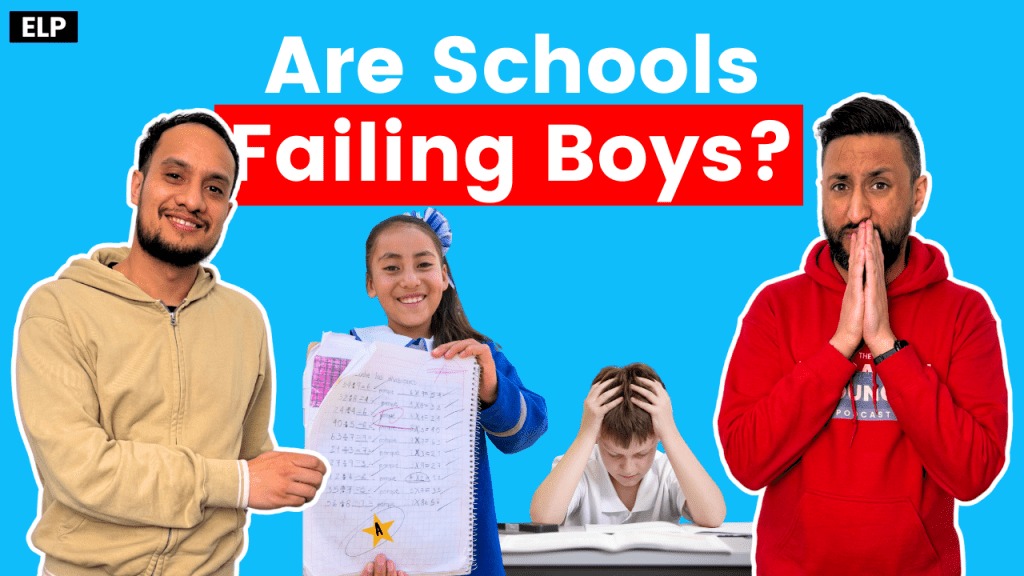
In this episode of The Education Lounge Podcast, we explore the widening gender gap in education, how brain development timelines differ, and whether today’s school structures are unintentionally setting boys up to struggle.
We unpack evolutionary ideas about learning alongside nature–nurture influences, look at the literacy gap between boys and girls, and weigh the argument for boys starting school later. We also dig into the impact of teachers and male role models, attention span and study habits, and how classrooms could be better tailored to different developmental needs without boxing students into fixed paths.
Watch or Listen




Timestamps
Show Timestamps
0:00 – Intro
1:25 – Ignoring the Problem in Education
4:09 – Differences in Brain Development Speeds
6:35 – Gendered Perceptions Around Literacy and Maths
9:24 – Evolutionary Biology and Subject Preferences
13:02 – Boys, Status, and the “Effortless Success” Myth
17:01 – Should Boys Start School Two Years Later?
20:07 – Intelligence Distribution and School Disengagement
23:06 – ADHD and Behavioural Labels in Boys
26:04 – Teacher Expectations and Gender Bias
28:20 – Importance of Male Teachers in Education
31:25 – Academic Achievement, Status and Gender Norms
35:11 – Is Higher Education Still Worth It?
39:31 – Mention of the Medics Podcast
40:05 – Degrees, Status, and Economic Value
43:42 – Rise of Portfolio Careers and Practical Alternatives
47:00 – The Rise of Self-Taught Experts and the Value of Passion
50:55 – Education Reform: Tailoring Teaching to Learners
55:02 – Final Thoughts
1:00:20 – Outro
Key Takeaways
Girls lead early in literacy; it’s not about raw intelligence. The gap shows up in primary years and reflects different maturation timelines and classroom habits, not a built-in ability difference. The key is closing it with teaching that meets students where they are.
Nature sets tendencies; nurture sets trajectories. Boys often skew toward things/space; girls toward language/people—but exposure, expectations, and practice reshape those defaults fast. Don’t box kids by sex; shape the environment.
Mindset and expectations matter—especially for boys. “Boys aren’t good at English” and “girls aren’t good at maths” become self-fulfilling. Raise the bar, make effort visible, and reward strategies, not stereotypes.
Attention, risk-taking, and variability show up differently. Boys crop up more at the extremes (both struggling and excelling) and are likelier to show restless, risk-seeking behaviour; girls’ challenges can present more quietly. Teaching should assume different routes to the same destination.
Role models help. More male teachers and mentors can improve engagement and behaviour for some boys—alongside what matters for all students: clear instruction, warm authority, and fair boundaries.
Delay school for boys? Better to tailor early learning. Rather than blanket later starts, use more play-based, movement-rich, language-heavy learning for those who need it, then ramp up the challenge as readiness grows.
Teach to the “stretch zone,” not the stereotype. Keep work just beyond current mastery, with quick feedback and chances to retry. Small, steady wins build competence—and close gaps—without tracking kids into fixed lanes.
Design school for development, not convenience. Smaller groups, clearer routines, explicit literacy support, and time for focused practice help everyone—while giving boys the structure and reps they often need earlier.
Show Notes and References
Education Policy Institute — Gender gaps across phases in England
HEPI — Why more male teachers isn’t a silver bullet for boys’ outcomes
SAGE Review — The “Matthew Effect” in reading (Pfost et al., 2014)
LJMU Scoping Review — Male teachers and boys’ academic achievement
Institute for Fiscal Studies — When you are born matters (relative-age effects)
Transcript
Show Episode Transcript
Intro
Even at primary school, there’s a big gap, a huge gap between boys literacyskills and girls. In evolutionary terms, the men were the hunters and the femaleswere the ones that were looking after the cave and the kids and buildingcommunities. So, it’s not really surprising that mathematically and hand guy coordination and all that sort ofspatial awareness is stronger in males. And it’s no surprise that language anduh communities and all you know all that sort of stuff is stronger in females. There’s no intelligence differencebetween boys and girls. I think there is like a brain development speed. It’s such a massive lead that girls have inespecially literacy. There’s more at play than just biological differences.Teachers are probably aware of it. Parents maybe not as much. So, one ofthe year sixes, I think it was a year ago, he said teachers don’t like boys. Iwas like, that’s his perception of teachers. And the boys just sort of agreed. Should boys start school 2 yearslater? Do you feel like that would just lead be slightly insulting for boys? Doesn’t that just mean we should justchange how school works?the Education Lounge podcast. [Music]
Ignoring the Problem in Education
Well, we’ve got an exciting topic to address today. Mhm. So, the differencesbetween boys and girls in education and the fact that girls are surpassing andcatching up with the boys. Yeah, it’s something it’s something that um it’snot really talked about openly. I think people do talk about it but it’s not really like aopen discussion. So I think that’s what we’re doing today. It’s it’s is known very well in academic circles. So but interms of like parents and teachers and dayto-day I think I think teachers areprobably aware of it. Parents maybe not as much so.Do you think there’s some sort of uh what’s the word? purposely not paying attention to it, ignoring that itexists. We have a tendency to do that. So ignoring I think this is just a societalthing is in ignoring obvious problems and just allowing it to sort of festerinto I think because there’s not really a solution. It there there are solutions butpractical solutions. I think there are practical solutions. They’re just not m maybe it’s it’s notwhat you’ve got to make a sort of value judgment about how important it is and Ithink it’s all swept under the carpet compared to other things cuz I mean there are more important things to maybeworry about but the direction of of boys in educ in education and society isactually very critical in the long term but it’s a very on the short term termside you don’t see bigger impact but you will see it in the future and I think that’s why it’s not really talked aboutthat openly okay um or that often simply the priority isn’t on thatnow that’s you think it should be yeah I I think I think any child’s I whetherthey’re boys or girls we should always be aiming for excellence in educationSo we should always be asking ourselves why is this person not succeeding? Why is this person what could we do toimprove this person’s education? We should no matter who that person isum attempt to within reason get thembetter levels of attainment. Is that possible though? Because interms of like developmental uh speeds. Is that possible?
Differences in Brain Development Speeds
We can certainly It’s such a massive lead that girls have in especially litliteracy that there’s more at play than just biological differences. There’s nointelligence difference between boys and girls really. I think there is I thinkthere is like a like brain development speed. Yeah.But it’s not in related to intelligence. It’s related to probably emotionalprocessing and that sort of thing. I don’t know. I think it could be partly intelligence aswell because if if your brain is developing slower than somebody else’s,then there will be an intelligence gap there. That that might be true for certain types of assessment or certaintypes of question that boys sometimes struggle with more than girls. But ifyou think about it, throughout history, we’ve had amazing malewriters. Amazing male writers. Yeah. They had no deficit in terms of theirlit. No. But how old were they when they wrote those? How because because the the gap does closeup in, you know, early 20s. By 25 it’s sort of set. Yeah. Um but growing upMhm. there is a difference. So yeah, we have had amazing male writers and amazing female writers, but that youknow the things that they’ve written that were that amazing were once that gap had been closed in early earlyadulthood. Mhm. But I’ve also seen boys who are 10 years old write amazing pieceof work. Yeah. There’s a there’s a problem here though because what’s the exception and what’s the rule? Because you can’t take the exception and andmake it the rule. Well, I I would say they’re exceptions.They’re exceptionally good. It’s an exception to the rule of what generally happens. Do you think there’s aperception that boys are just worse at English and thatYeah. permeates across like in the same way that people used to have aperception of girls in math that permeates throughout the systembecause I’ve heard so many parents comment on okay he just he’s just not very good at English and that sort of
Gendered Perceptions Around Literacy and Maths
thing and it’s always with boys and I’ve I’ve heard the opposite with girls. I’veheard oh she’s just not very good at maths. I think that’s it might not seem that relevant,but I think there’s a causal connection between them because I’ve I’ve I’ve just seen it so many times. Girls whostruggle with maths often presented a sort of view. It sometimes stems from aparent not being particularly strong at maths. So, a parent going, “Okay, h I’m not very not very good at maths and sheseems to take after me.” And I think that’s kind of a harmful perception. Isit like a self-fulfilling? Yeah. Yeah. Yeah. I think those you get told something overand over again, you believe it. Those things are so powerful and we I don’t think we I think we underestimate theYeah, we do. Um the impact. If you tell say tell say tell say tell say tell say tell say tell say tell say tell say tell say tell someone they’re useless at something eventually it’ll I’ve seen inin class I don’t know if it’s like a just a like colloquial sort of it’s what the kids always say when they getsomething wrong they’re like oh I’m so dumb blah blah blah oh I’m so stupid and I keep saying like yeah I know it’s likea phrase but stop telling yourself thatit happens all the time you start to believe it so you don’t want to internalize those thoughts cuz I have mI My my main thoughts on this, I know we’ve spoken about it before, but mymain thoughts are to go back to neurological brain development,biologically speaking, that sort of Mhm. that sort of thing. So, maybe we can go into that first cuz I’ll tell you what Ithink, right? evolution. In evolutionary terms, themen were the hunters and the females were the ones that were looking afterthe cave and the kids and building communities. So, it’s not reallysurprising that mathematically and hand guy coordination and all that sort of spatialawareness is stronger in males. And it’s no surprise that language anduh communities and all you know all that sort of stuff is stronger in females. Yeah. As a generalization. As aobviously it’s a generalization. Don’t get me cancelled or anything. It’s a generalization. But that that’s how itwas thousands of years ago. And despite what a lot of people think, we don’t evolve that quickly that those networksare still they’re still there. M so I don’t think it’s surprising that andobviously people we said this before people enjoy um they’re better at things that theyenjoy. Yeah. So generally speaking, boys prefer physics and maths and DCT. They
Evolutionary Biology and Subject Preferences
say it’s things like boys are obsessed with things and then yeah and obsessedwith people people which goes back to what I was saying about living in caves and stuff which is why you have loads ofuh women nurses and that sort of stuff and more male pilots and engineers andmechanics. Yeah. Right. So it’s it’s it issomewhat a biological thing I believe. It’s not to say that you can’t have, youknow, a female pilot or a a male nurse or whatever. Yeah. But generallyspeaking, people go into what they’re interested in and that’s generally how it works. So it’s not surprising thatgirls are stronger in English and they prefer biology um compared to like maths and physics.Yeah. No. Well, do do you agree with that or do youI think now I think societal influences are so powerful that you can to some extentalmost social and engineer a lot of these things. Yeah. But in terms of the girls havebasically caught up with the boys in terms of STEM. But in terms of the we Ithink we’ll come on to that next. But the thing I’m talking about is the the biological evolutionary point. Do youagree with that specific point? Partially. I I think we’re more mutablethan as in we we we become what we’re exposed to.But again, that’s that’s uh that’s nurture. That’s not nature. I’m talking about the nature. But I think I thinknurture is so critical that can sort of I wouldn’t say itsurpasses nature’s importance but it canseriously affect it. I think nature is the sort of foundation point and theremight be like preferences based on biology but then the nurture will takeover from that point. Yeah. I I think there’s there’s something atplay in terms of um boysbeing placing an emphasis on status in ways that girls don’t. Again, that’sbiological. Yeah. I I think that’s a biological thing. And I think that alsoplays into why they’re sort of struggling a bit because think if youthink about intelligence, right? This idea of intelligence, you’d say intelligence is like aquality that someone has. Yeah. Intelligence is a quality. So that person’s intelligent, that person’sintelligent. That person’s not as intelligent. But I think that’sa it’s kind of like effortless success is our view of intelligence. It’s likeoh that’s easy. Um, and I think boys are obsessed with looking or being perceivedas intelligent and thus they do thingsthat where they’re required to well they they succeed effortlessly in it.Explain. Okay. Explain what you mean by that. In terms of school, in terms of Yeah.life in school and generally like beyond that beyond the classroom there’s this I
Boys, Status, and the “Effortless Success” Myth
think hard work um is something that people go okaythat’s a good quality in a in a girl like she worked hard she works hardthat sort of thing I think in boys socially we’ve got kind of got this ideathat oh he’s just awesome like okay I see where you’re going and and there and boys will go oh Look at him.He’s doing that easily without no effort. And I think this was true in school as well as in boys working reallyreally hard wasn’t really cool or they did it in secret at home. Yeah. And thenlike Yeah. No, I didn’t really revise for it and you know Yeah. That whole I think I mean girls have that too. Thewhole after the exam talk. Yeah. Like oh no it was it was easy. I got like 90something%. I didn’t I only looked at it the night before. I didn’t really work. But I think in girls in girls it’s more accepted that like hard work isyou know necessary in order to do well at some level and I I just think a lotof boys are it’s not entirely their fault because I think there’s societalpressures behind this. Um, culturally we justexpect, you know, intelligence to be that simple idea of effortless success.And with boys, it’s particularly powerful because they equate intelligence with status.Do you think? I think so. Because girls, I don’t believe that. No. You don’t think? No.Think about the stereotype of like the uh American jock, head of the football team,whatever. Yeah. They’re generally portrayed as not very clever yet their status is really high. So I don’t knowif I agree with that. Yeah, there’s Well, that’s the other thing as well as in if they can’tsucceed in school, then there’s a physical outlet because boys are, youknow, strong. So I think what we can take from that is just whichever side of it you’re on,effortless is Yeah. The thing. Yeah. Whether it’s you’re effortlesseffortlessly bad at something. Yeah. And you’re not bothered to try. Yeah. Or you’re effortlessly good at something.Mhm. But I’ve seen it more with boys than girls. Like overallI’ve seen girls not try. Definitely. like that that that’s true but I think in general they they try harder thanboys and I’ve seen that at every stage of educationpretty much whereas boys there is this sort of even prevails into their 20iesand in university they’re still like laxidasical about studying and that kindof thing but whereas I’ve not seen the same thing with a girls and it might be because historicly girls have had to work a lot harder to get into the So I think the onlything holding girls back was always sexism in in terms of um sort of theireducational achievement. And now we’re starting to see what happens when there’s not really sexism. The girlsWell, no, I don’t think it’s not even that. I think it’s overcompensating. We’ve gone the other way where the girls are like doing really well and the boysare left behind. Yeah. But it’s not balanced still. is overcompensate the other way. Now, don’t get me wrong, Ithink there are some may maybe girls do have some natural advantages over boys in terms of study and how they studybecause what’s required to be a good studier, right? Concentration. Yeah, youneed really good concentration, focus. You’re not playing around as much. You’re more Well, this was this was part
Should Boys Start School Two Years Later?
of the theory. This was part of the reason of speaking about this is that there’s a there’s a concept thatboys should be left to play for like another two years because the gap in um brain development is about two years.So when a girl is um when a girl is 18 Mhm.No. When a sorry, other way around. When a girl is 16, a boy is 18 in terms of theirDid I get it right the first time around? Yeah. Yeah. So, when a um when a girl’s Mybrain’s gone. See, when a girl’s 18 Yeah. is equivalent to No, I was right. It’s equivalent to a boy being 16. Sameway around. You said it. Okay. The second time was correct. Yeah. Yeah. So, a 16 year old girl is equal to an 18-yold boy essentially. Yeah. So that there’s a two-year gap and it does sort of plateau and level out.Can back this up with um real life uh examples of five boys being stupid.We can Yeah, we can put basic like a montage of Yeah. guys getting hurt byplanks of wood or something. Yeah. Um and I think that Yeah. is it it’sfunny. Um I was listening to a podcast. I can’t remember which one. Becauseuh girls tend to find risk takingaking in boys attractiveand boys take a lot of risks. Yeah. A lot more than girls. A lot more. Yeah.Yeah. Um things that could potentially get them hurt. Yeah. A lot of the time.Yeah. Yeah. This there’s a whole show based on that premise. Yeah. U and and yeah, I think that’sthat that’s the thing with I think it it also comes back to that effortless success thing as wellis for for a boy they want to just look cool essentially a lot of the time andsometimes that just boils down not to studying doing something else getting in trouble.Yeah. I think it’s a specific type of person though. I think it’slike it’s either end, isn’t it? Like you people get will get bored and distractedif something is way too difficult or way too easy. If it’s doable, it’s kind of okay. Butoptimum is just past what you’re currently capable of. So you can start getting those neural connections firingand creating new new connections. So I think it was usually both ends of thespectrum in terms of from what I remember at school, the kids who are actually really clever andfound the stuff really easy thinking of people like sleeping in the classroom and uh making jokes and getting kickedout. And also true on the other end, people that weren’t that bright thatfound what they were currently doing too difficult and then they switched off and messed around. And that it’s the peoplein the middle that are kind of okay. They had this thing
Intelligence Distribution and School Disengagement
um about intelligence and how it’s distributed differently, boys and girls.No. So, it roughly ends up fairly similar when you average it out, butthere’s like a a curve slightly off something. So, there’s more really really stupid boys and more reallyreally intelligent boys and then whereas girls it’s more of an sort of moreevenly leveled. Yeah. Flat distribution. Yeah. Um which makes sense.Yeah. I mean, I don’t know whether it makes sense, but it just sort of it might explain quite a lot why mostof the prison population is boys. Um, yeah,there’s also I think more there’s certain so ADHD is morecommon in common in boys, I think. So, and it and it also is um shows up ingirls differently. It presents differently. Yeah. In a gut. It Yeah. It’s not as um hyperactiveor obvious. Yeah. Not as obvious because of I think of the hyperactive because because it’s quite can be quite tell forsomeone to tell that they’ve got ADD instead as opposed to ADHD.Yeah. We were talking about this yesterday. Yesterday Sunday. Yeah. When we met up with the guys. Yeah. We had afriend who he was that I think I think I’m the same after that conversation. I was like, I definitely not ADHD. I don’thave the hyperactivity. No, I’d rather sleep. But I I think my attention is notYeah. not great. But I sort of think unless I’m like properly locked into something cuz he cuz he he was sort of going, okay, I kind of I’m kind of hewas he was angry that maybe people didn’t spot that sooner. And I was sort of thinking it’s really quite hard toIt’s not even that. I think people just look at it as less this is ADHD and more this is whatall boys are like. Yeah. This is this is a bad thing. I think thisis like one of the year sixes. I think it was a year ago maybe two years. Two years ago Ithink he was talking with I think you know the one um he was talking with uhthe other year sixes the other boys in the group. Yeah I know the group. Yeah.Um, and he said teachers don’t likeboys. I was like, that’s his perception of teachers. And yeah, I was like,there’s no And the boys just sort of agreed. Well, we did a video on our um personalchannel uh like last week or week before and wespoke about the Matthew effect. Yeah. I think it’s only occurred to me
ADHD and Behavioural Labels in Boys
just now. I think the Matthew effect is come is is having an effect in theclassroom. So the people that are working and that are further ahead getgiven more attention. Yeah. Those what those that have more thusmore will be given to. Yes. Yeah. And those who have less more will be takenfrom Matthew effect. I mean we we know from experience we’ve taught the 11 plusloads of times it’s very high pressured you have an exam to sit at the end of the year requires a lot of concentrationand focus we know that dragging a group of boys to through the process throughthe process as opposed to girls is very different like yeah is and it’s not froman intelligence perspective it’s the focusing and well there just there’sjust other things that they would find more interesting. Like we said, girls are more interested in people and likeconcepts and stuff and boys are more interested in things. Even now, I would ratherbe fiddling with a thing like a laptop or or a building, whatever it is, than Iwould be sitting and looking at vocabulary or whatever. Even evennow, I would still prefer that. Yeah. So I get it. I understand. Was therelike you have a you have a sister obviously and um I’m an only child. Ihad a bit of a different exper I feel like I I was expected to just do everything well in a sense because I hadthe as in I wasn’t I was kind of expected to be good at English and maths and so on. But thenWell, I mean you are that you did do that. So yeah. In your case didWere you sort of expected to be good at maths as opposed to English? And do you think there was like somesome sort of understanding that? No, I I don’t think so. I know that Istruggled with English when I was at school. But what about when before school? So preschool.Um like could you read like were you like getting into reading? Encouraged. Iwas encouraged to read. sister was has always been a big reader. I wanted to goplay in the garden. I I wanted to do that too, but I also loved reading. Ididn’t enjoy reading. Reading your parents readers? Yeah.Interesting. Cuz I for for me I really enjoyed reading and I think it’s myparents love reading so they read so much. To be fair, I they were they they were working a lot. I never didn’tactually see them that much. They were working so much. Um school fees and stuff, you know. Yeah. House mortgage.
Teacher Expectations and Gender Bias
But um I never saw them sit down and read like that. Oh, that might be justpart of the reason. My mom and stuff, they did read with me. No, but did I think seeing your parent read is verydifferent from like my dad? They didn’t really have time honestly.My dad was just working 24/7. Yeah. My dad was literally always reading. Yeah. No, I never saw that. Sorry. I think Ithink that’s something that like just more generally um that’s one of thereasons why children struggle with reading like okay you can read with your childand that is great like no that that we did do that definitely did that. We read like Grim’s brothers, Rald Doll, HarryPotter. But don’t would you say it’s a very different thing reading with your child as opposed to your child seeingyou reading? Yeah. Yeah. Cuz you pick up on you youthink that’s a thing to do. That’s a thing that people do like reading. Whereas like when your when your parentreads with you, you’re like, “Oh, they’re facilitating my not in those terms, butfive with that vocabulary. They’re facilitating my language acquisition.I know what you mean though. Yeah. Yeah. Like that there’s something very very different in kind of I don’t I’m not I’mnot fully convinced on that point though cuz my my dad would read the newspaper all the time and I couldn’t stand stillcan’t stand newspapers or on or news or did you not like kind of want to try and read it? I did try and read it. Yeah. Ididn’t enjoy it. Yeah. But at least you you saw it and you kind of wanted to tryit out, I guess. So it was just the wrong like it was the wrong medium. Yeah. But wrong content for me. Yeah.But if you had like I just remember like my dad would have these broad sheet newspapers and I was just obsessed withreading them because I’d see him with a huge basically like a blanket of ofreading matter and then I’ I’d want to read everything on it. Yeah. No, I didn’t I didn’t have that. Yeah. So, I Ithink there is I think there is this expectation with boys though that they won’t read as well as girls and they’ll
Importance of Male Teachers in Education
have more trouble acquiring language and it becomes that self-fulfilling prophecy. I alsothink following on from what that boy said at primary school which you can see that even at primary school there’s abig gap a huge gap between boys literacy skills and girlsum I I think it’s also partially because teachers have quite a low expectationfor boys as opposed to girls and they also haveUm because there’s so many female teachers as like the ratio. Um you have a 3:1 ratio.But then we said, didn’t we that the teachers the classes that have male teachers Oh yeah, that’s the kids theybehave better and they learn more. Yeah. I mean, it’s a bit of a this is abit of a weird thing like um we do need more male teachers in education simplybecause they produce results that are different from girls, but I think a boy seeinga having a male I I certainly knew role models. Yeah. When I had a male teacher,it was different. like it was like I did feel that the boys were more on track atthat like I noticed that there was a difference. Well, yeah, because they’ve got someone to look up to and and it’salso goes back to like biologically and all that sort of stuff we spoke aboutearlier. Um it’s less less nurturing and more like lessons like you learn yourwhat to do and what not to do from your father really. Mhm. And then generally speaking again, but and then yourmother’s the the nurturer, you know, like, oh, your um dad will be really angry when hegets home and all that sort of stuff. You learn your lessons from that side mainly and your nurture nurturing comesfrom the other side. So it again is no surprise that that’s how it plays out.They behave better because they’re more fearful, I guess, of being scorned by amale teacher. Yeah. Well, looking cool in front of the male teacher as well. I think there’s anlike a degree of competition that like I’ve noticed that in 11 plus. I feellike the boys are obsessed with like beating you and stuff. Yeah. You know? Yeah, they are. Yeah. Like like theythey they they’re quite happy when they can like outthink me. Yeah. And as a teacher, when you lean leaninto that and and invite those games in Mhm. it helps with memory, it helps withenjoyment, retention, you know, all that sort of stuff. Yeah. So, you can lean into thesethings to get better results. It’s interesting how it’s persisted inhigher education. So it used to be the case that it was like a 7030 ratio between or even like before that in it
Academic Achievement, Status and Gender Norms
was basically practically all males who went to university and then it’s sort of switched around. Yeah. So now I thinkthat’s partly to do with a change in how universities work and stuff and what they What do you mean? Uh I don’t wantto get political but I don’t think it’s just that though. I I think there’s athere’s a it’s partially to do with there being less value in a degree.That’s also true. They’re not scarce anymore. Scarcity creates scarcity creates value and everyone’s got adegree now. So, well, I think that’s a that’s one of the points. It’s not notthe only point. That’s a bit of the the problem is is that we we think that scarcity createsvalue. Like it’s a perception. No, it does. No, there’s a reason why gold is more expensive than silver. No, but thenfor instance, a math degree 10 years ago is like the thevalue of the education that you receive is still worth the same amount. But not to the not to the economy and toeverything else. No, but that’s our problem is that we perceive thingseconomically. Uh but I think boys are very logical in that regard. So whenthey see that there’s less economic value in achieving higher levels ofacademic excellence, they naturally will go into other things. I don’t think that’s justboys. That’s across the board. But girls are pursuing more high education.Like as in they are in they’re increasingly going to university andthey’re increasingly doing better than boys at an academic level. No, but you’re talking about in terms ofswitching based on economy. Yeah, that’s across the board. I’ve seen is it? Girlswill also switch to um industries and stuff where there’s more money to be made. That’s just normal. I don’t thinkthat’s a boy that’s not a boy or girl thing.Maybe I don’t I don’t know though because you still got quite low levelsin computing, programming, stuff like that. Certainly, but that again that’s down towhat people enjoy doing. Boys will prefer that generallyspeaking, but I think that’s also changed. I’m I know people in year 11 oryear 10 here that are coding games and stuff. So, girls. So, yeah.Yeah. I don’t I don’t know if I agree with that. You don’t think like boys sort of seeespecially boys who maybe aren’t doing as well in school, they sort of see uhhigher education as just a bit pointless to do. because the perceived value ofthe degree has gone down and thus they’re going okay well I know thisroute isn’t for me and thus I can probably do something vocationalum again I think that’s across the boardmore girls pursuing vocational education I don’t know if it’s more or less butI’ve seen both boys and girls do that so I can’t it’s too it’s too close for meto tell what the exceptions are and what the rules are. So yeah, I think it’s leveling it’s leveling out.Um but there there has been more talk of people going and becoming like electricians and whatever else. Yeah.
Is Higher Education Still Worth It?
Than like going to university to study something that it’s not really going to get you very far. But that I don’t Ithink that’s a flawed perception because like people don’t people do earn more bygoing to university. It depends what they’re depends what they’re doing. Yeah. Depends whatthey’re studying. But I think that people have woke up woken up to the idea that degrees especially as they’ve risenin cost. Yeah. That degrees need to get you some something at the end of the day. Yeah. Which is something I wish Ithought about back in the day. Definitely. But you would have pursuedsome I think your degree has great economic value at the Yeah. I mean I think now everyonethinks they can do it and there’s been you know there’s so many different tools AI Canva. Yeah. that thatcan produce something close enough. You can say like, “Oh, make me a logo that’s blah blah blah.” And it will spit outsome sort of shape and some sort of text and you can use it and you can be on your way.But I’m thinking more of if I knew what I knew now about um money and loans and interest ratesand compound interest, then spending 30 40,000 on at the time on thedegree may not have been the best financial move. However, I would not Iwouldn’t have changed it because I got to meet people. I got to have new new experiences.or to move out. Yeah. No, I learned, you know, cook for yourself, clean for yourself. Not that I couldn’t do thatstuff before, but a lot of people couldn’t. A lot of people still go home and their parents do their laundry stufffor them. So, you know, I remember the lingerette was a little confusing at first, though. I can imagine you I canimagine you found that confusing with the coins like and all that like just the idea of I know putting money intothe machine and cleaning your clothes like you know when you’ve got when you’ve got a washing machine well whenwe were when I was growing up we didn’t always have a washing machine that worked. So we had to go to Wanted HighStreet and use a lingerette and stuff. So I knew how it worked from a young age. But some people like I I was it wasjust the notion of putting coins in the machine that I found weird. It wasn’t the actual washing your clothes whereasI had you had vending machines at school. Yeah. I I had friends that that didn’t really get how to wash clothes.This is what I mean. So there’s there’s other values of going to university um or cooking. That was also something.Yeah. But the thing is I could do my own bedding, washing, laundry. Yeah.cooking, cleaning, I’ve been doing all that stuff for at least five years before I evenleft to go to uni. So, but I don’t know, freedomand meeting new people and all that sort of stuff. Nowadays, I think we mentioned this before, nowadays with the um thenew cost of these degrees, I’d probably consider it more. Yeah, you’d have to Yeah, you’d have to depending on whatyou’re doing. If you want to become a doctor, then you have to kind of have to. Yeah. But if you want to do what Idid and do graphic design or or videography or something like that, you could not do uni, save £9,000 orwhatever it is and then go to do a course in London or learn online or in this um I think in this in this in thiscountry being a doctor is or a lawyer for that matter is maybe not the bestoption just for just because of the years of the years that you take to get topractice law or and also the my um sister is a lawyer and she’s beenqualified for a couple years and she’s already thinking about leaving it because it’s just endless hours of workand stress and and you know we bumped into Ibraim at the gym. Yeah. Uhdoctor’s medics podcast up there somewhere. um he was saying, you know, he’s taken him seven, seven years, eight
Mention of the Medics Podcast
years, and now he’s on awards and stuff like that and he’s already consideringlike, is it worth it for like 40k or whatever it is? Well, it was way lesslike 35 or something. Yeah. So, he’s already thinking like, is it Yeah. Is itworth I don’t I my mom like convinced me not to to bed.You’re actually like most Asian parents would be like, “Oh, great doctor.” Um,
Degrees, Status, and Economic Value
but my um that family guy my um my mom was like just don’tdon’t do it like but she’s had she had experience in that field. So yeah, shewas like it’s not worth the it’s not worth the stress, the time and and thethe pay is not even really that great like for the amount of time it takes to getqualified and how re really how educated you need to be. H like years and yearsand years and years of education to um and you could do something likenursing and you’d be in a job quicker first of all and you’d also you you earnless like longterm but compounding like investing what you’ve earned and yeahbut come on how many how many people know yeah but how many nurses do you think invest in you compound rest. Somelike not all of them, obviously, but I’d say most probably don’t. My mom did, butmost exceptions, not rules, remember? Yeah. No, I’m I’m just saying like um she’s kind of right cuz you got to thinkmoney now is there’s the time value time value of money. Yeah. Yeah. But I’m saying not most people don’t think like that.Yeah. Most people aren’t aware of this sort of stuff. True. So, which is kind of I I believe why thesystems been put the way that it is in the first place. You’re not meant to be aware of it because, you know, if youare aware of it, you make more money and you pay less tax and that ruins the economy. So, it it kind of makes sensethat it’s set up the way that it is. Yeah. Not that I agree with it at all, but Yeah. Yeah. Yeah. I think um withoutsome fairly high financial incentives I wouldn’t wouldn’t have going into thoseroutes. Um there’s also places where I think this is another problemwith like we about getting males into teaching. Yeah. Um like for instance inphysics or something like that. I’ve got a friend who did a PhD in physics. He’dbe a very very good physics teacher. Yeah. I mean, well, he wrote he wrote our year 11 math booklets. So, he did hedid so he did he did tutor. Yeah. But he didn’t even consider becoming a teacher.And I think so no financial reward for doing a PhD in physics. Like Yeah.Where’s the incentive? Yeah. Yeah. Where’s the incentive? because like it’sit’s difficult to get a degree in theoretical physics and um you can makeso much more money going into data science and that sort of stuff and software development. Yeah, cuz he hedid um development for like is it a gambling app or something? Yeah. Yeah.So, um and he gets a percentage of stuff from that probably. Yeah, exactly. I mean, yeah, his he’s um so yeah, likeyou you I think that’s part of the reason is there’s not enough which iswhat I was I was saying earlier about how like males and status. Yeah.Um you get like having really good degrees andstuff like that and doing really well academically, I’d question like thestatus it gives you. I think it used to equate to yeah it did high status and
Rise of Portfolio Careers and Practical Alternatives
now it doesn’t it does in certain societies but in this country in our society Idon’t think it does and I really think that that’s the fall that that’s that’sthe fall of western education that’s why western education strugglesthe status thing is it’s s it’s uh back to biological stuff it’s likeUm, how does it go? Women women date across and up hierarchies. Yeah. And mendate across and down. So guys, so theguys that have the status are the ones that get more mates. There there isevidence though that that is slowly changing. Yeah. So I I think the socialthe power of society is pretty incredible. Our view on education forinstance that’s more societal I suppose than it’s also by necessity as well. Soin Asian culture or whatever, education is how you got ahead essentially. That’show you Yeah. You you you had to be competitive. You had to you had to makemoney and being in a high earning profession like an accountant, somethingstable. So you’re you’re you’re looking for a high level of education, stability, and high income. I meanthat’s all true here but then it’s less reliant on those educational factors.It’s actually more reliant on networks who you know. Well, yeah. I I think theuh so the working landscape is sort of changing. Whereas before you’d have a CVand a cover letter and your degree that was not many people had that or lesspeople had that back even before our before our time like I don’t know 20 30 years ago. My dad had a degree and hewas like very few people had degrees that got him into a job and whatever else. uh now a lot of people havedegrees but also I think the working landscape is changing into moreportfolio-based work. Yeah. So if you think back to when I don’tknow the first market stores were invented or whatever popped upin I don’t know where Africa or something where wherever we sort of human sort of started. Oh okay. You youtook it really far. Like I was like in Africa. Oh yeah. As in like Pangier andyou know back literally like when people started trading things. Mhm. There wasyou know butcher baker candlestick maker like the everyone had their own thing their surname or whatever and that wastheir their thing and then it went into what we’ve been having so far. And Ithink it’s starting to go back into okay that person’s the I don’t know AI tutor person. andthat person is the one that does the designing, that person does video stuff, that person writes essays, that person is a um researcherfor whatever. I think it’s going back towards that. It’s going back to having individual mini businesses and the
The Rise of Self-Taught Experts and the Value of Passion
there’s sort of a fall of all the huge um companies, people, you know, quitequitting all that sort of stuff is happening, isn’t it? So I think there is a shift in that and for that you don’tnecessarily need to have degrees and stuff. You just need experience and you need to know people. But I mean it it itstill depends on what you go into because obviously you want to become a reallygood maths expert or whatever maths teacher, it’s probably helpful to have a degreein maths, but you don’t need it is my point. Yeah. Have you got I mean you do like Have you got No, but you you have you got a degree in maths. Yeah, but Istill study it. I know. Yeah, but that’s my point. You don’t need the degree. You can still do the studying. That’s whatI’m saying. You don’t need to have that piece of paper. No, that’s true. But I think it helps like because stilldepending on what it is. Yeah. It’s like if you have a degree from Cambridge in mathematics, that’s a status. You’reYeah. you’re more likely to get your internship at. But that’sthat’s the status thing. You’ve gone through this system and it’s a status thing. Like things like Skillshare andall that stuff that teach you maths still exist. Mhm.Yeah. I think they’re not degrees. Yeah. I think the highly trained amateuris underrated. I think they’re they’re probably unappreciated. No, I I thinkthey’re probably better than people that have been put in the box of the system and whatever else.It’s all teaching yourself, communicating with otherpeople, making making money early on from what you’re learning. Have you haveyou rather than waiting seven years to do a thing and then making nothing. Have you heard of Rammanujan?I recognize the name. The math initiation. So recognize the name I think but there’s like a movie uhsomething infinity can’t remember what it’s called he was uh really important for ourunderstanding of infinite series so maths and he was he wasn’t really liketrained in maths but he just was a bit of a genius but he was also um sort ofjust he was like literally writing on on the floor like a lot of these equationsand stuff like that and he sent a letter to like he became the first fellow atOxford, first Indian to be a fellow at Oxford. Okay. Because he sent he sent some ofhis work to as in a letter to um I don’t know some other mathematicianworking at the university and he was amazed. He was just like oh my what this is groundbreaking work. So he broughtthis guy over. He was only about 22 years old or 21. He brought this Indianguy over and to the university and he to learn how to systemize this like toactually write papers and not just go cuz he just the Rammenujan would just goit’s that like he didn’t have like an understanding of how to present it. Sohe had to learn the system of how to like present his findings well and that sort of thing and and he became thefirst and yeah he was an amateur. He just loved maths. He just gotobsessed with maths. He I think he learned a lot of his maths out of like little textbooks that he found. Again hewas a clark. It was a bit like Einstein. He was working as a cler. Um and youjust sent off papers to the university and oh wow this is likegroundbreaking. So um but again that comes back down to the interest. He was
Education Reform: Tailoring Teaching to Learners
interested in the thing. Yeah. If you’re interested in it then you go into it. Gointo it. You do better in it. Yeah. Um, just to round off, the reason forthis whole episode was I I heard a thing about should boys start school two yearslater. I kind of want to finish it off on that question. Do you do you think boys should start two years later sotheir brain development lines up with the girls brain development? So, you know, girls finish at school at 16, boysfinish at 18 and there’s a there’s that gap or not? or is there something elseyou think would work better? Do you feel like that would just lead be slightly insulting for boys in a way?Yeah, it could be. It could it could have a um you’re just expecting boys to be lessmature and girls like but biologically that is what happens. Yeah. Right. Butthen that theory is they should be left they should play for two more years becauseyou learn a lot through play. But doesn’t that just mean we should just change how school works? Like howschooling works to adapt for that? Yeah, that’s what I’m asking. In this hypothetical world, what would you do?Maybe you wouldn’t have them studying in the same way as early. Um you might have more playbasedlearning, but then that doesn’t work for all boys. There’s some boys who concentrate fine at that age. So youagain you be so would there be some sort of filter system that’s like right you’re you’re more suited to this you’re more suited to that and they go off intothese different schools or I believe that’s something that we need to do more in education is not put people in boxes.So yeah that cookie cutter thing doesn’t really work. I I think there there are generalizations across the board, butevery child’s development is different and you need the no one like something that wentwrong in my education. I think I was like held back at certain points by thesystem, right? And I think that’s true of certain people, but by the sametoken, some people are pushed on to do things that they’re not ready for. Andthere there needs to be more tailoring which is why I think it like tuition at its heart is is very good if it’s um nottoo systematic. So it’s if you take the child’s learning needs into account.Yeah. So what would you do in this hypothetical world? Mine mine wasn’t so much that at school. Mine was more justby the time I got to 14 and stuff I was just disengaged with all of it. Yeah, but I think thatwas probably more maybe that was more personal life stuff as well. It wasn’t just partly. Yeah. Um because when I wasyounger that was like at the top I was I was fine. Well, they used to have that in in ineducation. As you got older, there’d be more specialism into certain areas that you were interested in than happens now.At the moment, you choose your subject. They’re sort of trying to bring that back. So at the college level I feellike it’s much better than it was obviously we went to a school so it wasa bit more academic. Yeah. But in colleges Mhm. as far as I understand itnow it’s a there’s they’re given quite a lot of options. Um so but but so they’veimproved that aspect. So they’ve like the tailoring for the different types ofpeople. Yeah. But that’s at college. I’m just going to go back to my question. My question was, what in this hypotheticalworld and you were in charge of the schooling system, would you let boys start two years later or would you dosomething else or would you leave it as it is? No, I’ I’d I’ I’d say they couldstart at a similar time, but I’d probably justindividualize the education more earlier earlier on. Let me guess, you’re going
Final Thoughts
to say AI. You’re going to say get Yeah. um it’s part of it but it’s not it’s noteverything as as in it’s it’s uh an aspect that where tailoring can beum useful and and it can be done uh and obviously at scale. So how would you howwould teachers cope with that? One teacher 30 kids. Yeah. This is this is the the problem. This is yourhypothetical world. You can do whatever you want. What would you Yeah. money is no object. Then you you invest morein in um in teachers. Well, you invest more inteaching. That makes sense. So you have one teacher that does like high level math for five kids and that out of that30, one that does the normal level for maybe 20 of them and then one that does the other five or 10 that needs a lot ofhelp. Yeah, that makes sense. I I think it’s it’s back to that curve. It’s back to that flat curve again, isn’t it?Yeah, it’s the end the beginning and the end need the most attention and themiddle ones are generally okay with Yeah. But I I do think there’s like potential in that middle that issometimes not nurtured and and that is I I think there’s a lot of potential inthat middle because I’ve I’ve had loads of people who students who are in that middle and they can be better capable ofgetting into those in terms of achievement. But I think that’s that’s coming from your experience of you said you were felt like you were held back.Yeah. So I feel like you can you can relate to and pick up on that more. Yeah. Um but I think it like as in youcan empathize with that there was like I remember there was I had a friend whowas from Somalia. That kid needed so much helpwith I was I was helping him so much in school like trying to help him with hisEnglish, help him with his maths and I was like a year six child. Um and I was like this kid is not like even back thenI was like this child’s learning needs are not being catered for cuz he I waslike he can’t read. He’s like we didn’t really communicate with like English. We weused a lot of non-verbal communication because he was just so wow like but youcan sort of do that as I think you’re more comfortable with that when you’re a child. I like I remember going to uhNetherlands and there was a kid who I’d made friends with and we he didn’treally know much English. I didn’t obviously didn’t know Dutch and we were just sort of communicating a lot of thetime non-verbbally. So yeah, I had a kid next to me didn’t couldn’t really read or do anything. SoI remember doing sats and I used to let him like look at my um answers a littlebit. So he could get like the level two or whatever that he was aiming for. Umwhile I was sort of working on, you know, getting that level five, they used to have likelevel they had level two to six, I think, achievable. So two to six. Idon’t remember that far back. Um, and you had to sit a special paper to do level six, but I didn’t do that. Oh, Ithink that rings a bell. Yeah. Okay. So, your solution would be uh more teachersto specialize down into the individual levels that they currently are and thatthey could achieve. I think in a society like our one where we have a lot we have a lot morein terms of resources but we also don’t necessarily have the discipline in theclassroom to have big class sizes. Yeah. So the answer would be more yeah moremore money towards teachers and more uh better ratios. Yeah. I I think the stustudent teacher student ratio is is really an important thing and also the fact that a lot of teachers they’re notnecessarily allowed to teach as much. They’re they’re they become behavior control. Yeah. They become and that thatthat boils down to better discipline in the classroom as well. And we more through to more more um doable with morewith a better ratio. Yeah. Because I I think a a lot of the time it is someone’s completely disengaged eitherat the tails of distribution. So like someone who’s quite clever but justbored and then you’ve got some people just have no idea what’s happening in the class. They need sort of moretailored education. Those ones need to be sort of brought out and into smaller groups into smaller groups. uh engagedin at a level that they understand and get and that will allow everyone to justdo better. So I don’t think it necessarily boils down to boys starting earlier or anything likethat. I just think it’s better tailoring of of the materialuh to that that individual child’s level because if you start putting people into boxes, I think that that can be a littledangerous and you just end up with a subpar result. So, thanks again for watching
Outro
this month. If you’re watching us on YouTube, don’t forget to subscribe and give us a like. Comment down below on your thoughts on this conversation. Ifyou are listening to us on Spotify or Apple Podcast, give us a follow and a rating and we’ll see you back again herenext month.The Education Lounge podcast. [Music]
 The Education Lounge Podcast