On this page: Summary · Watch or listen · Timestamps · Key takeaways · Show notes and references · Transcript
Summary
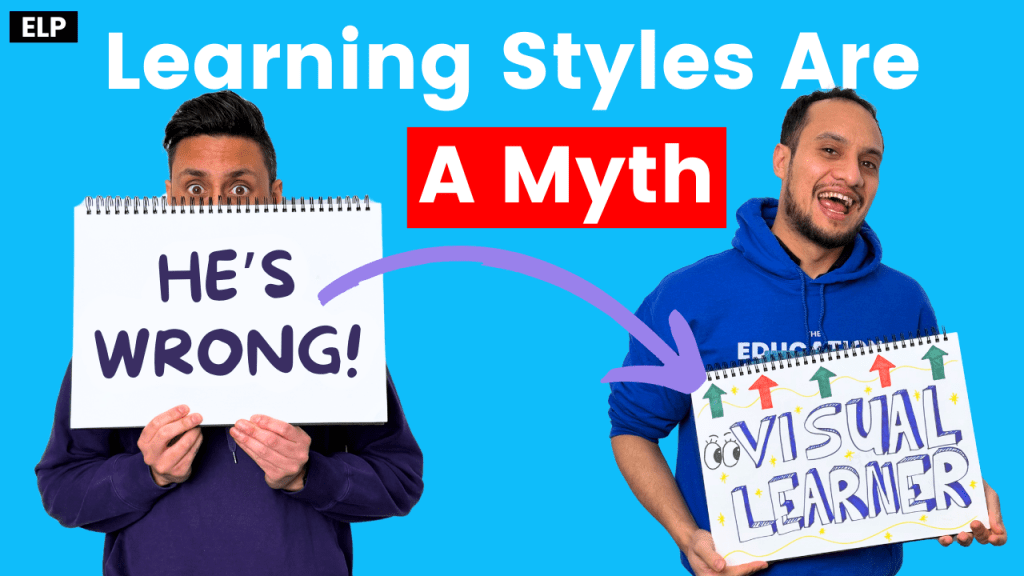
In this episode, Prajay calls the ending early as we dig into the myth of VARK learning styles. Why so many people believe in “visual/auditory/kinesthetic” labels, how those labels can box students in, and what actually moves the needle. We reflect on our own learning journeys and show how to pick methods based on the task, not a fixed “type.”
Instead of chasing styles, we lean on research-backed habits: spacing study to ride the forgetting curve, working in short focused Pomodoro sprints, using active recall (low-stakes quizzes, teach-back, blank-page summaries), and mapping ideas to reveal connections, without pretending a mind map only “works for visual learners.” We also call out common traps that feel productive but aren’t, like re-reading, highlighting everything, and copying notes verbatim.
Whether you’re a student, parent, or educator, the takeaway is simple: learn smarter, not harder. Let neuroscience (memory, attention, and motivation) shape your study system, mix modalities on purpose, and judge your method by one metric: does it improve retrieval and transfer when it counts?
Watch or Listen


Timestamps
Show Timestamps
0:00 – Intro
0:49 – Prajay Forgets Everything
3:20 – The Learning Styles (VARK)
6:41 – Enjoy What You Do
9:15 – Prajay’s Early Prediction
12:02 – Language Learning
15:38 – Learn Concepts in Several Ways
21:27 – Using the Wrong Methods for the Topic
24:52 – Passive Leaning is Also A Myth!
27:42 – The Neurochemistry on How We Learn
32:20 – Learning Techniques
32:38 – The Forgetting Curve (The Spaced Repetition Technique)
36:04 – Mind Map Technique
37:25 – Don’t Do Exams! Learn First!
40:13 – Attention and Distraction
42:00 – The Practice Method
43:54 – Highlighting is Also A Myth!
47:31 – Focus, Timeblocking and The Pomodoro Technique
52:19 – Screentime
54:25 – Activation Energy and Overwhelm on Big Tasks
56:56 – Music While Learning
59:03 – Conclusion
1:02:22 – Outro
Key Takeaways
Learning styles are a myth (for people); match the method to the task. Labels like “visual/auditory/kinesthetic” describe preferences, not performance. Coding is learned by coding, CPR by hands-on practice, countries with maps, and languages by combining listening, speaking, reading and writing.
Retrieval beats re-reading. You remember what you’re forced to recall. Use active recall: blank-page summaries, low-stakes quizzes, teach-back, and past questions once the fundamentals are taught.
Spacing tames forgetting. Memory fades on a curve; revisit on expanding intervals (e.g., ~1 day → ~3 days → ~7 days → ~15 days → ~30 days) to make neural pathways easier to re-fire each time.
Mind maps are for output, not aesthetics. Use them to dump what you know from memory, expose gaps, and connect ideas. The value is in organising recall, not drawing pretty branches.
Pomodoro lowers activation energy. Short, focused sprints with pre-decided micro-goals plus brief breaks make starting easier and keep attention high. Plan → attempt → review → tweak → repeat.
Attention is the bottleneck. Turn off notifications, park your phone in another room, and, if you use audio, prefer lyric-free study music or binaural beats. No focus, no learning—regardless of method.
Highlighting feels productive, but it isn’t. Re-reading and painting pages rarely translate to performance. Convert notes into questions, problems, and explanations you can produce cold.
Enjoyment helps, but efficacy wins. Interest pulls you in, yet the optimal route is dictated by the content. Start with the best method for the topic, then adapt to the learner for motivation and fit.
Confidence follows competence. Early wins with the right technique dismantle “I’m bad at this” beliefs. Most “strugglers” are really using weak study processes, not lacking ability.
Learning takes lift-off energy—then compounds. Like a plane using most fuel at take-off, the first reps are hardest. Stick with it, and the path of least resistance shifts in your favour.
Show Notes and References
Learning styles: Concepts and Evidence — Pashler et al., PSPI (2009)
Should we be using learning styles? What research has to say — Coffield et al. (2004) PDF
Six Strategies for Effective Learning — The Learning Scientists
Transcript
Show Episode Transcript
Intro
when we first learn something uh it’s quite a hard job because those neuronshaven’t necessarily fired before those connections haven’t been made so there’s some friction I think this is just thenature of the world that we live in an object in motion tends to stay in motionright a plane taken off uses most of its fuel taken off and very little or like alot less actually flying and it’s mirror in education a lot of students who struggle with school they awful atrevising like they’re really really bad at yeah the process of learning this was me what did that say about my learning[Music] style the education Loungepodcast so I don’t know if you remember when we were at school they had that class psse which was physical social
Prajay Forgets Everything
education I mean I remember going to the class remember being it kind of beinglike a a nothing lesson a Dos Class A dos class yeah yeah I don’t remember anything specific from apart fromwatching random films but yeah oh oh yeah um they had one session sheprobably didn’t remember but on study skills no don’t remember that throughoutthis session they talked about various things so memonic devices was onedon’t know if you remember that so you know using basically an acronym to remember Concepts like like Mrs Gren andthe yeah um and one of the things that theywent into detail on was what type of learner you are and they made us do aquiz I don’t remember any of this so clearly clearly my learning is not tothe same level um does it ring a bell not at all nono really we were in different classes remember so oh maybe do it no you musthave because they had it on like a rotational thing you did it at different time but you would have done the sameclass I don’t remember it so that say about my learning style well I there’s visual yeah sothere’s you’re remembering using an acronym no no is in I in my research like and Idiscovered that the acronym that they use is V but when I was there I remember it was visual auditory auditory and umkinesthetic that were the th those were the three that they were investing sothis is like where people say oh I’m a visual learner know that phraser yeah soyeah visual um auditory which apparently I’m I’m Kines well according to thattest back then it was that I’m auditory and ktic maybe this does ring a bell becauseI thought I was auditory as well anywayyeah strange that you wouldn’t be kinesthetic I think let’s explain what
The Learning styles (VARK)
each one is so so visual is obviously like will you seesomebody doing it or you see it written you you you learn from things like diagrams and stuff like that that’s theidea right um then there’s auditory which is youlearn from listening uh so lectures audio booksyeah okay um and then there’s kinesthetic and obviously we’ve got theK kin uh route so it’s to do with movement yeah so that’s one activelydoing something yeah so I think that’s probably me if if this were fully realthis is yes that that would be me and well the theory well actuallylet’s go into it so it it was um it’s actually varc sovisual visual auditory um R is reading and writingokay and then K is kinesthetic so yeah I mean I can tellyou when I when I was revising the brief amount of revision I did back in the back in those gcsc days the readingdidn’t do it for me reading and writing didn’t didn’t go in oh um but when I sawsomebody doing it or I got to actively do something then it did which makes sensebecause my favorite subjects were all the you know design technology and music and stuff with you picking up thingsbuilding things making things out of other things yeah rather than readinglike essay aftera but well the idea be behind thislearning style theory is that if you know someone’s learning style you cantheoretically help them learn quicker if you teach them with their preferred in away that suits their preferred learning sty andit’s kind of an so I can’t remember on on there um there’s a theorist who cameup with it and it’s a learning theory it sounds really nice it’s kind of romanticisn’t it because you go oh well he he’s not having he’s having trouble learningbecause it’s not suiting his learning style we need to teach them in we needto teach the students in a way that appeals to their preferred learning style um and and it’s actually one ofthe biggest myths in education so many people believe it infact I’ve had so many conversations with parents talking about learning styles and I sort of I don’t really sayanything but it’s on my mind that it doesn’t reallymatter well it’s not that it doesn’t matter because you can prefer a a way of learning so it’s probably true it’s truethat you might like kinesthetic learning and then it’s true that I like auditorylearning but it doesn’t make it easier to learn a certain thing okay but does
Enjoy What You Do
it make it more enjoyable for that person it might it might it does make you more enjoyable for that personthen then they’d probably learn faster or better because if youenjoy doing something you you know well what happens is you end up doing whatyou enjoy anyway right and probably one of the reasons is if you like learningin a certain way you’re more likely to like the subject that appeals to you in that wayso for instance some people end up not doing some people really love likelanguages for instance I I’m not one of those people I know you are I’ve goingto be but it’s because I’ve discovered how to learn languages um in the past at school Ireally really the only one that I really got on with was Latin funnny enough veryuseful yeah yeah I mean it is like as in I I think it really improves your graspof other languages because well it’s like a root language isn’t it so so soit helps you learn other languages but I think it was actually the way that we learned it that actually helped meretain it so I was looking back on on on things I’ve learned in the past and wesort of believe that we’ve got this optimal way of learning a language or ohit’s got to appeal to a certain learner learning style but actually the way that you learn or the thing that gets you tolearn quickly is um dependent on the subject thatyou’re learning so the way that you should access that subject dependson the nature of the subject so if you have geography if you want to learncountries then you need visual you need visual stimulus I remember like I listen to Iwas like I listen to a lecture well I just listened to an audio bookon python like Pro like oh God that that would be the most boring thing for melike I’d rather I’d rather go on code academy or something and like actually do do it see it in frontof me yeah listening to a book about coding it’s like well well that’s that’swhat I’m getting at is as an auditory learning might be enjoyable for me butit doesn’t mean that it’s the best way to learn that thing this is this is this is my takeaway from this I know we’re
Prajay’s Early Prediction
what quite quite early on in the in the conversation but I feel like I already know what my conclusion is what myconclusion is that the learning style isn’t for each individual person butit’s for the thing that you’re learning yeah well I mean that’s that’s the conclusion from the data is it I Ihaven’t actually looked at it so so so no it is it is at well there you go end of podcast but it’s it’s kind of aterrible thing that so many people believe it because people think okay oh it’s youthink it doesn’t matter but like in terms of an education system you’ve got loads of teachers and loads of studentsand loads of parents who believe in learning stols and that some needs tosuit a preferred learning style you’re wasting time you’re you’re making you’remaking it more effort to actually learn stuff when you could be going okay wellthis is the optimal route to learning this specific specific thing and this isthe proven route for learning this specific thing while we doing it yeah sowell it’s like when you do like when we did the first aid course yes we had toread but it wasn’t just reading there was barely any writing but there was alot of auditory the guy was talking to us about how stuff yeah there was a lotof visual yeah and then there was K athetic you s you’re doing the whole thing on the dummy so it’s covered allthe yes but but but I I guess the best way it’s for each individual thingthough yeah right my point is for for um CPR obviously kinestheticis the best way to do that yes exactly but to know what to dowhen I guess kinesthetic works for all of it but like if you had to use an EpiPen or no no no I guess it it’simportant when you first of all you can’t put something in intopractice so you don’t like you don’t have a burn victim there this is mypoint so just knowing for instance okay use King film that’s visual well likejust I think they put it on the projector or screen or whatever it’s visual um and I think like the importantthing as well is obviously that doesn’t mean that you shouldn’t learn visually auditorily orwhatever I I I believe my honest belief is you use as many forms of stimulus asyou can can to get something into your head so um this is this is where um sort of
Language Learning
the language learning because that’s been my big experiment in my life I guess umsomething that you learn outside of school um self self teaching yousomething self something can teach you a lot about how first of all what you enjoy learning but also can help you uhdiscover the best ways to learn different things so when I waslearning Mandarin like I well when I was learningFrench in school the way that we learned was very much I didn’t get it was verymuch here’s a vocabulary list learn these words uh here’s a dialogue do thisdialogue um there was me me you they them them like you plural conjugatingstuff so You’ go down lists of conjugations that’s not how you learn though is it never but but that’s uhlike obviously you need to learn those aspects but then it’s not it’s like thewhat’s the most efficient way of learning those Concepts it’s actually todo loads of roleplay so because um most people want to learn a language in thefirst place to maybe maybe speak and go to the country doesn’t quite work withLatin but you could go you could go there and just start speaking Latin but um itprobably wouldn’t be um the best way but it’s to get people into a stimulus thatthey enjoy doing which which is why enjoyment doesdoes matter you do need an incentive to learn in the first place yeah often buteven if you’re not particularly interested in something the fact that there is a proven route to L to learnsomething which is basically exposure with the language is how much many times you’re exposed to it will get you tolearn it it’s like I remember we had those books on like we on trick law onc trick law but then they had a magazinethat people could get so I got I got a few copies of that magazine and I thinkI learned more from the magazine than I did from the yeah cuz it’s it’s it’s umit’s concrete it’s real it’s not an abstract thing like you’re seeing an actual it’s interesting well yeah and it’sinteresting yeah it’s interesting and because I mean that’s that’s the purpose of a language in the first place to likeinvolve yourself in the context of of th that people or whatever what they’rewhat they know and what they what they want to tell you so there’s that gettinga pen pal is also a really good way I think yeah we did that didn’t we we had to write not the real pen pal I don’tthink it was but we had to do a pen pal letter exercise or something if you tookit to a level then they did some sort of exchange thing I remember I didn’t gopast well French I French I started when I was like fiveoh yeah and then I just got to school and I didn’t get it and I did Spanishand I understood that yeah partly the teacher partly the language but with with Chinese Irealized like writing reading speaking and listening are all separate skills you need to practice in their own time andwhich we had to do all of that in GCS didn’t we and I mean how do we learn in the first place it’s neural Pathways
Learn Concepts in Several Ways
connections it’s the neurons that fire wire fire together wire together yeahyeah so if you do this is what I was trying to do do the other day we said itin the in the previous podcast one before there’s a short on it somewhereyeah yeah um but yeah when you I I find that obviously that’s whyrevision is very important so you need to go over the concept again and then sometimes that’s what I find in schoolthey do they move too quickly so they move from one thing to another toanother thing before the student gets it but encountering the same concept in loads of different placesstrengthens that ability yeah it’s recall application mhm but I just I just um interms of the say VAR idea the the problem is is that you can try and makethe subject more interesting but if you’re not doing it in an optimal way that causes thoseneurons to fire in a way that’s useful to the student then you’re essentiallykind of wasting time it might not be if there’s some other motivation goal behindthat if you get what I mean like there’s if there’s some if if it sort ofstimulates an interest then that will get the student more engaged with the idea of learning it but if you’re doingit purely to help the student learn better then you’re going down the wrongpath right get what I mean not quite why whywould you be going down the wrong path if you’re trying to get them to learn better no if you if you try to justappeal to their preferred learning sty right yeah yeah I I think the key isjust getting them to getting them to enjoy what they’re doing really regardless of which way itis but enjoyment doesn’t necessarily mean translate to well you the way you you remember things based on how youfelt about the thing that’s how memory Works partially but so if you enjoydidn’t happen with me for chying need I I I didn’t enjoy like some of thestuff I did let me let me give you an example so when I’m teaching probabilityyeah is my favorite lesson I don’t just go oh this is fifth this is 0.5 50% that’s our halfchance this is a mhm um quite likely chance this is 99% we would call itlikely but it’s not certain yeah I’d say all those things but what I do is doreal life scenarios well not real life but so I do what the chance of flipping a coin and I’d get a coin I’d let themdo it kinesthetic audio you know all the all together and then I say well go abit abstract well I’m going to flip the coin I flipped it 99 times it’s landed on heads 99 times what’s the chances ofthe 100th one being also on heads some of them go yeahcertain and some one or two people might say 50% half like stillhalf um and then i’ open a discussion up I say mathematically yeah it’stechnically still half but I’d probably question the person that’s flipping the coin and I’d probably question the coinyeah and then they’d laugh there’s a bit of humor they remember that conversation you know what are the chances of I dothe coin thing and then I do like uh what the chances of a tiger walkingthrough that door in the next half an hour yeah they use the same one every time they laugh they get they rememberit but you’ve got proven but that shows you like you’ve got students with probably different preferred learningSTS maybe and yet they still you still have the same approach to teaching thesame thing which is I think backs up the point that I was saying there is anoptimal way to teach a certain specific thing yeah it’s down to the down to the topic or the yeah yeah topic sometimessubject but not the actual individual person because they all remember that class they all remember probability mhmbut yeah if if you’ve stumbled on this is the thing though so if there is anoptimal way of teaching EV absolutely every topic then we need just one thingone way of learning it in which case it makes sense to just generalize across the whole one way of learning eachindividual topic yeah that’s all you need because if it’s the optimal way you need to know what that optimal way isfor that thing yes you do that you do that with experimentation having an audio book oncoding wouldn’t work yeah no as I as Open brackets div equalsspace it is like that no I mean oh no noI mean there’s certain aspects of it that are good so for instance when you’re going throughdifferent different sort of Core Concepts then audio learning is good butwhen it actually comes does it beat visual no no no no like like as in no well actually maybe it it dependsbecause if it’s a if it’s a core concept then I don’t think it’s that hard toremember it if it’s if it’s audal kind of this goes back to what we were sayingum God like two years ago in the podcast about why people need to read
Using the Wrong Methods for the Topic
H um and I was I was saying that there’s obviously we we compared Kindles versuswell e-readers versus um audio books and physical books and I was saying bookslike um Atomic AtomicHabits Like A lot of it is okay in audio form but there’s graphs yeah like likeyou but then you can use the audio like this forgetting curve thing which we’ll probably come on to like there’s there’sgraphs like how how do you put that into um audio yeah um the graphshows an x-axis of 0 to 30 and a y- AIS of 0 to 100 the y axis is percentage andlike you just look at you just need to look at it Audible has me they supplement with PDF yeah butyou can’t learn you can’t understand that graph when someone reads it out to you no so again there are certain thingslike fiction books some self-help books story books yeah fine MHum things like psychology of money or Atomic habits or like I don’t know a lot of the stuffthat I read like a journal article as well in a university I don’t I think if you if you got I mean you it probablymight help you like if you don’t have much time and you were commuting it might helpjust to like listen to it but then it would be very difficult to get a truesense of all the information and read it and understand it in depth without yeahgoing into it and reading it in depth I never I mean I don’t know if they do or not but I’ve always thought um likeKinder and audible obviously they’re both Amazon companies do they have a feature where you can have the audibleplaying you can read along on the Kindle I think there is a read aloud thingthere is a read alloud read aloud is different uh I’m not sure an actual audio book I think both you can you can haveauditory and reading there might be a way together it’s like when you sit with a class and you read out loud togetherthey get both yeah you might have to export to an eepop or something to do that for I mean they shouldreally like get that working because that it’s useful for certain um certainthings especially for kids that are reading if they are reading on a yeah umKindle but yeah I find that for instance with languages so I need I often findthe most useful way is to read along like have the text in front of meand read along to something so I’m listening to it yeah and reading at the same time um it’s practicing somethingslightly different from because it’s still good practice to listen to something and then decode it as youlisten yeah but but it depends on what if I if I’m experiencing a text veryearly on then that’s a really good way to uh basically practice those twothings so the the reading and the listening skills at once um I I do think
Passive Leaning is Also A Myth!
that a lot of students they engage in passive that’s all I I don’t think it’strue that like the word passive learning I it’s a bit of a misnomer asin I don’t think it’s you don’t really passively learn but there’s like subpar ways of learning things it’s like thewhole passive income thing yeah um then you can get close to it there’s not really it doesn’t doesn’t really TRtruly exists because if you’re learning then it’s not passive it’s certainly active you’re doing somethingthat’s the thing with audio books and stuff you can zone out and you can miss like a chapter while you’re driving or whatever you I didn’t really like I Iheard it but I wasn’t listening a lot of students engage in many many hours ofwork but they’re going down a route that they shouldn’t be as in as in if they’reengaging in a subpar form of learning they’re wasting time they’re probablydemotivating themselves they’re probably hating it because they’re not getting any thingdone so I think that’s one of the reasons why studying so hard for people is actually is when it’sineffective that’s the most depressing uh part isn’t it like whenwhen you’re like okay I’m not actually learning this like I can’t can’t get it I had that yeah well but did you engagein subpar ways of learning yeah I mean I wasn’t going through a time when I wasdo my GTS um but yeah no I wasn’t revising properly yeah how did yourevise reading reading the textbook the depend depends what it iswhat you’re trying to because like for instance reading a tech reading a bookis a good way of revising English I think like so I did it for um geographyI think maths I don’t know I don’t I don’t I didn’t do too much yeah they did okay they got A’s and B’syeah but if I have had a bettersituation um and I actually bothered yeah I probably done alot better but I I think I’ve always been very efficient at studying so solike one of the reasons why I’ve I think I retain things quite well is because I don’tum I don’t I I don’t do things like read textbook too much Ido if I am going to do anything I do a mindmap so should we um should we talk about techniques yeah
The Neurochemistry on How We Learn
let’s go on to techniques so okay all right so so techniques that you can use in learningum well there’s the whole idea of active recall which basically is the mostthe best way to learn anything but that encompasses a lot of differenttechniques so obviously we went a little bit intobut not that much we’re not neuroscientists if any neuroscientist out here out there want to join us andtalk about the brain that’ be really interesting but essentiallybecause you’re trying to retrace a path a path a new NE connection our memory iskind of a strange thing so what is memory is it appears to be it’s not a single neuron or something like thatit’s the multiple firings of different neurons and connection yeah it’s made upof quite it’s quite complex when when we um when we first learn something uh it’squite quite a hard job because those neurons haven’t necessarily fired beforeand those connections haven’t been made so there’s some friction in getting thatconnection across I guess an analogy is plane taken off well I was thinking oflike a like you’re making your way through a dark forest and you’re trying to trace a pathand there’s things in your way and you got to cut cut them away well I think this is just the nature of the worldthat we live in because inertia like everything takes a lot of energy to getmoving like an object in motion tends to stay in motion right yeah so Newton Third Law so a plane a plane taken offuses most of its fuel taken off and very little or like a lot less actuallyflying yeah like a ro rocket like a rocket a plane a car the faster the cargoes the more power that’s needed to keep it pushing throughh the resisting forces which try and bring it back to astandstill yeah a snowball effect snowball or wealth creation compoundinterest mhm like the initial everything compounds the initial push to get yourfirst 10K 20K 100K is what 100 times harder than gettingfrom 100 to 200 and it’s mirrored in education when you think about how long it takes children to get reading orchildren to um get basic skills in maths yeah like we spend the first 10 11 yearstrying to get them to basically carry out four operations and um well they canobviously generally do more at that point but to understand those Core Concepts of like percentages and fractions and things like that it takesa long time um and they’re constantly they’re constantly for reiting it um andI think that’s another thing is I realized one of my limiting beliefs wasI kind of thought if I learn something like I shouldn’t just forgetit yeah but accepting that I will forget it helped me learn much better becausethen I realized it was just a natural well going back to the new Neuroscience side of things your brain is literallydesigned to forget most things I forget the percentage but like think about thenumber of images sounds and stuff that you will see say in aday how many different frames would you see in a day thousands thousands like every oneof you me moving different frame Millions how many of those frames andthings that you hear are useful for you yeah it’s the it’s your brain it’s allprocessed unconsciously and you’re not actually but yeah it’s designed to forget I don’t know if it’s like 70% ormaybe even higher forget and not notice as well yeah um think cuz a lot of the stuff isnot useful yeah no your brain decides it’s useless yeah so so that’s that’swhy it happens um getting onto the forgetting curve yeah so did you want to go on toum the forgetting curve or you you you going to mention some uh I’ve forgotten um I remember you were goingto mention um techniques yeah yeah so this is where the forgetting curve comes
Learning Techniques
in because actually one of the techniques is to do with that forgetting curve if you accept that first of all ifyou learn anything new you will probably forget it yeah you’ll you you’re likely to forget it um there’s
The Forgetting Curve (The Spaced Repetition Technique)
actually a sort of curve which describes how we forget things basically itdescribes space repetition so this is useful in this method so spacerepetition um you know like flash cards yeahso Pim have you heard of pimsler language no pimsler language course sothere these series of of courses and there was this guy called Paul pimsler and he’s he throughout his course hebasically doesn’t get you to learn that much in the period of time that you learn in the course but essentiallyspaces out a lot of the inputs and the words and then the idea is that overtime you do you actually retain quite a lot of what you learn and that’s certainly might with pimsler again it’snot very dense course but you do find that you learn some of the things quitewell like because they they appear in later lessons like oh use a word hereand then use a word a bit later here well it turns out that there’s a sort ofspecific so there’s the first day where you encounter something then you wait a day and then you revise that thing thenyou can wait three days or two days after uh the second the second time thatyou review it yeah James showed this to me he he was learning I don’t know electrician orcoding or or something and he showed me this and he’s got revision cards James um he was in the first episode of thepodcast or technically second the one about Forest school um he showed this to me uh last year I think yeah he’s usinghe’s throwing himself up new flash cards in these intervals yeah I think there’san app that he uses maybe hany maybe maybe I can ask him so so there there are apps that actually have thisprinciple built in like flash card apps so if you wanted to learn biology which is one of those ones those subjectswhere it’s really important to memorize a lot of memorize a lot of yeah termsand facts then perfect method space repetition using flash cards yeah you can do itsort of yourself so you can create your own little space repetition system butthere are obviously tools that will do it more easily yeah I wouldn’t besurprised if this follows the um Fibonacci ratio because it’s like thehow I feel like the Fibonacci ratio is like how a lot of the world is codedyeah I call it coded in the world is just coded um I wouldn’t be surprised if itdoes have a 1 to 1.6 whatever ratio day one day three dayseven day 15 not quite almost yeah but it’s it’sbasically doubling every almost doubling um it’s double plus double plus one yeahapart from from 30 yeah but by that point you you know it already so but youyeah you know it pretty well by that point but no it still doesn’t go completely to yeah yeah I mean it’snever going to be yeah yeah um so now that you know this forgetting
Mind Map Technique
curve uh thing well now that we’ve explained it MH you are going to mentionI think mind maps uh different techniques right to soobviously the the one which is the strongest sort of acknowledgement ofthis forgetting curve is probably space repetition but mind map so also reallygood ways to learn things because they they’ll they they basically get youto remind yourself of these Concepts and go over them again so thus you’re retracing the same newpathway yeah I find mind maps useful for getting stuff out yeah no no as but Iguess getting stuff out helps get stuff in so so so like I was doing yesterdaywith my student in physics I was like getting him to do a mind map right umwith forces at the center and just like what do we know about forces and then dividing them up so yeah this um activerecall yeah so obviously like something that he struggles with so gettinggetting him to sort of visualize it on the page is is useful and also just getting to him to remember like thedifferent concepts quite quite important I meanobviously something that we always encourage is practicing exam
Don’t Do Exams! Learn First!
papers which is I guess that is that is active that is active recall so this iswhy I don’t like you know we get so many parents that say like give them exams give them exams give them exams theyneed to be able to have something to rec you need to be able to recall it first so this is why we’re teaching everything first the exams will come in a year anda half’s time how can they do the exam without being able to recall any of theinformation we’re trying to teach them the information first happens a lot in the plus people want people want examslike but straight straight away right year four like they can’t oh yeah theycan’t add fractions yet how are they going to be able to do simultaneous equations and ratio and yeah like we need to teach it before you can activelyrecall it and and so much of it’s about confidence before you initially that’s I think that’s a huge a huge thing likefor instance with language learning my limiting belief was that I thought I was bad at learning languages I think I ambut maybe no M no mat no I don’t think I don’t I don’t think you are I I thinklike for instance for me I felt that I really really struggled with French and yeah I convinced myself thatI couldn’t learn it and yeah I did the exact same what what how old were you when you did this like 13 and I did thesame thing I like quit it because I I did literally the exact same thing and and it was and I don’t think there wasanything wrong with with my ability to learn it it was it was simply that firstof all it was a subpart way to learn it and that had few things subar way tolearn it but also which which basically means like I didn’t feel like it went in at all like I couldn’t remember it I dothink the teacher had a part to play that as well yeah I I teacher that I hadanyway I think it was I think I I got on quite well with it was it was morewithin me so I just because I I think for instance a plenty of students theydon’t dislike they they don’t they like this they don’t they dislike the subjectbut then they can still do well at it yeah and I think the reason why they’reable to do well is they they’ve actually cracked or at least part of the reasonis they’ve cracked how to learn it to some extent they they understand understand the process of learningsomething and what I noticed as well is a lot of students that struggle withschool they’re awful at revising like they’re really really bad at yeah theprocess of learning this was me yeah it can also be um obviously there’s
Attention and Distraction
attention so attention pays a big part in learning and if you don’t if you’renot paying full attention no matter what method you use you’re notgoing to learn it um whether it be space repetition or whatever or exam papers ifyou’re not having full attention on what you’re doing then you’re not going tolearn I think that’s one of the biggest problems with uh kids nowadays is Idon’t think nowadays I think that was a problem for me as well so they have a lot more distractions and they do havemore distractions yeah and I think that plays into it h because they they’ve gota huge number of advantages yeah we didn’t have absence St did we so it was there was that but Ithink it was also just we understand I think now teachers are a lot morecognizant of how exams work then I I don’t think it was so much of awell obviously we went to a private school so we had some benefits in that regard like they definitely understoodthe exams better but I think now teachers are a lot more aware of howexams work how to get those optimal grades that sort of thing there’s a lot more help in that regard so I thinkthey’ve got a huge number of advantages but their big disadvantage is simplyattention being pulled this way and that way and yeah everything’s fighting foryour attention isn’t it so so that so we’ve done space repetition obviouslyspace repetition mind maps mind maps yeah was there’s was there another one doing
The Practice Method
questions so just I don’t like it’s not really a method it’s just it’s somethingthat we use and and and obviously is is important because it combines thosethings but before you even do exam papers I always did a mind map because amind map tells me how much I can recall and that tells me where the gapsare and you can waste a lot of time as a student going over things that you knowalready and that’s another thing a lot of students will go over things they know that’s that’s that’s aum what’s the word cogn not ego but like fear of yeahfear of failure I guess because they’re like yeah I know it so if I like whenyou say to kids so what do you want to go over they tell you the thing that they know insideout and you have to say to them no don’t pick what you can already do pick thething you’re struggling with at the most sometimes there’s that lack of awareness because they don’t know whatthey struggle on so that’s something that I’ve also noticed with studentsthat are basically failing or doing quite badly in school they tend not toknow what’s happening so they don’t they don’t know what’s on what they need to know they don’t know what they’ve donethey don’t know what they’ve eaten in the day so they they they just have um they just can’t remember that sort ofstuff and I think obviously there’s no revision going on there they sometimesdon’t take notes that that tends to be a a patternyeah like you can tell you can tell the students that struggling bit of a side thought what
Highlighting is Also A Myth!
you mentioned notes so what’s your thought on um hihighlighting cuz a lot of students do it and I’ve seen people say likehighlighting is like it it doesn’t doanything uh I didn’t need to but I think it I mean if you think thatsomething’s important you highlight it but highlights appear everywhere where it’s like you end up highlighting thewhole paragraph the whole book yeah there’s there’s no there’s no benefit in in that no but generally highlightingapparently highlighting is not doesn’t do anything for learning they have this idea as well like I think there’s likeTik toks on it where people like Scribble or doodle whilst readingsomething and it helps them remember it better so there are things that we there there are things about our brain butwriting is different to highlighting just going through and going like that is you know yeah I don’t it looks nicebut um it can I can I I think generally students should if they’ve got a Englishpaper or something like that it’s super useful having stuff just to highlightwhere things are but if you’re saying in your revision process you need ahighlighter I would say generally not it could help to do somepictures because a visual aid can help you associate with that thing so like amagneet M so we’re doing the concept on magnetism and just drawing a magnet orsomething on that could help you remember it if you’re doing moment in physics I know it’s very physics basedbut this the most tactile thing to explain though isn’t it then then then you have your seil whatever yeah toremind you of the concept um so basically just things that help with umactive recall essentially you tend to find as well so Med students I’ve noticed they have veryvery good notes but I I haven’t seen a med student without good notes and theyare very very they tend to be very high achieving tend to get very good exam results they’re obviously doing asubject which is very fact heavy and they need to remember was a lot of stuff I haven’t I haven’t seen a med studentwho doesn’t have pristine not pretty good notes like they might not be themost colorful it depends on the person but um but they tend to be veryorganized with their notes I’m always jealous of that like when you know when you download good notes or whatever andthey show you the the um previews and the adverts and stuffwhat you could do what you could do what why does a m look like that and yours is just like a mess there’s a mess andthere’s like perfect shading coloring and yeah yeah so I I do think there’s athere’s an art to study in especially and Med students especially understand it down to down tohow to how to put it together like sometimes that’s why I really like bringing them in as tutors because theythey understand studying so often they you see them they go in little littletangents with the students and like oh you know you need to do this and do that and I’m like that’s that’s kind ofinvaluable from a med student perspective because they definitely know how to learn yeah well we did a um a podcastwith the Medics didn’t we Nick up there um we’ll try and get them back on atsome point we talked a bit about focus and how important that is and one of the
Focus, Timeblocking and The Pomodoro Technique
although it’s not really a method it’s an important it’s a I guess it’s almost like a it’s a technique isn’t it thePomodoro Technique yes this is um you chunk set amount of time shortbreak set amount of time short break you’re chunking your you’re learning into manageable chunks yeah so 30minutes well there’s AOS yeah I I don’t know the um exactformula but there’s a formula for how long someone can concentrate forbased on their age okay you take the age and you multiply subtract something something and it’s like okay well Ialways really skeptical about that but cuz I like it it varies a lot yeah so it be like a 10-year-old can do 18 minutesa 20year old can do 45 or whatever it is I can’t remember the the formula I’veheard about it but so yeah the Pomodoro thing is where you have a set amount of time then a short break a amount of timeshort break so it kind of um matches up with how again with howyour brain naturally works I did that on Sunday so I was I was studying Romanianand I I spent like 30 minutes doing onething so I just practiced the technique I did that and then I you know being me I went to go and eat something of courseyou did and had a little walk and then came back and then I did that and then I did it again did it again I got I didtwo and a half hours of study like but it was quality studybecause I knew exactly what I was going to do in that time yeah yeah you had it planned out wherewas like I think I think a lot of a lot of students theystruggle with that extended Focus obviously yeah I mean I do as wellunless I’m really into a task but the having a strategy of sortshelps so you you know how you’re going to use that time at least um that’s also something thatpeople struggle with like time blocking yeah working out exactly how they’re ohyeah I mean I struggle with that too but I get distracted yeah I distract myself otherthings distract me you might get an email or a call or whatever um so yeah time blocking withPomodoro yeah probably yeah pretty useful when like alot of the time when students say oh what will make me better like what willmake my essays better like how can I write better essays write write the essay writeessays well just write more is back to that whole camera yeah photography wellyou you experiment we spoke about you need to write according to the medium that you’re aiming for so if you’re ifyou’re writing essays that’s a particular art and of itself if you’re writing creativelythat’s also something you need to practice often so you and eventually becomes easier because so many things inmy life like I found really difficult to begin with and then as I got into ityeah it’s back to what we spoke about earlier yeah Pathwaysyeah I had that I was never a big writer at all um or or a reader and now it’seasier now it’s easier now I start to actually enjoy it I found it get harderas I get older well it’s kind of like a I would say the the graph would belike the camera but that way like difficult easy and then when you getpast that it goes back to being difficult again is the cuz you’re leveling up aren’t you you’re at the newpoint of the next level before you have the next dip it’s I I found it so easy to read when I was a child yeah Icouldn’t concentrate now I find it really difficult to read and but it’s not because of the difficulty ingrasping what I’m reading I just find like oh I’ve kind of don’t want to treadthis ground again or don’t want to read that it just but that is down to what you’re enjoying yeah partially but Ithink is also just the act of reading is harder now I think that is that’s distractionsyeah I S I wanted to like have less time with my phone and like I’m not on my phone that often really um
Screentime
so now now when I’m sitting and watching TV or working or whatever I sometimesnot all the time up put my phone in a different area yeah I wanted to I’veupgraded the the Apple watch even though I kind of wanted a normal watch but I wanted it for health reasons but Iswitched off the beginning of this year it doesn’t so every WhatsApp and emailthat comes through doesn’t tap me on the rest anymore the only things that do that is when it tells me to like standup and take a few minutes to walk around and stuff so yeah I don’t get a tap on the wristevery time someone likes an Instagram picture or something like it’s completely cut off so I think at themoment I know it’s difficult it’s probably more difficult for like people at school but try and switchoff you can set your phone to do down time and that sort of stuff or you cango into each individual app and turn off specific notifications you can also have it so it um shows up as a banner andthen disappears and doesn’t ping you if you’re go into settings whatever that there’s different find yourlevel but yeah I would try and try and minimize the number of notifications you get because every oneof those takes you out of what you’re doing the Pomodoro thing is good for that because of the fact that you youconcentrating waiting for well you know you kind of label that part of your timeas this is study time this is the I need to be focusing and then you can come outthat at the end so I mean people would say oh my phone is my time or whatever but just go and put your phone on chargein a different room yeah you could set a 25 minute alarm or something or just get a cheapstopwatch mhm yeah I mean you don’t need to I wasn’t 100% sure sometimes I think
Activation Energy and Overwhelm on Big Tasks
i’ went further than a full paduro like in yeah yeah but I mean it’s theactivation energy that’s the difficult thing with these things yeah like I get overwhelmed with like a big abig task so I’ve got like an hour long video to edit yeah I get overwhelmed with it but taking the first small stepit’s like when you say you don’t want to read all the time and I I I don’t either um but if you say right I’m going toread one page a day which is how I started like five years ago um you will inevitably read morethan one page yeah sometimes you might read a page close it or starting is the hardest activation energy back to theSnowball Effect that’s the hardest part no my hard do you know the the thing that gets meis before I’m about to do it i’ I’d anticipate how long it will take and itputs you off and for me it’s like I would rather I’d rather go watch umwatch a YouTube video I’d rather turn the TV on yeah yeah so like for me Ijust go oh this will take I don’t know five hours to read this yeah and I I just go oh 5 hours isa long time to read yeah but you break it down again don’t you yeah um and ifyou want to not just do it in silence we will probably be making a video on likedifferent types of music and stuff to use but there are different frequenciesmhm that you can use to trigger certain reactions yeah so you can have binuralbeats that are um I don’t know what the frequency is for concentration I think it’s like 555 or something probably fiveI know there’s 432 432 is music stuff 555 I think is concentration maybe don’tquote me on that I’ll have to have to look it up then you’ve got um 528 ishealing like there’s different frequencies for different things but there is there are binur Beats and stuffavailable on YouTube that you can have playing full concentration you haveSpotify and apple music have study music usually withoutwords so um that that that kind of stops you fromthinking oh I’ve got to sit here for 25 minutes in silence I’m I’m not too bad
Music While Learning
with the music I don’t like for instance I can I think I can play quite busy stuff and I can conent Li as in I I canstill do it but then some people I think I can too but when it I think it’s when it comes to writing orreading like trying to listen to Kendrick Lamar while writing or reading don’t too fast you’ll be you’ll belistening to all the words that they’re saying rather than what you’re trying to read no but as in when when there is Idon’t know something like a rap or something like that what it tends to do is my brain will will automatically likeblend out somehow I can’t do that which is strange because I I can’tstand it when two bits of Music are playing at the same time and as someone who’s like djed for years that’s kind ofstrange that I can’t tune it out cuz in my in fact in my head I’m trying to match them up oh okay so I’m like wellthat um that’s like half a BPM behind that one and that’s that that chord class of that chord whatever else mybrain does all that I don’t and and it tunes into that imagine trying to listento a history book and then Kendrick Lamar at the same time that that would be a panic attack for me I wouldn’t beable to do it yeah but interestingly it’s the same with if it’s two differentlanguages that you know so you could be reading something in English someone’s talking to you inMandarin or whatever a language that you know and it’s still difficult I have to but if it’s a language that you don’tunderstand I can tune that out yeah I can what I have to do is what I’ve noticed is that my brain sort of has tochange to the language is in it there’s a thinking language in a yeah yeah so solike I find that I end up like I knew that I was getting quite good at Mandarin because Istarted um thinking thinking manding a little bitwhereas before you had probably hear it in Mandarin translate to English in your head and comprehend it in Englishyeah the conclusion that I came to about 10 minutes into this
Conclusion
conversation without looking at the research by the way I know you’ve looked all the research I’ve not done that butI think that conclusion still stands I think yes there are different learning learning styles mhm but not forindividual people but for the actual task that you’redoing yeah there are so there are preferred things that people like to dobut I think that just factors in what they end up doing yeah so I prefer kinesthetic learning and ief so sosubjects I chose were all subjects are like you know I get to go look at rocks or I get to build this table or I get toplay this instrument or compose this piece but it’s not that one cause is the other it’s it’s more yeah it’s more thatit just appeal to you your interest whereas with Reading Writing you know history long essaysdidn’t appeal to me but it appealed to you mhm and also there are certain wellit’s natural to forget that that’s something that people do so if you find that you’re juststruggling to remember you usually the people who know something the best have been exposed to it the most yeah that’sthat’s the simple truth or they’ve spent a lot of time doing it yeah it comes back to the um 10,000 hours againanother myth but 10,000 hours like it’s because those newal Pathways haveconnected so many times that it’s you know humans take the path of leastresistance so does your brain yeah the your brain wants to be lazy so if yourneural Pathways have been connected for 10,000 hours or however long it is MHM that ends up becoming the path of leastresistance yes um whereas naturally you’re path of least resistance is youdon’t you know it’s too difficult I don’t know where I’m going to go down this road yeah so also if you’rerevising for an exam or if you’re trying to learn something tryto do the thing that makes sense and for what you’re learning so don’t listen toan audio book on coding yeah yeah do a project or something like that um yeahso so do the method that appear appeals to the subject and works for the subjectthat appeals to you yes and also um utilize principles such as theforgetting curve so space repetition is a good method if you’re doing biology or learning a language or something likethat and need to remember vocabulary yeah um what we’ll do is um there’s aBlog on this we’ll leave a link down below that will have you be able to look at the forgetting curve the apps that we’verecommended um yeah we’ll leave we’ll leave that down below and I think we’ll probably be recording some sort ofPomodoro Technique study with me video as well we can put some yeah stuff on there as well this is obviously a reallybig topic so there are there’s loads of scope to go into other videos and dothings related to this where we can concentrate on a certain aspect of what we’ve talked about yeah but what we’vegot so far we’ll leave in the description below so thanks again for joining us this month if you are watching Us on
Outro
YouTube don’t forget to like subscribe and leave a comment down below if you are listening to us on Apple or Spotify give us a follow and a rating and we’llsee you back again next [Music]month the education Lounge podcast [Music]
 The Education Lounge Podcast