On this page: Summary · Watch or listen · Timestamps · Key takeaways · Show notes and references · Transcript
Summary
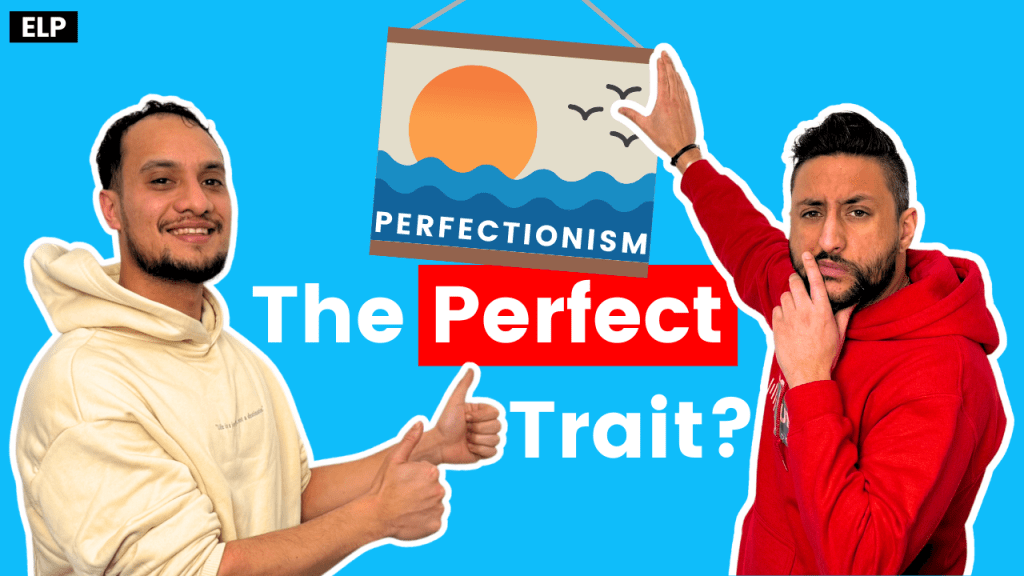
In this episode, we explore perfectionism, what it means, how it affects everyday life, and why it’s so hard to let go of.
From personal stories on music making and writing to big questions about the nature of perfection itself, we dive into the psychology behind it, the fine line between excellence and obsession, and how personality and age can shape it.
Along the way, we discuss Steve Jobs’ relentless standards, Porsche vs. Ferrari, and whether anything can ever truly be perfect. With practical tips for overcoming perfectionism, this is a must-listen for anyone striving to find balance in an imperfect world.
Read Prajay’s blog on perfectionism
Watch or Listen




Timestamps
Show Timestamps
0:00 – Intro
0:53 – Perfectionism Anecdotes from our Lives
6:30 – What is Perfectionism?
9:00 – Two Types of Perfectionism
11:43 – The Big 5 Personality Traits (& Tests)
16:43 – Does Age Affect Perfectionism?
20:41 – Perfectionism in Nature – Can Anything Ever Be Perfect?
22:06 – Childhood
23:25 – Social Media
24:58 – Perfectionism in Students
32:52 – Excellence vs Perfectionism
34:57 – Steve Jobs
41:19 – Porsche Vs. Ferrari, Apple Vs. Samsung
43:58 – When Perfectionism is Needed
46:26 – Are YOU a Perfectionist? How to Find Out.
53:21 – Strategies and Techniques to Overcome Perfectionism
1:03:00 – Thoughts on Social Media and the Modern World
1:07:13 – Final Thoughts and Tips
1:07:45 – Prajay’s Favourite Quote
1:07:55 – Outro
Key Takeaways
Perfectionism isn’t one thing. There’s a maladaptive version (fear of mistakes, harsh self-criticism, anxiety) and an adaptive version (high standards without the self-punishment). Know which one you’re feeding and aim for excellence, not obsession.
Progress beats pristine. Get ideas out fast (brain-dump, rough mix, first draft), then refine. Separate “creative flow now” from “left-brain polish later”, you’ll finish more and make it better.
Done at 80% > perfect at 0%. Use 80/20 thinking and hand off work: brief well, let someone get it to ~80%, then you apply the last 20% edits. Quality climbs, burnout drops.
Deadlines create flow. Time-boxing forces decisions and momentum. Short, clear cut-offs (and public commitments) reduce perfectionist procrastination and get you shipping.
Process over outcome. In study and problem-solving, reward attempts, workings and partial credit. Puzzles, rough workings, and crossing out build the habit of engaging instead of freezing.
Morning Pages unblock you. Three longhand pages of anything each morning clears mental noise and lowers the urge to “get it right” before you start.
Personality matters—but it’s not destiny. High conscientiousness + high neuroticism often fuels perfectionism. Use tests to spot your patterns, then design guardrails (limits, reviews, accountability).
Use the right standard for the job. Planes, medicine and buildings demand near-zero-defect thinking. Most creative/knowledge work doesn’t iterate Porsche-style: small, steady upgrades.
Curate your inputs, not your image. Social feeds are highlight reels; comparison inflates perfectionist pressure. Reduce triggers, raise gratitude, and measure yourself against yesterday, not the internet.
Be kind to the doer. Self-compassion keeps standards high without self-harm. Notice the critical voice, name it, and choose the helpful next action instead.
Show Notes and References
Read Prajay’s blog on perfectionism & burnout
The Artist’s Way – Julia Cameron (book)
16Personalities – free personality test
APA Dictionary: Perfectionism (definition)
Perfectionism among young people has risen since the 1980s (APA press release on Curran & Hill)
Julia Cameron: What are Morning Pages?
Transcript
Show Episode Transcript
Intro
so you’re you’re making a pencil and you want to make the best pencil in the world I mean great all right have fundoing it but if you’re making a plane or rocket yeah that can’t go wrong yeah wewouldn’t have these types of devices and things if there wasn’t a perfectionistaround so one thing’s perfect or five things get done I’d rather get five things done I wasn’t happy with any of them because none of them were perfector even close to 80% yeah I’m overly critical of myself and no and others I’msorry I used to stress over the tiniest things until it made me ill yeahliterally it can actually at its worst destroy [Music]something the education Loungepodcast so I was reading your blog in the run up to New Year and which one was
Perfectionism Anecdotes from our Lives
that uh the perfectionist one right okay um yeah and you know Perfection versusgetting things actually done the yeah the whole progress versus yeah perfectionism yeah um and something thatstood out to me was the discussion that you had on music yeah there was a coupleof points where I mentioned well I mentioned one about like learning music in school and then one later on when Iwas sort of teaching myself how to do music production yeah so that stood out to me just because I obviously when Iwent to school with you and uh we we we were in together I never thought of youas much of a perfectionist on the violin no no I didn’t yeah I didn’treally it didn’t come me I mean I started off that way I I did my grade one violin with no music in front of meand got distinction I didn’t have the I memorized the entire thing oh I don’tthink I’ve told you that before I don’t you do that later on anyway like as then you go in I think I think so but I meangrade one I think I was like seven or eight oh um I didn’t started violing bythen yeah um so I did I did that the piece I think it was called hodown anyway um it I had it all memorized I I did the exam without any sheet musicand it’s the only distinction I’ve got in a music exam so I did start off very much likeperfectionism but I think I think as I sort of grew up and wentthrough secondary school and stuff that sort of dropped off because I sort of lost yeah the fun aspect which we spokeabout a couple of episodes ago but the whole yeah the music production thing was um I think what you were askingright yeah yeah so that looking back I kind of understandthe whole perfectionism versus fun versus progress thing so I think what Isaid or Inc correct me if if I’m wrong I think what I said was basically when I started musicproduction just for fun I was just messing around with the software and stuff like that uh in uni so when I gotinto like DJing and that sort of stuff didn’t really know what I was doing made some awful music at thebeginning but then as I sort of left uni and and sort of played around with it a bit more the sort of playing around kindof went and it felt more like a job it felt more like a like a chore and I spent ages like perfecting like thatkick drum has a little high frequency that I don’t want and this and that and this snare is not quite as sharp as Iwant it to be and and I get sort of bogged down in the weeds of all of this sort of stuff and what I found was thatthe overall track I was making was worse even though in my in my head I’m likeI’m trying to make everything better it actually ended up worse so what Ifound was throwing everything onto the screen onto the door thedigital something like my stands for door it’s it’s the music production software so you have like ablon andlogic and whatever else um I found that just throwing stuffdown and getting like the rum patterns out of my head and like The Melodies out of my head and just on there withwhatever synth whatever kick whatever drum and just getting the idea down and having fun with it and then going backin and changing the kick drums out and changing the snares and eqing everything later on essentially leaving all thelike left brain stuff yeah for later on and getting all the right brain flowcreativity onto the software reminds yeah reminds me alot of University when we’re doing I was in a creative writing society and oneone of the exercis that we had to do was just brain dump everything on the page yeah which I’ve actually been doing likeI said to you I did do it this morning yeah yeah a good exercise and it get just gets your ideas out but it’s notparticularly important what you write so your point is not to be critical of whatyou WR your point is to just get things out and then select the best ideas thatcome and then refine them yeah so this this week or like last week I started abook called The Artist Away by Julie Julia Cameron it’s a 12we course on likegetting your flow and creativity back and she she talks about something called morning Pages which I’ve mentioned toyou this week yeah um and essentially it’s that you take three uh three pages and you just writeif you don’t know what to write you just say I don’t know what to write I don’t know what to write I don’t know what to write I’m sitting in coffee shop I’msitting I’m drinking whatever and eventually like things will start to come out come out it’s a good way ofgetting your thoughts in order and it’s a good way of sort of getting all the the creative blocks out of the way soyou can go to that flow State yeah did you get there actually today I got thereyeah started to get there I actually went to carry on uh onto my fourth page and continue writing but I’d finished mycoffee and you were waiting for me so so obviously it’s to come in to record this yeah I think probably a good I think a
What is Perfectionism?
good thing to probably start with is to actually explain what perfectionism isbefore we get into other topics like how it relates to education personality types uh how to tell if you’reperfectionist how to get past all of that sort of stuff maybe we should sort of Define what it is yeahso I did some research on this and it seems that this idea of per ISM hasundergone a bit of transformation in the academic literature so it’s sort of changedfrom being probably considered a bad thing like completely bad to being morenuanced in how it’s described so what yeah give me initially you could sayperfectionism just involves setting abnormally high standards um for yourself and others andthen judging your own selfworth by those standards right andbeing over overly critical of your own behavior okay and that’sbasically what we’ve always generally thought perfectionism is because I thinkin most cases we regard it as not a good thing so it’s negative but yeah I guess yeah dependswhat it is depends what it is I mean I I I everything you’ve listed there I canrelate to I’m overly critical of myself and others and others I’msorry um but it’s like I just want things to be done the right way which there isn’tI know I know I get that but the right way to to me is not always the right way to you or whoever else I’m talking toworking with yeah but anyway yeah you’re saying it transformed into nuanced so it’s basicallytransformed into there’s more than one type of perfectionism essentially so youcan have perfectionism that is debilitating so it’s really bad sonegative form of perfectionism right or maladaptive form and then you’ve got amore adapted form of perfectionism which is actually just setting just settinghigh standards isn’t necessarily bad thing to do can you explain the Adaptive and man adaptive so basically there’s
Two Types of Perfectionism
two types that we think of so maladaptive perfectionism is fear ofmistakes excessive concern no notice the word excessive MH about others judgmentsand is associated with the higher risk for depression anxiety and eatingdisorders okay so generally pretty bad like as in we’re not going to say thatis is is generally going to be a bad thing and then adap adaptive is setting High personal standardswithout harsh self-criticism and it often leads to better emotional well-being and greaterlife satisfaction so I think it’s setting higher standardsversus debilitating perfectionism okay so then I would say I’m probably on the Adaptive side yeah I mean like at timesI think it’s natural people like a spectrum where you can FL between there yeah there’s probably probably times where like I think I can be overlyperfectionist but even even me and I wouldn’t consider myself a perfectionist no I wouldn’t I just say you’re morelike free flowing with that sort of stuff but I I I get it as in I have Ithink sometimes I’ve got an idea of how things should be yeah and if somethingdoesn’t conform to the ideal I won’t even attempt it in the first place because I don’t believeit’s worth doing unless it’s unless it’s perfect yeah I feel like that about alot of things I’ve had to sort of let that go as we’ve run and and obviouslyus working together where opposite ends on that I’m more perfectionist andyou’re more like it depending on what it is you’re more easygo goinging so I’ve had to adjust my behavior to find amiddle ground yeah I just like I’d just like something to be done a lot of the time so it’s yeah where it’s this umwhat was the quote again it’s like great perfect as theenemy have done I think it is yeah uh wait minute who said that it wasvolter oh Perfection is the enemy of progress there’s Winston Churchill saidthat and artist but that’s from volter isn’t it the French Pro yeah probably there adapted from yeah yeah I’m I meana great mind said one thing another great mind took it changed it he perfected the quite unperfectionism restated it in a different way cuz I don’t think it means exactly the same thing but yeah um but I thinkthe I think that the church or one is probably more more apt to what we’re talking abouthere so we’ve defined what perfectionism is um and something that I’m really into
The Big 5 Personality Traits (& Tests)
is like psychology and uh you know my Briggs tests and the big five uh uhpersonality traits and anagrams and all the different personality thingsum we we we spoke a little bit the other day yes yesterday maybe about how howperfectionism relates to the big five specifically mhm which again issomething that Jordan Peterson talks about a lot it’s a big five yeah so it’s so it’s O so you remember using theacronym ocean don’t you so openness to experience conscientiousness verion agreeablenessand then neuroticism yeah and it’s really funny cuz I I Iwhen I was researching this idea of perfectionism I thought it’ be good combine those two things together andsay okay what makes you likely to be a perfectionist yeah and it kind of cameup exactly how you’d expect it to be yeah so so I’m going to I’m going to try and let’s let’s see if I can if I canguess this so the first one was openness right openness to experience um I thinkopenness won’t make much difference toperfectionism is it high or low uh probablylow Yeah the more open the more open you are the more free you are so it’s yeahperfectionist has a li has limit in beliefs it’s is like Price is Right like higher or lower um so the next one wasconscientiousness yeah conscientiousness I think you’d have to be for some for you to want something to be like perfectyou should be you’re probably going to be quite conscientious yeah yeah yeah Highconscientious High conscientiousness probably lower in extraversion yeah because you’re less open again mhm umand then agreeableness agreeableness I think will go either way because yeahto in order to get something perfect especially if you’re working in a part of a team you’re going to have to besomewhat disagreeable because people aren’t going to be always doing things the way you want them to be doing themso I think but then it could be the other way as well it could go either way yeah I um there doesn’t seem as far asI’m aware um correct me if I’m wrong but there doesn’t seem to be much of a relationship between agreeableness andperfectionism yeah I think you can be very agreeable conscientiousness veryvery strong relationship yeah on the last one new yeah and very very very strongrelationship again and I think I am quite neurotic yeah and I think I’m highin I’m quite High I’m high in openness conscientious I’m quite I’mhigh in conscientiousness depends extraversion it kind of It kind of fluctuates depending on what situationI’m in and who I’m with I don’t think you’re I I don’t think you’re as I I think the conscientiousness isvery this and that way with you in what way as in in some some areasyou’re very conscientious and others you’re not okay so it fluctu depends depends on the situation yeah but there’s somepeople who are like with everything I’ve got a soldier from 500 a.m. till 12:a.m. well like all all day like like you know like they there are people wholiterally like that I don’t think you’re like that I think I like I like my sleep too much to be like that so it’s noteven about sleep is like I like for instance throughout school I don’t think you’re like I wasn’t very I mean I Ithink I’m more conscientious than you as a student yeah I agree but like itdepends what it is so I I think neither of us are completely conscientious but the thingis with these type of things no one is no one is ever fully there and somepeople conscientious people also follow rules I I tell I do tend to do that wellit depends what it is if I think the rule is stupid I would I would ignore it yeah but conscient like if you’re reallyreally really conscientious then then you’ll be like on it yeah yeah fair enough follow the rule um yeah yeah wedon’t have to go through all of them yeah um quite agreeable quite neurotic so I mean yeah so there’s yeah there’sHigh correlation between people with perfectionist traits and there um thisidea of conscientiousness and neuroticism so those are the main two yeah so they makeyeah and they make sense as in as as soon I was not surprised that all though was those two no it yeah it makessense another aspect that I wanted to S of check in
Does Age Affect Perfectionism?
research is to what extent perfectionism is linked toage and whether it declines over time because myexperience I get less perfectionist as I get older I’m I was very very perfectionistwhen I I was a younger can you explain what you what like give me some examples like to theextent I couldn’t even do stuff I like what um any just anything like if Ithought I couldn’t do it to a very very high standard I couldn’teven try to get involved in it but like like what like school workmusic sport everything like give some give some examples oflike one one that an example of where you didn’t do something because sportswimming like any anything i’ as soon as I saw it I was like no archery like anyanything that was new I was like I’m not going to touch that cuz it could go wrong looking back I can kindof not from school but I can kind of see it now that you’ve mentioned it because when we have conversations and stuff I Ifeel I get the feeling you tend to want to talk about stuff that you know really well and stuff that you don’t know thatwell you tend to switch the topic back to something that you do know very well yeah cuz I I I think it’s I I don’t knowsometimes I feel like I shouldn’t really talk about anything I don’t no if I don’t have all the evence and Idon’t but that’s a perfectionist mindset it doesn’t stop you from talking about it yeah I mean the way to learn thatstuff is by talking about it by talking about talking about it with someone that has more knowledgethan you that’s how you learn yeah so well and researching it in in detailthat that tends to be my way so if I acquire knowledge in that area then Ifeel like I can talk about it so yeah you’d acquire knowledge by having thoseconversations if I’m with an yeah if I’m with someone who knows a lot about it then if I ask them questions about itthen I’ll learn something but if I just try and debate someone who knows a lot more than me there’s no winner therelike there’s no point because I’ll be at a disadvantage MH because I’ll have aninformation lack of information and thus won’t be able to engage fully in theconversation so uh I don’t know if I agree with the the logic there but yeah but then as I get older anyway I findthat I’m able to talk about most things because I have acquired enough knowledge yeah so this is the coming back the whole age thing this what I was going tosay because I think as a child I was very much perfectionist uh they then dropped offwhen I got into secondary school and didn’t really uh care as much about all thissort of stuff and then when I got to probably after University it s ofcame back in again and then it it yeah it just I think it depends onthe phase of life that I was in I don’t think it’s like it starts very like you’re young and you’re veryperfectionist and you get older and you get less and less and less I think it again fluctuates I don’t think it’s likelinear well there is some suggestion although it’s obviously quite difficultto understand it’s a Time sort of time based Age based study you need sort of to follow someone for a long period oftime to do it but they seem to be suggestion at least that there is acorrelation between age and decreasing levels of perfectionism I think yeah I think asyou get older you realize that not everything well the world the world is not perfect yeah the world will never be
Perfectionism in Nature – Can Anything Ever Be Perfect?
perfect and your perception or your idea of perfect is different to somebodyelse’s idea of perfect so mhm it will never be but you think about this comesback to for the blog before maybe did I speak about um Morganhowel’s same as ever book was that last podcast one before blog I wrote it spokeabout it somewhere anyway the the tree that grows the tallest and the straightest to get the most sunlight islike trying to be perfect but then it sort of bends and collapses under its own weight yeah so it’s a natural thingin nature nothing is perfect because if something is perfect it um negatesanother aspect of the characteristics of that animal or plant or whatever mhmso nothing in nature is perfect therefore nothing that we do aspart of nature will ever be perfect yeah and Perfection is is obviously objectivesubjective thing so perfectionists have an objective view of that somethingshould be certain way it has to be that way whereas in reality it doesn’t playout that way and I think that’s also the other thing is children live in a sort of curated world so everything’s like
Childhood
pretty and lovely and you’re the I don’t know if you’re your girl you’re the magical princess whatever and then ifyou’re the boy you’re the sort of hero archetype with the sword that saves theprincess and that’s all thing it’s it’s like um yeah you play into these childhoodarchetypes your dad is perfect for you your your mom is perfect uh for you aswell like your parents are like everything seems perfect in a sense andthen you’re shielded from a lot of the pain in the world right yeah you’re in alittle bubble yeah um which you know is fair enough as in I think it’s it’s niceit’s the magic of childhood um butit also can lead to a bit of delusion as you get older soobviously in in the teenage years you might be confronted by more challengesyou’re approaching adulthood you realize that the world isn’t completely Rosy and that’s probably why thetransition between childhood and adulthood so difficult yeah um and then
Social Media
I think now social media is a big sort of yeah bit more of a thing that we wedidn’t have to deal with so much obviously we we still had to deal with the perception of others that kind ofthing growing up family pressures that sort of thing but I think this currentgeneration has maybe slightly worse because theyhave such a curated life and it’s online and well yeah not even that everythingthat they see is curated is a highlight real of somebody’s life you don’t see theimperfect moments mhm the 49 photos that were taken before this50th one got uploaded yeah yeah I just thought it was an interesting Dynamicthe the fact that perf like for me a lot of the time if something’s done it’s better than it being if five things getdone but one thing is perfect or like the choice between the two so onething’s perfect or five things get done I’d rather get five things done than one thing perfect yeah but right but aperfectionist would be well I can get all five things perfect so why shouldn’t I yes but butthen you it’s about accepting that you can’t yeah and that’s the next so that’sthe next strand of the conversation later on we’re going to talk about how to get over or get through the likestrategies and yeah yeah let’s talk a little bit about how perfectionist plays out in a student’s
Perfectionism in Students
life and how it can be debilitating because I think I’ve seen it a number oftimes but there’s like a certain student that stands out to me okay why don’tyeah go on so I had a student a few many many moons ago it’s a long long time agoshe’s probably at like you know 20 25 26 now um that’s m yeah that’s so crazyyeah um yeah she must yeah she’s quite must be quite old now umshe was uh so let’s call her Diane so Diane was I’d say a be student in manyways because she but it wasn’t because she wasn’t capable of getting those astars and other grades and higher higher things she could aspire to higher things but it was actuallyperfectionism that was somewhat getting in her waybecause if she saw a question and there was even the slightest s possibility ofher getting it wrong she was and this is was in maths because I initially took itmaths she would be afraid to even attempt thequestion so and I I’ve seen this as well with youngstudents I had someone like that yesterday yeah um but shebasically it was it was about helping her with the knowledge side but a largepart of what I did to work with her involved reframing her ideaof problem solving so rather than getting her tothink about getting it correct and focusing on the answer I got her to focus more on the proc process yeah yeahwhich makes sense yeah um and the way I did that was I just gave her a book ofpuzzles and we started working through puzzles because puzzles the fun yeah andthey also sort of reframes what you’re doing doesn’t it you reframe it as a puzzle it’s like as soon as you say theword puzzle you think I might get this wrong anyway like it’s doesn’t but it doesn’t particularly matter because it’sthe fun of doing the puzzle yeah yeah there’s no high Stakes or anything involved just but even evenwith that though she she was she had the tendency to want to get it correct like it yeah yeah well you would wouldn’t youyeah she had a competitive nature but that was really important for transitionand her to sort of get those higher grades because now she could after doingthat for a period of time was able to sort of embrace the idea of problem solving getting stuck in getting thingson paper even if they’re not right because at the end of the day you can pick up Marks here andthere it’s a bit like um you were talking about the the kids who rub outtheir works yeah I said that in the um the SATs video the one that’s just gone upum yeah they want their page to look nice and neat and they want just the answer and and the rest of the pagewhite just the question blank page and then just just the answers like so everything’s like perfect they just theyjust know what it is but obviously you know two three four Mark questionsmhm even I couldn’t do that without writing something down so yeah we have this idea have you ever seenAmadeus um no what so it’s a really good movie you should watch it it’s it’sabout motot and S so he’s a another composer at the time it’s a work offiction as in they didn’t really have the beef that they’ve got in this film right but basically it’s about salierijust um being confronted by The Genius of Mozart and he he just can’t he’s justlike this person is just a gen just so much above him and he could just likewrite stuff perfectly like perfect sheet music and it’s true like as if you look at mozar you could just write out musicperfectly but if you look at Beethoven there’s like Crossings out and it’s like a complete mess like all over the placebecause he’s like that’s no good um but moar could just go that straight fromhis head onto the page without even like trying things out he could just do it umand sometimes you are confronted by that sort of Genius Perfection it’s like yeah but that’s like one in how many butBeethoven absolutely brilliant probably the Great composer ever right um but hehad Robbins out and stuff like that and at the time actually sary did did verywell so as in he he’s although he’s lesser known than moart now at the timehe was sort of regarded as pretty importantum and yeah it just reminded me of that like you know this tendency to want likeyou think of perfection and you think about oh what is a good student and you kind of think oh they they just writethings and it’s all perfect and all way through but sometimes you find it’s not like that it’s it’s a lot of hard work alot of hard CFT and a lot of rubbings out and Yeah well it’s well you learntry yeah you’re going to try it realize that doesn’t work that doesn’t work this one does work yeah you know which is thesame in everything and I’ve seen the I’ve seen also people who are brilliantas in I think they’re probably like very high IQGeniuses sort level people and what in here well just like at school right andstuff like that and then then transitioning to University like I know some people are just like properGeniuses but they go to university and all their life they’ve been the topthey’ve been perfect as it were like hundred on everything likeall through their lives 100% scholarship to this place and like nothing they cando goes wrong I can see where this is going and our University they’re confronted by first of all lot of smartpeople so I think there’s some reality to but even though are those universitiesthere um probably like amongst the top but it’s just there’s people it’s noteven that it’s the reality that they don’t know everything it’s the it’s just confronting that real itythat there’s some questions out there that are Beyond them as soon as they’reconfronted by something they cannot answer it’s like debilita destroys theirworld yeah um so yeah that’s um I thinkthat’s kind of an interesting that that’s kind of what it can it can actually at its worst destroysomeone that’s what perfectionism can do m well um we’re going we we’ll haveto you’ll have to give some strategies on this in a bit it’s not all it’s not all bad no no no there yeah like I saidthere’s there are those two forms that in the scientific literature there’s there’s the one that’s really really badlike I said the one that destroys you and there’s the one that actually helps you yeah sort of reach another level andthere’s probably a healthy approach to it do you think you can create or become
Excellence vs Perfectionism
excellent without having some element of perfectionism like what’s thebalance yeah I I do think there’s a healthy balance to to be Str and andthere are some perfectionist traits that are important in achieving anything right umbecause ultimately the life is quite competitive yeah yeah and at the verytop of anything if you’re at the very top of anything you reap the rewards sothere’s some level of perfectionism that is critical to that but can you get to that pointwithout perfectionism being a trait well it’s the high standards part isn’t ityeah that that’s really the I I guess having conscientiousness so working hard towards something but also having thisidea of excellence in your mind andI wouldn’t say it necessarily avoids the issues that you might have mentallyso some of these people who are at the top of their fields and they’re brilliantlysuccessful I question how happy they are like I don’t think you can have Idon’t think you can have both true but I’m I I agree with thatbut I’m talking more about Excellence versus perfectionism wellperfectionis perfectionism is just taking Excellence to an unreasonablyhigh level where you can’t achieve it I don’t know about can’t achieve it because you can’t because perfectionismby its very nature unless there’s God God is just perfect right but there youcan’t achieve something Godlike um probably not but I mean the example that comes to mind is theum have you heard of the Steve Jobs back of the fence
Steve Jobs
quote you know no what’s the back of the fence I know he dropped an iPhone inwater to make or something like an iPod oh that was um something about like ohwe can’t get any there we can’t find any more space or something in the iPod yeah and then it in front of the people thathad made the very first the very first prototype of the iPod he just got it and dropped it in water and Bubbles came outit’s like there’s air in there there’s space do it again but is that is thattrue what do you mean in the thing is he he did that as kind of a power play butthen but then it’s not really like it doesn’t prove anything because therelike even if there were space there sure there’s space there but it doesn’t mean that you can make the device smallerthey did though yeah they did no but that was just like in that case that wastrue yeah in every case it might not be true because there might be some laws ofphysics that would be imposs or engineering that you could not yeah Idepend depends what the product is cuz the iPod was fanless it’s not like it needed air flow for calling and yeah soyeah and I guess if you dropped it in there no air came out you would have been like yeah okay good Iknow but the um the back of the fence thing is so I can’t remember the exact quote but it’s essentially some someonepaying a garden fence but they only pay to the side that faces yourgarden and and then you know You’ say like to pay to pay in the back as well it’s like well no one’s going to see itno one’s going to know and he’s like well I’ll know and I’m kind of like that I’ll know it’s the same reason why ifyou ever do you remember when we when we opened up the back of one of the MacBooks back the day when you couldactually upgrade them yourself when I was upgrading the hard drive or whatever like it looks it looksincredible if you compare like like how everything’s laid out it’s all really nicely neatly designed the ribbon cablesare all perfect and stuff like that and um that was one of his things again he was like he opened up the backof a uh MacBook or something I don’t know the ex the exact quote or whatever model but it was umbasically said he hated the way it looks and somebody was like well not a single one of our customers is ever going to open it how they’re going to know it’slike well I don’t care make you look good and I get that I I understand theconcept and the thought behind that um and back to the five trait thinghe was probably not not that open very neurotic quitedisagreeable yeah uh um yeah quite conscientious Ithink he what he wanted was achievable andthat is you know you know if it if it’s to the extent where the highest standardis impossible then yeah I think thatis that is debilitating as in you’re not because if you if you can’t do it in thefirst place then I think for him he didn’t even know if it could be done or not and theengineers and people thought it couldn’t until it could yeah um so it is a way of gettingthe best out of people that they don’t even know is that they’re capable ofmhm it’s just you have to go through a lot of a lot of stuff a lot of crap toget to that point yeah but it’s what made the iPod that thin rather than like that like itit obviously made a difference and obviously he was very critical Windowsdevices throughout his whole um it was yeah quite famous for S bashing on yeahuh other competitors and their products yeah disagree yeah well CR critical ofthat’s the so you had the maladaptive perfectionism yeah yeah yeah but I meanlike I I would say yeah it’s not I you can be a perfectionistand and actually still still be very successful it’s not it is just that beprepared for some pretty serious side side effects of that inyour sort of relationships with others and yeah life generally like you’llnever be happy with anything uh I don’t no I don’t agree with that II don’t agree you’ll never be happy with anything cuz you w to create anything perfect I think he was pretty happy withthe iPods and MacBooks and iPhone and whatever else yeah but that’s what I mean it was itwas feasible because it it happened it could be done there are some people who will like they might have an idea ofperfectionism that’s completely unrealistic yeah but I think I think for the general masses that’sthat’s like you know top nor point something per of people yeah top bottom depending how you look at it yeah in myin my opinion in our society it’s not a problem like as in no but I’ve seen butI think it’s more it’s more of a problem when I said with young people when they can’t dostuff because they if they have the idea that things need to be perfect to evenstart yeah then that can be very bad yeah it’sthe it’s to get get started take action and make changes along the way mhm thingthe one in 60 yeah short that we did a while it’s like perfecting a product over time it’s like the courseadjustment adjustment thing yeah that’s one the one in 60 rule that we spoke about so there’s two different ways of
Porsche Vs. Ferrari, Apple Vs. Samsung
looking at this uh have you heard of Porsche versus ferrrari I mean the different well I meanobviously the cars I mean the different um like methodologies of how they howthey I think Porsche would aim for per like Perfection how what’s the um Idon’t know you just hear it like Porsche so pora porsa areincremental adjustments towards Perfection and Ferrari is just theopposite random car crazy car random car crazy car and it was basically equatedto the iPhone versus Samsung iPhone versus Android thing iPhone is Porsche it’s they maketiny tiny changes every year to the point where you’re like oh these phones look the same as last year like whichthey do but they change a couple of bits here and there and they incrementally make itbetter it does mean you don’t need to upgrade every year or whatever but they have the port philosophy yeahand then Samsung has like it’s flip phone Samsung is the Ferrari philosophy it’s like yeah flip phone F phone phonewith a stylus thing phone without a thing camera Arrangement looks completely different than last yearthat’s ferari and iPhone is Porsche that that that’s the mentality yeah so we’relooking at the incremental upgrades to make things that you’ve started on better and better and better rather thanmaking seemingly random things and hoping they hit but I think like interestingly enough you need bothbecause you need you need you need the Ferrari thing to start with yeah exactly and then once you start it you refine ityeah yeah although there are some people who just they new thing new thing new thing new thing new thing yeah theycan’t focus on one thing yeah no I Ium it’s annoying I I prefer the design of Ferraris but the philosophy ofPorsche we spoke about Kaizen I think might have on our personal Channel but Kaizen remember the Kaizen philosophyit’s that incremental Tiny Steps yeah towardsbetter better better better and there that course correcting thing as well the one in 60 it’s the one in 60 R yeah so Ithink sometimes as well it’s but all right so you’re you’re making a
When Perfectionism is Needed
pencil and you want to make the best pencil in the world I mean great all right have fun doing it but if you’remaking a plane or rocket yeah that can’t go wrong yeahit’s like they still do I mean you’ve seen you know initial rocket you know SpaceX and whatever else they do haveteething issues yeah but but you you can see how Boeing if you’re watchingdon’t don’t kill me though but yeah basically having incertain industries I think you need to have like some some Industries maybe youcan like have a bit of fun and stuff like that yeah and it’s not higher Stakes but in certain certain Fieldscertain Fields you you do need you need that perfectionist neurotic yeah itcan’t it can’t go wrong or it will kill people yeah right um so I think there isthere is something good in perfectionism in that case because I’d want i’ wantwant my plane to work yeah I’d want a plane built by a perfectionist rather than I don’t know lazy Joe turned onsorry Jo um yeah but you know yeah I get I getthe idea yeah yeah obviously you’d want it to yeah and I think I think as well in like you can see in the car industryM there’s certain cars that i’ prefer to be in than others like justfrom a safety perspective safety vers and just mechanical faults yeah um or more likely to buyjust because they’re more reliable so yeah same I agree same withhouses some of these really big housing developers they take like some shortcutswhen they’re constructing and yeah that can actually end up costing the homethe home buyer the one who’s invested in in this Pro or worse like the whole like Grandfield the cuts in buildingGrandfield for example exactly so there are places where you need know what Iwouldn’t even I don’t even think it’s a matter of perfectionism it’s a matter of just very very high standards you needto maintain the stand I think if it’s life and death and obviously yeah not quite the same as apencil I made the pencil wrong it’s fine I always think whenever you’ve got
Are YOU a Perfectionist? How to Find Out.
a problem in your life it’s important to realize that you got the problem first otherwise you’re not going to be able todo anything about it MH so how do you find out that you are a perfectionisthow do you know well I think if you if any of the things firstly anything that we spoken about relates you relate to then thenyeah um you can probably you can take personality tests the five the big fivetests you can do 16personalities.com has great MyersBriggs test you can figure out your level of neuroticismand all of that sort of stuff perfectionism there’ll be tests out there mhm butyou you should be able to recognize it in yourself based on what we’ve spoken abouttoday so what are some of the questions that you should askyourself well one of the things I picked up on is that I’m I was notgood at taking criticism on something that I had made even if it was constructive even ifit was constructive criticism I remember handing over one of the tracks I had made to one of my housemates or like unifriends back in the day it was like yeah it’s really it’s great it’s good it’s really good track um I’ll say the thesecond snare there was like two snares or what whatever sound effect it was uh is coming through a little bit too loudto maybe turn that one down and I remember becoming defensive about it andsaying so I don’t know something like um it sounds fine on my end or uh oh I didit on purpose CU I wanted that to stick out more or something like you know some sort of excuse yeah rather than beinglike thank you for the feedback i’ listen to it again and maybe yeah maybe I should take it down by acouple decb so that it fits nicely into the mix but yeah I couldn’t I couldn’t take onthat that constructive criticism from a friend that also produced musicyeah I can recognize it now I didn’t recognize it back when I was like 19 years old or whatever I could I couldn’trecognize it yeah especially yeah if it comes from someone who actually knows about it yeah well I think with anotherthing that a lot of this backed up by re research as well people we procrastinatea lot tend to be perfectionists yeah yeah I can tick thatbox as well yeah and why do why do you think that isum it’s it’s me ignoring the one in 60 Ru it’s me being like uh I don’t knowwhere to start I don’t know if it’s going to be good enough whereas I should just start thebrain dump start chucking stuff onto the track start putting pen to paper whatever it is thatyou’re doing and just yeah take action and you figure out along along the way Ithink it’s yeah there’s probably a link to fear of getting it wrong like we spokeabout with with the kids fear of failure yeah you can’t fail in procrastinatingin a sense like because no you can’t yeah but you can fail in the task that you you lay out yeah mhm yeah um Idefinitely feel I’m it’s kind of weird though because I think I progate more now than I didbefore I i’ I’m actively trying to make it the other way around with stuff that I do so I startedblog I was never good at writing I’ve started blogging mhm I was never big into writing and GCS and school andstuff I struggled with writing stories and essays andthings I now just take take notes I have a on a Blog I might want to write and I’ll make a note and it willsay blah blah blah blah and then no bullet point bullet point bullet pointjust the ideas and I I just Chuck something onto a piece of paper virtual or otherwise and and then I’ll expandfrom there so I’m I’m trying to take on this advice it’s very easy togive this advice yeah it’s very difficult to take your own advice and to live by it I don’t live by it all thetime it it it creeps back in but when it does creep back in you need to recognizeoh that’s procrastination because I’m worried about dot dot dot yeah anothertrait is that you have Stress and Anxiety when other peoplewouldn’t yeah I I about about something it depends whatit is again but yeah I again I used to stress over the tiniest thingsuntil it made me ill yeah literally so I I I try and not again itstill creeps back in it’s something I do struggle with but um it comes back to not being too harsh on yourself notbeing too hard on yourself about these things happening but realizing that they’ve happened allowing them to happenand realizing they’ve happened for a reason and that you just need to work through it and I think the final thingand actually I think think generally if you’ve got any sort of problem um when others say you have an issue with itright so if if if someone says you’re perfectionist then that’s pretty goodindication but I do you know what a lot of these terms especially with the wholeSocial Media stuff which we’ll talk about in a second I think they get thrown around a loteveryone’s toxic now for some reason yeah everyone’s like OCD for some reasonbut but like that’s they get thrown around umwithout people knowing the meaning of the word the word misogyny gets thrownaround all the time yeah people don’t know what it means yeah people don’t take time to Define it which is why Iwas like I thought it was important to actually Define perfectionism before we talk about everything else yeah yeah soI think yes people calling you a perfectionist might be a cluebut first who’s saying it do they know what it means yeah cuz not everyone’stoxic not everyone is OCD like it’s if everyone’s saying it thoughthen that probably is a good indication yeah yeah obviously the numbers yeahmakes a difference but I’m just saying be be wary of when they get thrown around in general day-to-day talkbecause it’s not always accurate yeah let’s go into some of the strategies and
Strategies and Techniques to Overcome Perfectionism
sort of techniques that we can use yes cuz I I I as I was writing this articleI realized I was um yeah it comes across as negative alllike perfectionism but there are there are some good traits I mean again we wouldn’t have these types of devices andthings if there wasn’t a perfectionist around to yeah it’s a bit like you know extroversion introversion like all ofthose personality traits the big five they’re all not bad in of themselves ifyou got like nothing is all bad or all good everything comes with advantages anddisadvantages yeah and perfectionism is very much the same yeah but there are some obviously if it’s affecting you ina overly negative way it’s important to have some strategies to mitigate thatyeah um and also bring out the best of the perfectionist traits so the best youyou can use the stuff to your advantage just be aware of the bad stuff as well the first tip I had when I waswriting the strategies to deal with this uh perfectionism was mainly in terms ofthe business the businesses and it was to Outsource and actually trust that the person you’re given the job to can do adecent job mhm this is good if you’re capable of trust that’s the it took me along time it took me quite a long time to allow someone else to do I don’tknow the the printing or whatever you know whatever video editing as well video editing is a big one always takesme a long time to get those handed out yeah Andrew great job social media workas well uh social media work took us a while to hand out as wellbut I think again with anything it’s it’s back to back to 8020 right I I saidthat if you can Outsource a task and you can get someone to do the task to the to80% of the capacity or 80% of the way to your idea of perfection then then do itcuz I because it makes up 100% right first 10% is you tell them this is the task this is the brand colors and thewhatever fonts and stuff this is what I want you to use you let them go away do 80% of the work do the edits do thesocial media whatever whatever and then the last 10% is you saying like a quick run through like oh can you cutthat bit but leave that bit in can you spend more time on that and leave this bit out can this pop up on screen thelast 10% so you are still making up 100% of the work but you’re not doing 80 of ityeah so yeah perfectionists have trouble handing tasks overas which I did I meanI definitely did and obviously is this is specific to if you’re running a business but you obviously need we’venot been able to hand everything over but you obviously need to replace your time with money it’s an important skillfor anyone though because in any part of your life like if you take the whole burden of everything all the time Burnyeah well it’s burnout which is what I did I took on all of it running all thestuff doing all the social media doing all the video stuff all the podcast stuff all the all the teaching likewe took on all of it yeah there too much there too much yeah you do everything uhlesser exent and then you’re not you’re not happy with the result because you’re a perfectionist I wasn’t happy and Iwasn’t happy with any of them because none of them were perfect or even close to 80% yeah but I think we’re we’reworking on that we’re get we’re getting there um what otherstrategies I think what about what about strategies that are not so much like to do with running a business butmore personal more personal in your like day-to-day in your school life in yourright your writing like you write blogs and stuff as well so like what I think setting deadlines is probably theprobably the key to getting like if you’re if you’re able to sortof as a tool to sort of put in place setting deadlines really helps because adeadline forces you to get something done even if it’s not perfect yeah so I guess that’s similarto like when you have a to hand in an essay for example so it’s imagine if there weren’t deadlines at Universityyeah like nothing would ever first of all you wouldn’t see any essays people would also be worrying about making itperfect as perfect as possible or not doing it at all so you’d have two extrems you’d have like theperfectionist sort of going oh God I need to do it perfectly and then you’d have like the people who just like hyeah I mean I I had that issue I I I was a last minute person found if I had adeadline for an essay I would write it the night before I’ve found as well thatthe further away the deadline sometimes the worse it is because when you havethe idea of like a lot of time that you well also you’ve got this idea of like writing something amazing and then youget disillusioned by it through your research and like when you’re writing disserationI find that’s always the thing that I struggle with the most and it’s not just CU it’s long it’sbecause you spend so much time on it that it’s like if it’s not perfect youyou just get annoyed by it so sometimes perfectionist traits I’m not really muchof a perfectionist but I’d say like with that sort of thing if I had I I do sortof get disillusioned by the process but then some of the best essay I’ve written have actually been very short deadlineFlow State yeah because it just forced me to get it done and lock you you lockin you get into a flow State and things will start to yeah come out yeah what we’ve mentioned is sort of twoI think principles in a sense because you’ve got the 8020 principle and then you’ve got an activity which is the uhset in the deadline but then in terms and I think they they work but then Ithink the real thing that makes that possible isactually your view of changing your view or perspective on the world yeah andthat involves some deep internal work it does yeah I’ve been going through this recently so what are the different partsor facets of this deep internal work I would say I mean for me the the firstthing is to understand your personality doing the tests we spoke about16personalities.com the big five like figure out what personality type you areusing whatever tools you want to use um and then once you’re aware of ityou want to understand it I guess and you do that by being withyourself meditating walks with no headphones mhmjournaling morning Pages mind dumps all that sort of stuff the Gratitude stuffgratitude journaling yeah all of it gratitude involves even being thankful for things that aren’t perfect yeah butyeah yeah that’s basically it an understanding that nothing is perfect because like we said if anything anything in nature isperfect it comes at the loss of another attribute so I’ve been doing a lot ofthat a lot of that recently um yeah writing writingnonsense whatever comes out whatever my hand does on the page just allowing it to flow and do and doing that meditating Iused to do every day for like 10 15 20 minutes now it’s more like I’m finding it hard to keep on topof all these things and that comes back full circle to wanting them all to be perfectwanting to meditate perfectly wanting to journal perfectly you know like and it’skind of ironic but it’s it’s the opposite it’s it’s not what it’s there for yeah there’s no right or wrong wayto write there’s no right or wrong way to meditate there’s no right or wrong way to walk for the mostpart turn do it backwards but you know yeah there are better ways ofwalking but yeah yeah there’s better ways of doing all of this stuff but you you get you get what I mean I’m tryingto like over over perfect the things that I’m doing to stop perfectionismbut the I think those are those are the tools I would suggest yeah and then I think a maybe a final one is limitingexposure to anything that makes you more of a perfectionist or seems to give youthose feelings CU those feelings of perfectionism are sometimes brought outby things in your life sometimes could be a certain family member it could beum other people in your life it could be social media yeah just quickly to to to get to
Thoughts on Social Media and the Modern World
the AL coming to the end of this but we’ve not really spoken about social media exactly MH I think we brought itup earlier on yeah um what are your thoughts because I I have some thoughtsas well what you a big source of a lot of people’s anguish in Modern Life isthat they look at they can see other people’s lives world away M andalthough that’s sometimes a good thing has some good good effects there’s someinspiration that you can take yeah it it can also make you feel a little disillusioned when you look at your ownlife because you comparison is the thief of Joy yes exactly the r of quir isn’tit especially in terms of I’d say uh body image that’s a big um yeah that’s abig thing for many people is I think I don’t think it’s body I think yeah that is a big thing yeah but I think I thinklifestyle is also yeah no no I’m not yeah I’m saying body image especially for I think teenagers is big big bigone because they they and that will become a even bigger problem with AIunfortunately yeah but we can’t talk about AI in every podcast so we’re going to skip it this time but but sort thethe Deep fake sort of technology that sort thing so um train that ability thatAI has to just actually portray the ideal of what you’d actually want yeahum put that in front of you every day um I think unfortunately so wa thiswhere money’s made though isn’t it it’s it’s um you feel you’re lacking in a certain thing you need the dopamine hit you knowthey have this this this person that’s got perfect makeup or whatever and thenBang up sponsor bye bye bye bye bye yeah yeah advertisers are very good at takingadvantage of these gaps yeah yeah where it’s their job um but yeah there’s that there’slifestyle as well which I I know I can be guilty of looking at other people’s Lifestyles and thinkingmhm this why Why Not Me sort of thing which is a negative mindset it’s alacking mindset it’s all of that so this comes back to using gratitude andjournaling and all that sort of stuff but yeah the social media thing for uh especially the the kids that wehave here is a big thing mhm yeah I’dsay yeah it’s the it’s it’s probably their greatest one of their greatest challenges yeah and it is it’s I don’t Idon’t right so my point was going to be my thought on this fully is I don’t think that social media will createperfectionism in people it sort of exaggerates and exacerbates what isalready there in their personality so if you have a tendency tobecome perfectionist over certain things or OCD or you know it will highlightthat and it will bring it to the surface and it will make it seem bigger than it actuallyis uh but I don’t think it’s the cause of perfectionism because I hadperfectionism when I was a kid before social media but then sometimes like I think growing up like even though Iwouldn’t say I grew up completely perfectionist i s of grew out of it I think but I I do think there’s certainthings that encouraged perfectionism when I was young yeah um soort of thatmindset of like if you do something you do it properly do it properly don’t likeif if you’re going to even try and do something don’t don’t do it if you’re going to yeah it’s what you get told isit do it like do it properly or don’t do it at all yeah and that sort of attitude I don’t think helps it gets embeddedyeah especially that age neopress to yeah absorb absorb all that um yeahthat’s my that’s my thought on the whole social media thing so to wrap up I think the main
Final Thoughts and Tips
takeaway is to do your personality test figure out if you are that sort of aperson use the tools that we’ve spoken about and practice self-compassion Ithink practicing self-compassion and being not being as hard on yourself CU people that are perfectionists and quiteneurotic and all this sort of stuff they tend to be pretty hard on themselves sopractice some level of self-compassion uh I would say to end on
Prajay’s Favourite Quote
one of my favorite quotes about this topic and it is Art is never finished itis only abandoned so thanks for joining us again this month if you are watching us on YouTube
Outro
don’t forget to give us a like and a subscribe and leave any comments down below if you listening to us on Apple orSpotify give us a follow and a rating that would be really useful and we’ll catch you again next[Music]month the education Lounge podcast [Music]
 The Education Lounge Podcast