On this page: Summary · Watch or listen · Timestamps · Key takeaways · Show notes and references · Transcript
Summary
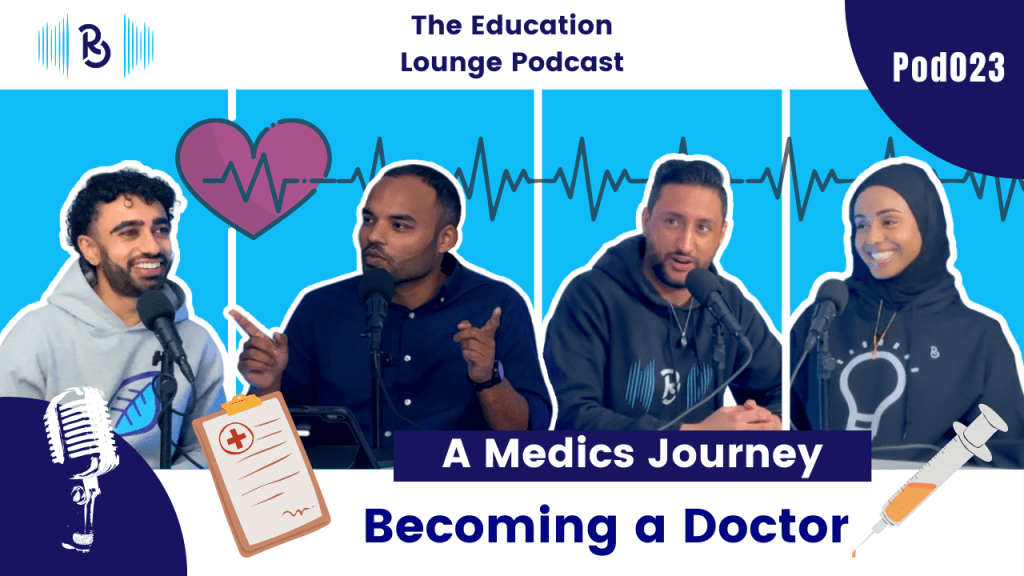
Becoming a doctor is one of the toughest yet most rewarding journeys a student can take. In this episode, Ibrahim and Fatima, two final-year medical students at UCL, share their experiences of medical school, from the first spark of motivation to the reality of patient care and the long road to qualification.
They talk openly about the challenges of applying to medicine, the intense workload, and the emotional demands of caring for others. The discussion reveals the dedication, adaptability, and self-awareness required to succeed in healthcare and shows how medicine shapes not only a career but a person.
Watch or Listen



Timestamps
Show Timestamps
0:00 – Intro
0:41 – Background and Motivation
4:00 – The Academic Process/Exams
16:37 – Clinical Experience
21:44 – Communication and Interpersonal Skills
23:48 – What Do You Study in the Course?
27:00 – Nutrition & Lifestyle vs. Medicine
32:00 – Research Studies
38:08 – What Happens After the Course?
42:30 – Future Goals
49:59 – Key Points for Students wanting to study medicine
52:14 – Outro
Key Takeaways
Choosing medicine. Motivation should come from personal interest and empathy, not family or social pressure.
Early preparation. GCSEs and A levels matter. Most universities require biology, chemistry, and strong academic results.
Entrance exams. The UCAT and BMAT test logic, problem-solving, and scientific reasoning, rather than pure knowledge.
Work experience. Placements, volunteering, and patient-facing roles build understanding and communication skills.
Resilience and reflection. Every rejection or delay can lead to new growth. Learning from setbacks is essential.
The long road. Medicine takes five to six years at university, followed by at least two foundation years before specialisation.
Beyond medicine. A medical degree opens doors to research, technology, and education, not just clinical work.
Patient-centred care. Communication and empathy are as important as scientific skill in supporting real people.
Lifestyle balance. The best doctors protect their well-being and set boundaries to avoid burnout.
No wasted time. Every stage of training, even detours, contributes to becoming a capable and compassionate professional.
Show Notes and References
UCL Medicine: Course structure and clinical training
UCAT Official: Test format and preparation resources
BMAT Cambridge Assessment: Exam overview and support materials
NHS Careers: Applying for medicine and medical school guidance
The Medic Portal: UK medical school requirements and entry tests
GMC: Becoming a doctor in the UK
Royal College of General Practitioners: GP training pathway
Health Education England: Foundation training and specialisation
Transcript
Show Episode Transcript
Intro
[Music] the education Lounge podcastso we’ve been trying to get these two people on these two very very busy people on for quite a whileum do you want to maybe introduce ourselves and yeah just tell us what you do I’m Ibrahim hi I’m in my fifth yearstudying medicine at UCL a and I’m Fatima also my fifth year studying medicine at UCL yeah so we justthought we’d get them on today and just discuss your journey basically at the moment how you got into whatyou’re doing what you’re planning to do next so um yeah yeah I think to start
Background and Motivation
with maybe your sort of motivations for for studying medicine in the in thefirst place so yeah I don’t know who you want to go first of courseum yes I think during school I was kind of like a well-rounded student apart from PE I’ll say but yeah like I enjoyedscience I enjoyed English enjoyed maths enjoyed history sociology and I think it gets to that time of year like in year11 starting year 12 okay what am I gonna do for the rest of your life which is a very daunting decision to make and Ithink for me I was always drawn to science like science has always been an interest of mine and I just thought you know what whatelse can I do the medicine Pharmacy or like research and I thought you know what medicine seems to be the thing forme and then as all like sixth form students would know when you’re applying to study medicine you need to have likeloads of different experiences so did what did I do did work experience is like a renal Center like looking atdialysis patients did like a palliative care placement was doing volunteer work throughout that and I just thought thisis something that can really speak to me and I think another thing that was quite appealing with medicine is like the jobsecurity that you get with it like it’s a really rewarding job as well as that you’re not limited or like confined tothe UK you can pretty much go anywhere which I thought was something that I was like oh maybe I can imagine myself likewhen I’m 30 just off in a different country helping people so yes I think that was like kind of my motivation andas well as that I didn’t really have anyone around me studying medicine that kind of pushed me towards it it was verymuch my own like research and like individualistic decisionmy motivation came quite late I would say around the time where you have to start thinking about applying I wasalways good at science so I had that anyway but um I did work experience at apalliative care phase as well was it the same one which one did you do I did it in one like proper Romford like deepRomford I don’t know I can’t remember the name mine was in London um and it was after that like I saw the calmskills of the doctor and obviously palliative care is um for those of you that don’t know end of life care soseeing the way like a doctor really does shape people’s lives in their mostvulnerable States I was like yeah I definitely want to be a part of that so combining the sort of human aspect withthe science aspect is where that’s how I decided that yeah this is what I want to do rightso there was no like because a lot of times there’s family that want people to go into like medicine and law and thatsort of thing oh why do you studying medicine oh like I wanted to do it oh your parents didn’tlike force you into it so I don’t know what this like thing is in terms of parents forcing you to likestudy something I think my parents have been very supportive like regardless of what I do as long as I’m doing something like there would be supportiveregardless which I think is really important especially when the degree is so challenging and the whole process from like yeah 12 onwards like there’sso many other things that you’re doing compared to your friends like in terms of ucas you send that off way earlier to apply to universities you’re doinginterviews you’re doing all of these other assessments and you know I remember like in six of all my friends would be like oh I applied I got anoffer like the following week and I’m like oh I’m still waiting to hear back or like I need to do my interview orI’ve got this entrance exam to do so yeah so I think it’s not something that like you have this what am I trying tosay it’s not a light-hearted decision to make it’s like doing another a level with all the things you have to think
The Academic Process/Exams
about it’s a lot a lot a lot in terms in terms of that what what did you guys have to do in terms of you know yourucas your entrance tests for different universities can you speak a little bitabout that because we obviously we get like tons of students that want to do medicine dentistry and we get questionsall the time on you know what’s the application process like what tests do I have to do what GCSE grades do I need what what alevel grades do I need yeah um can you guys speak a little bit about that I think that’s definitely somethingthat my school did very well um so I went to ilford County and they had like excellent Newcastle I actuallydidn’t know that yeah yeah I did too oh no way yeah yeah Iwent to the county but um well as soon as I go to like year 12 the ucas team were on it like they tell me exactlylike what to expect what to do and they had a track record of getting people into medicine so that definitely helped in terms of what you have to doit’s probably changed a bit since but you have your ucas application that everybody does um butit’s a lot sooner so it’s a few months sooner and you also have entrance examinations depending on what universities you want to go to so Iapplied to three Unis which take the bmat exam so which is a type of entranceexamination there’s the Beamer and then there’s the UK cat which is now the ucapum they’re like aptitude tests they’re really weird to describe I don’t know how to describe it if you’ve done the 11 plus it’s a bit like that it’s like notavailable it’s very weird and like abstract and the bmat is different in the sense that it has an essay portionattached to it and it’s got like a science portion and again like a weird non-verbal verbal reasoning side ofthings but with the bmap fewer Unis take that examination or like accept it solike it’s the case we need to wait up like is it worth me doing another entrance exam and it only is accepted byI think like UCL Imperial and Oxford and yeah Oxbridge yeah Oxford and Cambridge and Leeds something yeah somethingrandom but um I think I did the UK cat which is more than the UK and I didn’tdo well in it because it’s a really difficult exam to know how well you did and you get the results and it’s just you do it like in the driving if theonly ones on their Theory test you do it in the driving test center and then you literally get your results as soon as so at that point in time you will know likeokay let me be strategic where am I going to apply or am I not going to for the ucat but not for the beam out for the [ __ ] you get the result after you’vechanged it now yeah so you can set the bmat twice so essentially with entrance exams you’ll do them in the summer ofyear 12 but before that point as well you need to look at your um universities and their entry requirements a lot ofuniversities for medicine you need to do biology a level and chemistry a level and majority of people will end up justdoing Mass a level as well just to complete that Trio so I think it’s important to know like you make sure tobuy your GCC grades you have enough like good grades to be able to do those a-level subjects so like it’s quite anearly decision you need to kind of think about it does start a GCC all right yeah because you need to have a certain amount of GCC grades because a lot ofUnis will look at that and they Factor it all into different units work in different ways so some of them care moreabout GCSE so I know Oxford for example they waited quite heavily on gcsesum and other other unions look at different things but yeah and then in the during year 12 and obviously you’re doing your a levelsand hopefully doing decently and then you want to do work experience at some point as well as to whether that’s goingto be in a GP practice or some people would do in-care homes and even Dental practices because it’s very hard to beable to get a GP practice even during covid I’ve seen people doing virtual work experience because of how likedifficult it was to attain actual work experience inside a clinical setting so there’s that then the summer of year12 you’ll do your entrance exam so either the ucat or the bmat or both or both yeah which I obviously both didum so yeah so the UK you get your results straight away and the beam I believe it has two opportunities for you to sit I think one in September and thenone in November and you sent off your ucas application in October of year 13.so with the ucat you get your results straight away if you do well you can just say to yourself oh don’t want to do the bmat I’m going to apply to whateveryou needs like you choose to apply to if you do the b-man September you I think you get your results just before yousend off your application so you still have an idea of oh will I get into these Unis well I’m not getting to these Unisyeah that must be new because I did the later B map and I was basically putting all my eggs because I knew I didn’t do well in the UK I had to put all the eggsonline but it worked out yeah and then following that after you do your entrance exams it’s basically that’s itlike you send off your ucas it’s a waiting game so you’re just waiting patiently to hear back with interviewsso not even waiting back to hear back with offers but waiting for interviews um so yeah so it can take a while someUnis you may hear back in a few weeks some it could be like months so it’s a very like interesting period of timevery stressful some don’t get back to you at all yeah something about Seattle so yeah um you’ll be hearing like anupdate with a ucas application and it’s like oh you’ve been rejected already or one thing that I learned during thattime is just to be prepared for anything like you can plan how like your life is going to go like I’m gonna get into Xuni do this do that and you could just be throwing a curveball and you just need to learn to adapt to itkind of like how you took a umYeah so basically I applied to UCL and I think I was like in the later application cycle so when you’re likewhen you start applying and stuff like you learn they kind of do everything in batches so I think I was like one of the later batcheswith UCL so I remember I did my interview thought it went quite well and it was just like a panel interview so Iwas just talking to a few like old doctors essentially and I think they’re talking about my personal statementtalking about my BMA exam and just a few other things anyways I remember I was in my common room I think like a few weekslater and then I just look at my email I’m like oh my god I’ve got an offer from UCL I’m so excited and theneveryone’s here celebrating celebrating with me and when I look at the date and I’m like wait I said this starts for2018 like my offer was deferred that’s all you hear me in guys I was like I was I was convinced that like they justwrote the wrong year on my email but as I read the email it was like a deferred entry offer so essentially we weren’tnew but not this year we’re happy for the following year and I was like oh like I didn’t expectthat like that was something that I had never considered kind of taking a gap year involuntarily almost so I rememberI was so upset and I was like oh my God I’m not starting uni with everyone else I’m gonna be so old by the time that Istart what am I gonna do with this whole one year like and especially where I think you’re so I unlike Ibrahim Ididn’t really go to the most Academic School let’s say and in terms of people applying to Medicine it was like aminority so everything that we learned we learned by ourselves like we were very much fending for ourselves there wasn’treally a support system there which I don’t know if it’s changed since but I hope so so yeah so I think I just had tomentally kind of prepare myself for what this next year is going to be like because I really did want to go to UCL I’ve been to so many open days so manyother like um Outreach events that they hosted and I was like I really do see myself at this uni I’m willing to takethis year out um and essentially I don’t have to do anything it’s not like I have to reapply like my offer’s just there waiting forme and then I started uni and I’m like wow there’s other people in a similar situation to me who’d been given adeferred entry offer there’s people there who are like in their late 20s people that have children people that have children they’re studying medicinepeople that have done one degree and then now they’re doing medicine afterwards and I’m just like wow like you think that you think this is theworst thing that’s ever going to happen to you at that point in time I was like this is the worst thing that’s ever happened to me and especially beingsomeone who’s quite like academic and I’m meant to do everything like in a stepwise fashion this was like a spannerin the works essentially and I was like wow it wasn’t it wasn’t that deep all in all and I enjoyed my Gap year Ithink it was like a good time off yeah it’s difficult though because in the moment it really is the B Woodland indoor and I think even now when I go tolike um like those open interview kind of days as helping out MMI um practice kind of days at local high schools andstuff but you can tell I just remember being in that position as well and I was like near 12 you’re 13. it really is thebeagle and end all as soon as you get into medicine you’re like wow what was I worried about there’s so many different paths there’s so many different ways andeven once you’re there like there’s it’s a whole other game like there’s so many other things to think about so my biggest advice would be to not be toohard on yourself because there’s so many ways you can go you can do medicine abroad you can like take a gap here likeyou did you can do a degree and then[Music] there’s just so many ways into medicine so don’t be too hard on yourselfessentially yeah 100 I don’t use and the bill and all going to University like just to do whatever you’re comfortabledoing and you’ll be committed to doing because six years that we did like it’s gonna be a long degree be sure is theother thing that you have to be sure I think we spoke a little bit about um work experience but it’s so necessarythat you have that because if I didn’t do it I wouldn’t have known that this is what I want to do but on the flip side Icould have done it and completely not liked it and I’m so glad that now that having gone through five years and done my clinical years as wellum that I made the right decision having had that sort of experience so do experiencemake sure that it’s not a decision that you take lightly because it’s a long like five years in I’m approaching the finish line but it is very low it’sexhausting people say that a levels are the different most difficult exams you do that’s not truethat’s definitely not true yeah that’s why I look to you yeah no I wasgoing to bring up I was going to bring up yeah so my brother’s done medicine abroadum he’s you know really enjoyed it um but just I’ll come back to that in asecond just before I forget touching on two things the the two tests the the Beamer and the and the UK catum how did you guys revise for those like like how much time sort of out ofyour normal a-level studying did you guys dedicate towards those two so withme um I still did like my as exams and yeah 12 I think that’s completely scrappedthough now for like majority of subjects so I think I finished that in like May June and then from that point onwards I was attending like sixth form but I wasmainly focused on like applying to medicine so I’ll probably say like an hour or two a weekyeah like four day like every couple of days or so right yeah so maybe untillike five hours a week roughly give or take um they would always tell you there’s like courses that peoplerecommend for you to go on um whether I would recommend them I haven’t been on I’ve been on like one personally andlike it was okay but I don’t know if I would like shell out for all of these the UK cat courses or ucat coursesthere’s loads of books as well that you can get with practice questions just so you can get familiar with theexamination process but it’s interesting because I think there’s this Theory as well I don’t know if you’ve had this that the less you revise for it thebetter you do because you’re not overthinking the answers where it’s like quite abstract and like verbal reasoningand it’s very 11 plus like if you think too hard like an especially where it’s very time pressured you might just endup just I don’t know using the wrong answers so I met a boy who didn’t know he needed to do it he did it in a weekand he ended up scoring like amazingly higher which is which is no I think a lot of it’s Instinct yes I think likegut feeling answers so yeah so I think that’s one part andwith the Beamer I think so the the three sections of the b-map the first section is meant to be GCSE Science so you don’treally have to revise excessively for that because it’s like essentially GCC science which is not the truth what’sthe harder but it’s fine and then the second section I believe is like againverbal reasoning aptitude stuff so again it just relays on from like the UK cat revision you would have done prior andthen the third section is an essay and it’s like I was doing history as like inyeah I was in history a level so that wasn’t too bad like me writing essays and stuff I was kind of used to it soalso you’ll see again loads of courses for the beam out you can get loads of books as well revision books and I thinkthere’s more like online courses now like question banks that you can do so I use the website called medify I thinkit’s called I don’t know if that’s right but it was a website that was really good um I kind of people say that you can’treally revise for the UK cat or and the bmat I don’t know I’m kind of in it’slike you should do something to get familiar with the questions but I would agree that you know you sort of hit apeak yeah and your best is going to be your best so I think I did like maybe a week of Revision in the summer for theUK cat because it’s uh I think I did it in the summer if I remember correctly so I took like a week out just doing that and asimilar thing for the BMI as well when should students start looking for
Clinical Experience
work experience like can they start you know after gcses or does it have to be in the year 12um and what sort of sorry I know you said you did some work in palliative care uh what other options are thereavailable for you know GCSE and a level students um because I think my brother managed toget um I think some a five-day work experience in King George I think it wasor Queens but you know I was having a look just before you guys came and I couldn’t findthat that same work experience program so what what sort of opportunities are there availableyeah okay so in terms of work experience it’s difficult to get I think Fatima did say it unless you’re like affiliatedwith a university and you’re actually on placement it is really difficult as a young person to get because there’s lotsof things to consider in terms of insurance and like safety-wise so it’s not yeah I was going to say if you’re under 18 A lot of the times they don’twant you to be in like a clinical setting and of course you have to apply to Medicine when you’re 16 17 so there’sthat like issue yeah it’s not easy I did go abroad which you completely do not have to do so I went abroad um to theDominican Republic it was with something called Gap medics essentially um people from all over theworld that come on this course and you get placed out of hospital it was really good experience because I saw medicinein a developing country um and that was again when like the sort of spark clicked I was like yeah this isdefinitely something I want to do it’s really good to like meet with different people from the um people from different parts of the world and also seesomething which isn’t the NHS because the AHS although struggling is great um but not everybody has that not everybody has like a national adviceHealth Service so that was a really really good experience when did you do that I did that in the summer of year12. okay I then um started like thinking about applying that was just to see if Iactually even like it yeah but then I realized it’s probably more useful to have work experience in the UK If You’reapplying to Medicine in the UK because the whole point of the work experience is they want to know do you knowum do you have a realistic expectation of what it’s like to study medicine in the in this country because often beinga doctor is glamorized people think oh you earn loads of money you do this you do that the whole point of the work experience is like no that’s not it theNHS is not glamorous like that at all you need to have a good sort of realistic understanding so then Iactually applied to um do this palliative care week at the Royal free hospital and I had set my applicationand not done the experience yet so that’s something that I was able to talk about in my work in my interview but Ijust mentioned in my personal statement I have this planned if that makes sense so it’s not the you know there are ways around it I think personally what Iwould recommend is after year 11 and GCSE is just enjoy your summer because that’s going to be like the last goodsummer that you’re you’re gonna get actually yeah apart from the year 13 summer I guess but yeah I would say Enjoy your year 11 summer I would saydon’t think about it but don’t actively make any plans personally like you’ve had such a stressful yearum just relax and then when it comes to year 12 when you’ve applied for your a levels of course make sure you’ve gotbiology and chemistry down and then you can start doing work experience so I did like a week placement in Queen’sHospital actually funnily enough but it’s so funny because the guy I did placement with she ended up going to UCL as well later so you know for FullCircle moment oh I have a really good full circle moment so the um the palliative care team that I wasshadowing for my work experience I actually had the placement with them a couple months ago the exact same team soit was a it was really wholesome because I remember back in year 12 I was looking at year five medical students on theirplacement thinking oh wow I want to be like you guys and then lo and behold yeah literally II was that so it was it was really wholesome but yeah and then I did yes I did one placement in Queens Hospitalthat one thankfully was an already established work experience program so I think I just checked like barkinghavering and Redbridge like that trust I checked what work experience programs they already have because I thought it would be easier to just go to somethingthat’s already a working program rather than me emailing doctors hi by the wayI’m a prospective like medical applicant um can you please take me on for like a week shadowing you so I thought thatwould be the easier route did that for a week and then with my palliative care placement which was somewhere like it was somewhere a bitdeep Essex like I was in the middle of nowhere basically um that one I think I just emailed saying hey like I’m interested in doingthis like can I do this and then they’re like yeah sure like just join us for a week just to see like what everything’sabout so I think in terms of options in terms of doing work experience you can either find an established program whichis quite helpful or you can basically email doctors like go on websites finddoctors emails hi let them know who you are and see what like what options they can provide for you or the other optionis like you working in like a care home so you don’t have to do something clinical that’s yeah my yeah my brotherdid that he was working in a care I’m on a on a Sunday I think just a couple of hours every Sunday yeah so I thinkwhat’s really important so I had like a part-time job as well throughout all of this during year as well um so I don’t know how I did actuallylose the thought of doing that now I was like it’s unbelievable but yeah so I had that and you being like a person so I
Communication and Interpersonal Skills
was working in Westfield um so you being someone that’s like person facing developing communicationskills like that working under pressure because of course in Westville Stratford you’re going to be under a lot of pressure and those things also showcharacteristics that are really important for a doctor so you could have the most amazing work experience but youmight not have learned anything from it official yeah we spoke about this in the last podcast didn’t we uh communicationskills yeah we’re speaking about um tutoring of the career and in fact you guys came up in that podcastum and we mentioned exactly that because you learn a lot of that from cheers always Meet the Parents meet thechildren like trying to get your ideas across 100 yeah I’m on my pediatricrotation at the moment so um having to explain things to children and their parents in a way that they’llunderstand is definitely something that I’ve developed being a tutor yeah so for sureand yeah just to Echo in fact I said it’s not really about how many different things you do like yeah I went to the Dominican Republic cool but it’s likenobody cares about where you do or what you do it’s more about like how you talk about it and what you learn from it because it’s so obvious when um you’vedone something as a tick block exercise versus okay I actually saw this interaction and then you sit back andyou reflect reflect on it a little bit and you have something more to offer in terms of just oh I did this placement at this place for this many weeks yeah Iremember I think one thing so with personal statements whether they’re still going forward in these next couple of UK applications I’m not too sure butessentially your personal statement you’re talking about the different experiences you’ve had but most importantly what you’ve learned from itso reflective writing is such a big thing that we do like even now in medicine so we see a patient what havewe learned from that patient what has that encouraged us to do in terms of ourselves and our self-development whichI think are very important traits so yeah don’t feel like you need to oh I didn’t get like the GP placement at thespecific practice it doesn’t matter like if you worked at a care home and you worked there for like a year every singlein intensive care because you’ve shown dedication and commitment which are very important traits in a doctor
What Do You Study on the Course?
I think what would be useful if you can do do you guys think you could give us just a quick sort of breakdown of thesorts of things that you study in sort of the first three or four years of course becauseagain that’s that that’s another thing that we get we get questions on and I think it’d be really useful I genuinely have no idea so I think it’d be reallyuseful for like everyone very variable depending on what university you go to so I’ll speak on UCL who they have a more traditionalsense so you learn science for three years and then for years four five and six you’re purely just in hospitalplacements so for the first three years of my degree well for the first two years you’re just learning science it’s lectures it’s um you do fun stuff aswell like um for example you have dissections that’s fun for everyone I don’t knowyou get to dissect a human body which is pretty cool that sounds like a nightmare to me so yeah you’re literally 17 18years old 18 years old and you’re in a room with about 20 dead bodies in it and you’re just all around a dead body justcutting obviously it’s a bit it’s a bit more structured than that but essentially yeah maybe we’re too deepexercise to this yeah yeah I mean we look at it like it’s very bad it’s not personal at all like it’sjust Anatomy for us like we’re trying to learn oh where’s this artery or like what’s this organ like always supplyingit so super useful yeah but yeah very science heavy for the first couple of years so for the first couple of yearshow much clinical exposure do you get like being in hospitals is that UCL isdifferent in the sense that it’s pre-clinical for the first two years literally and then we have we’ll talk about intercalated here as well so we dolike another we take 30 as a break we do another degree during that year and then yes four five and six are clinical so wehave very minimal exposure to clinical practice but that’s only UCL so I know St George’s on the other hand from dayone like it’s clinical like you’re doing stuff so I think it kind of depends where you want to go and where you wantto apply so usually I think Pride themselves and US learning the knowledge and then applying it in practice I thinkthat worked pretty well as in from my own experience I think it was quite useful to be able to build on something when I went to hospital so you’re stilllearning in fourth fifth and sixth year but you’re learning the more clinical side of things whereas as opposed to the nitty-gritty but it’s good to have likefoundations to build on but I think it just depends on what you’re after as well so if you want patient contact fromday one then you know look look for the the Unis that offer that like Fatima was saying with Saint George’s yeah I can’tI can’t tell you are the Uni’s officemy pre-clean then clinical and but that’s everything that you’ll be able to find on their websites like it’s not something that they’ll hide from you andthen you’ll find out like when you first start like oh you’re not seeing patients for two years um and we do have some instances wherewe have you know like with CPP so you would have like patients come in and discuss their conditions but it won’t bethe same as a hospital setting where I’m trying to find out what’s wrong with them for the first time and diagnose them it’s very much like oh someone whomight have a chronic condition and like how they’ve been living with it and then we talk to them ask them things more soabout like their lifestyle and like how their experience with Healthcare has been apart from that very non-clinical at UCLessentially first two years which isn’t too bad you know when you say the first few
Nutrition & Lifestyle vs. Medicine
years is quite um science science based how much of that isum sort of nutritional based as well so or is it all just I don’t know if I can I don’t know howto phrase this but is it all primarily on like your organs the body the cellsum but you’ll you also look at the effect that nutrition has on um different conditions and and andcells and stuff or because I’ve heard that like from other people that have studiedmedicine that they don’t do a lot of studying on nutrition is that the same at UCO or we had a module calledfluids nutrition and Metabolism oh yes do you remember that I think the secondyear in terms of the split for the first two years it’s um building on biologyfrom GCC biology knowledge um and it’s very organs based so like you’re saying like you’ll do therespiratory system you do the cardiac system um you look at the hormonal system we did have a bit on nutrition I thinkum that kind of thing is a bit more clinical you learn more in terms of management and how like things like Dietexercise you know lifestyle effects conditions when you’re explaining it topatients for example or you’re learning how to treat and manage conditions is that what you were sort of yeah yeah well I don’t think it’s like nutritionyou don’t Focus anything specific and as well as I think what I realized is doctors are very likespecialized so if you want to know more about nutrition you’re most likely going to see a dietitian regarding that sothere’s always like a big team with people who are more specialized a bit more Niche on certain things I thinkbecause from our like conversations off of off of camera we’ve both had thatexperience from the patient side where like nutrition and lifestyle really isn’t taken into account it’s just likehere’s some here’s some medicine rather than looking into more like root causesit’s like symptom treatment rather than root cause treatment yeah I think that’salso telling all the NHS as well that you just it has so much turnover you just need to give a patient something tosort of treat them and then move on kind of thing um but now we are seeing things likesocial prescribing so the idea of like prescribing literally literally peopleto different Community groups or things that might actually help them heal in terms of the the environment that theylive in rather than just giving them medicine and a lot of what we are taught in terms of management is got aconservative like at the Forefront so before you give pills before you do surgery you know what’s their lifestylelike are they smoking are they drinking what’s their diet like that kind of thing so maybe that’s something that’s changing yeah and I think there’s evenbeen like strides in terms of being very like having cultures and culture as a context as well like in terms of dietlike oh you’re not going to tell someone who like someone like me who primarily has a diet like because culturally likerice and meat and stuff like that which may not be the healthiest thing but you can’t just tell me to cut that out altogether because that it won’t makesense especially if that’s what something that I’d like grown up with so I think that’s another thing that I’ve seen doctors doing in terms of like ohlooking at how your culture your background where you live all of these factors come together to essentiallyinfluence someone’s health you know because it’s very easy to just treat someone as a body and like as a humanbut imagine they’re going back to an environment that’s just making them sicker which I’ve seen like quite a few cases actually like you see peoplepleading to their GPS I can’t live at home like I’ve got asbestos or there’s so much pollution and it’s like makingmy asthma wear someone like my COPD worse which is like different respiratory conditions and it’s like wowlike sometimes you see how limited I guess doctors are in terms of helping people so I think sometimes even thoughit does seem like they’re treating symptoms there’s also I guess a part of them which is like you need to know yourlimits like you can only help but only help so much as well which is unfortunate but it seems like you needlike several specific people rather than one General person yeah we have this concept calledthe multi-disciplinary team the MDT so if you’re doing like interviews or if you’re doing you know personal statement right you need to throw that buzzword inthere but um essentially yeah there’s lots of different members of different teams that are going to be involved incaring for a patient and the patient’s also part of that team so we’re saying like doctors will only get you so far but you need to look at like physio oroccupational therapy like is there safe is there home safe for them to go to you know do they need Mobility AIDS do theyneed help with their cooking and cleaning and the general activities of daily livingso it is a very holistic kind of approach and that’s only something that I learned having done clinical placementand speaking to patients because as students we have a lot more time than a 10 minute session that a doctor mighthave so um patients are more likely to tell you and open up to you and you really see that um it’s not straightforward it’snot ever black and white it’s loads of gray area um doctors do their best patients dotheir best but again there’s just so many factors to consider in terms of um you know I just thought something now interms of like researching stuff umfirst of all when you’re in University as a medical student um do you get to participate in in you
Research Studies
know all these research studies that we that we see do you get to work with other doctors on on different studiesyeah and then also as a as a doctor how sort of on top of thesestudies you have to be because it seems like there’s there’s like a new publication virtually every single every single hour so how sort of on top ofthat do you guys need to be and how do you stay on top of it is is myquestion I think it depends on the on the individual so you can either be like a medical student that just does theirexams and that’s it like they’re trying to do I wouldn’t say bare minimum they’re just getting through medical school I mean you’ll have other peoplewho want to be ahead of this committee and then want to do this audit and then want to do this research project and they want to do this randomized controltrial and so on and so forth so I think it just depends on the individual I guess there’s no right or wrong answerbut then again I guess it depends as well what field you want to go into so I’ve seen some people who reallyinterested in neurology so in order to get into neurology it will help if they do a research project in neurology orthey do all of these other things but you basically have to make time for it on top of everything else you’re makingtime for which can be quite challenging so I remember I think I did an audit in was it like second year or third yearI can’t remember but it was during covert times so it wasn’t too bad in terms of making time for it and prettymuch all of it was like done virtual as well so I wasn’t the end of the world and I think I did like another researchproject as well like in the summer literally I cannot remember the life of me what I was about it was like a goodfew years ago but yeah you basically have to make time for it on top of everything else and then actually finding the opportunities is the hardthing so some of them are publicized and again it’s like you jumping on an existing research projectother times you basically have to find a doctor and be like oh hey so like have you got any research projects going onlike do you need someone to do um the data collection do you need someone to do this do you need someone to do thatand then you might be able to get a publication out of it from that yeah so in terms of research opportunities Ithink I decided quite early on that I don’t like research but um all the opportunities that I havecome across have happened very organically so I’ll be sitting in a clinic with a doctor whose specialty is this part of this very specificcondition that affects the heart and then they’ll have like some kind of consultant that will have some kind of research going on and then you sort ofjump onto it as a medical student so it’s not something you have to do if you want to go into a specific specialtythen it’s good to do because it will get you you know on the ladder kind of thing but yeah definitely not something thatyou have to do um and again all those opportunities sort of happen very you know organicallyso if you want to help out you can you do a lot of data collection it’s very tedious like you’ll be tedious workunfortunately but it’ll be worth it to be able to see like you’ve got a publication at the end of it so yeahagain it depends on who you are and I think earlier you were saying about how our structure is six years so our course is six years and lots of units do dothis but in your third year you’re doing something called an intercalated degree so it’s sort of Midway through yourmedical school like a masters it can be a masters mostly it’s a Bachelors yeahum so for UCL it works differently at different units you have like a list of topics and subjects that you can studyso we both actually studied Global health so right now we have degrees for medical Sciences with global health andthen hopefully when we graduate graduate we’ll get our mbbs so in the space of the year you get another degreeessentially and but that’s where like a lot of research opportunities are so people will do different things so someof my friends might have did Cardiology and they were working with Consultants on their cases and then they gotPublications out of that so if if you if you’re keen on Research then look at universities that have a um integrateddegree and I think when you work naturally like they’ll be there’ll be some sort of research for you to do like even as GPS there’s ways for them tooptimize their practice and optimize treatments and stuff you’ll probably have to do some sort of research projects on that so it can be a verybrief project or it can be something that might take the span of like months or years to complete and it really shows that how importantis to be literate in these kind of areas because it’s so easy for um the media to sort of spin something in a certain waybut then when you like you read a headline and then you hit okay study shows you look at the study and the study didn’t show that at all it’s justvery um yeah it’s very misinterpreted so I think those kind of skills are important we do learn them yeah but I think it’salso important in terms of like patience like we learna patient and yeah how involved is the patient in terms oftheir care so some people um will see the doctor as the bill and end or like whatever the doctor tells me to do I’ll do it and then you have theother end of the spectrum where patients are really involved in their care and they’re like a part of the team they may even like research things and bring itforward to the doctor I’ve seen these treatments do you think I should like go forward with this so that person wouldsay is quite accelerated but yeah you’re saying a lot which is bringing up a lotbut that’s what like we’re hoping for people to do because I think it’s quite like what I’ve realized that’s why communication skills are so importantpeople will hang on to each word like a doctor will say and there’s some things which you say and like you don’t notthat you don’t realize but like you’re just so used to how you speak or maybe even to like you using fillers or theterminology you use you’ll be so stuck with using scientific terminology and it’s like wait this person doesn’t knowwhat I’m talking about I need to like break this down or like simplify it so I think it’s really hard just being thatdoctor that the patient’s just taking everything you say or maybe even taking it like very literally so I think that’swhy it’s really important I think for patients as well to kind of take initiative with their health because you only see us for that short appointmentmaybe a short telephone consult you’re going to be dealing with that condition or that illness or whatever it is for the rest of the remainder of its courseso I think that’s why it’s really important for people to research but research in good sources it’s adouble-edged sword isn’t it because um sometimes you can Google a lot Google the wrong thingum you know not understand the reason why a doctor might not be giving you a certain treatment even though you’ve seen it online there is a lot to thinkabout and I think sometimes patients come with ideas where they don’t realize the background whether or not it’s suitable for themkind of thing so yeah definitely a double-edged sword in terms of I know you guys aren’t there
What Happens After the Course?
yet but um what happens sort of after your course can you can you talk us through you knowthe structure after I think it’s is it fy1 if if one or fy2 that you do yeah socould you talk just just so that you know people have an idea of what happens after the course and umyou know when they can start to sort of think about either specializing or becoming a GP orso you have either five or six years of med school right and at the end of that you’re a doctor you know you havegraduated you’re a doctor fine you have to do two years um for the NHS as a foundation year doctor so that’s fy1 Foundation year oneand then Foundation year two so you’ll place somewhere in the country um and you have placement you’re workingas a doctor you’re a junior doctor sorry when you say you’re placed is that anonymously or are there more tests forthat basically it’s I think systems changing now so we’re not too sure we’ll talk about the system now but right nowit depends on how well you did on med school and you’re so and then basically in finallyyeah very similar again to the ucas so this theme of like I don’t know abstractunderstanding of like reasoning and stuff always comes up so you do that exam and final year andessentially wear your place is like half of your sjt and then half of how you’ve done in med school so those cometogether and then you get given a ranking and then you rank all the hospitals you want to go to all the Specialties you want to go to and thenbased on how well you did then you’re not going there that’s how it is right now but it could be changing yeah so youdo your placement for two years um and then you sort of join a specialty program depending on which kind of routeyou want to go down in terms of when you decide that I’m no I have no idea what I want to do going forward I knowFoundation yeah doctors in their second year of training that still don’t know like what they want to do so there’s no sort of pressure in the sidingum unless you want to be like a surgeon or you know you want to do something very competitive in med school you know you want to do it then yeah okay fineyou can do all the extra things that you want to do throughout med school and then I know a lot of people started to cut you off and have been taking an F3yeah as well so during so you’ve done F1 and F2 and now you’re basically on the register and like you’re a qualifieddoctor in the sense and then you can do another year where you’re doing agency work essentially so you might work in ae for a little bit some people travel for a little bit um and then you can have more tastes of different Specialties that you may nothave experienced in your previous years and then once you’re done with your foundation years then you begin specialty training so in GP I think islike the shortest yeah GPS the show is around three years and you um is the path different for past is very likedepending on what specialty you choose so the GP is like one of the shorter ones within three years you’re a qualified GPum but other special other than that it sort of depends do you want to do medicine do you want to do surgery if you want to do surgery you go obviouslyon the surgery route if you want to do medicine then there’s loads of Specialties that you can’t choose from and they sort of all have a trainingprogram a lot of them are centralized and then you go off into your yeah branches but all in all it’ll be aroundabout like seven to nine years before you’re a consultant so that’s why typically Consultants are quite odd whenyou see them and as well as that people don’t run through completely so they won’t like leave med school do F1 F2start specialty training straight away people may take breaks like people might do loads of things maybe go into likeAcademia for a little bit and people might have kids leave medicine come back so you’ll see people from like all walksof life essentially who end up becoming a consultant at some point but yeah all in all I think the youngest you couldpotentially be is like 32 or something roughly so finished with around 23 24526 you’ve done your yeah around 33 34 I think yeah the youngest you’d be as aconsultant and that’s having no breaks which is it should be tough yeah yeahwell over a decade isn’t it yeah essentially it’s a long time isn’t it even longer in the statesin the states they do men like like they do medical school name yeah so you know how we have sixth form and then we start med school18 they have college for I think four years when they leave high school 18. so when they start medical school I like tolike they’re minor and then they major in something yeah like they start med school like 22 or something like that it’s weird but I’m not too sure aboutthe American system from all I know is from what I’ve seen on Gray’s Anatomywe can go on to that future goals I don’t know what my future do I even know what I’m doing tomorrow
Future Goals
no I think um yeah I think it’s just important to be open-minded like I think I came into Medical School thinking Ihad to be a doctor but you don’t like in terms of like not being a doctor but you can there’s so many options for you youcan go into like Academia and be like a clinical academic fellow be teaching medical students you could be like adoctor be a surgeon you could do so many like different things essentially with your degreewhich I think is something just be quite open-minded about especially where we so during 40 and fifth year you rotatebetween loads of different Specialties oh my God like you’ll be doing Psychiatry one week next week you’re doing Pediatrics next week you’re doingOphthalmology the week after that you’re doing like Obstetrics and dealing with like pregnant women so you’re exposed toso many things and there’ll be so many I’ve had so many moments where I’m like wow I want to do the specialty I doanother special I’m like wow like I want to do this specialty but you can’t do it all so I think as of right nowum I’m very open-minded I was leaning towards the GP route a little bit and like all half of medical schoolgraduates end up becoming GPS actually um but leaning to that just for thislike the shortest training time and as well as I think it’s quite nice being like the first person that someone sees and being able to help them in thatsense and send them off where they need to go especially because like I haven’t had the greatest gpus so I’m like I wanna want to give back in a sense butyeah open-minded I think I could be swayed by a specialty depending on like what it’s like but yeah I don’t knowabout you I don’t know I don’t know what I want to do to be honest I think um you said someyou said something about how like there’s a lot of pressure as well to sort of you see all these you’ll expose all of these different Specialties andit does feel a bit you know you do feel Under Pressure sometimes to have it figured out but I think I’ve realized that medicine isgreat I love medicine it’s not my life it’s not um you know seeing the doctors you know well into their 30s and their40s unable to like start families not being paid well enough for the work that they’re doing I think I love medicinebut it’s not my life so I want to choose something that gives me a good work-life balance and I think that is reallydifficult to do in terms of a lot of um the specialty programs because you have to give a lot of your life to it theremust be like some like specialty programs where you get sort of normal working hours and like um Ophthalmologyuntil you’re a consultant a lot of it is like you you will be doing night shifts you will you will be doing Shift Worksyou will be working weekends it’s not like there’s a bit of leeway if you want to be in the hospital youhave to do all of that and it’s tough yeah so I think depending on the program that you go into which isn’t like againlike if you’re not even considering applying to medicine they don’t worry about this like don’t worry about this yet butum you can do like less than full-time training so I think you work like one day less a week and there’s some peoplewhere like they might have nights protected because maybe they’ve got children there’s like there’s certain things that you don’t realize until youget into it like how flexible the career kind of can be it’s not the most flexible career that’s all I mean you’renot going to be working from home that’s not something to consider um likesurgeries in your living room but yeah um I think there’s a lot more opportunities than we know about butagain like only until we get into the profession then yeah then you’ll see I’m not that well versed in the trainingprograms at all to be honest I think that’s not really something you worry about until you’re a bit closer to the time for now it’s just like getting through it yeah so I think likeOphthalmology is a career even Psychiatry actually so when I was in my Psychiatry placement met a guy who’sBoise st3 something about who’s in a third year specialty training and I believe it’s about seven years ofspecialty training he was like yep I chose Psychiatry because I know for a fact like I’m going to be home 6 30 mostdays start at nine like it’s not it is demanding work but it’s not the same as you being in a hospital work whereasthat could easily be 12 hours night shifts you haven’t eaten you haven’t had like a proper break haven’t even gone tothe toilet it will be that’ll be the case for a lot of doctors yeah not saying that GPS obviously don’t have areally hard and busy life they do but I just had my GP placement and um one of the doctors I was placed with was anorthopedic surgeon and decided to give it up and become a GP because it just wasn’t working with his family life heneeded you know was home late always really difficult to sort of balance everything sodepends what you value yeah I think this is always like as you said like putting yourself first I think it’s just the like the most important thing becausewith any job like you can be replaced which I think is a sad reality yeah so yes I think putting yourself firstmaking sure you don’t burn out which we even have to try and take care of ourselves during uni because it’s solong yeah burnout Ben are the very real thing so yes I think that’s just the main thing like do something that youlove obviously that will help you but again like make sure you’re taking adequate breaks when you canI think the emphasis really is though like make sure you like you’ve decided properly whether this is something thatyou want to do because I even know people now that I go into their third fourth year and realize it’s not for them and it’s not a great position thatyou want to be in so before you start applying or before you start your medical school Journey do someexperience speak to people ask doctors what’s the worst part of your job what do you not like see try to think aboutwhether you can handle that because it’s a very long time and you change a lot because you start when you’re like 18and I’m now 23. I’m not the same person as when I was a teenager so different things mean different things like yourpriorities change and shift yeah I think Jimbo when you came into into Laos on afew weeks ago after your after your placement you said you’ve got a few friends thatum you said they’ve decided to go down a different route yeah so I think a lot of them are realized that even if theydon’t go into you know Med practicing medicine they’re still quite employable with a medical degree 100 and a lot of people are going intoum med tech so there’s a big rise of that at the moment like startup stuff or yeah things like starting their ownthing or joining others or joining other staff subjects or yeah I have a friend actually who um he’s doing his computerscience Masters this year so he took a break from medicine did his computer science masters and he’s joining usagain for like final year but he had like a startup I think it failed but like that’s like the whole beauty of itlike you’re learning from all of these experiences and for him I think he is quite interested in like the medical side oflike technology because again that is an emerging um domain right now but even with that you think that the NHS has allof this like bureaucracy he goes the same thing you’ll find like in medical technology like there’s a lot of red tape there’s a lot of things going on soI think it’s the case of the grass isn’t always greener on the other side I think just kind of know what you’re doing andwhy you’re doing it not renewing your intentions and stuff like that and I think another important thing I think is just like this wholething about like sunken cost I feel like people think oh you’ve done six years of a degree you have to be a doctor nowlike by the end of it which isn’t the truth there’s so many things that I’ve learned from this degree that I can apply in so many different aspects likeso many ways so don’t ever feel like you’ve wasted time like everything that you’ve done has brought you to the moment like that you’re here right nowwow but yeah that’s lovely there’s no there’s no wasting timethat’s true it’s true for anything yeah yeah and I guess if you’re worried about like the length of time you’re gonna beyou’re gonna be 24 five like in five years time anyway so would you want to be 24 and be a doctor or do you wannaand like you’re still youngand you realize that’s not my youth no commentshould we wrap up yeah just to finish off just if you if you guys don’t mind could you just give let just
Key Points for Students wanting to study medicine
summarize key points for students interested in doing medicineand then one and we can we can end it after that okay speak to people speak to peoplethat have been through it whether it be students doctors whoever just speak to people okay get loads of experience askthem what they don’t like about their job is a really big um sort of feedback I would give because if you think you can handle that then you’re you’reprobably you’ll probably be all right don’t be too hard on yourself okay getting into this medicine applying to Medicine all that kind of thing is notthe build and end all and you’ll realize that as soon as you sort of join you’ll realize that there’s so many differentparts as we’ve spoken about earlier so don’t be too hard on yourself and just generally like put yourself firstit’s a long degree it’s a long course whatever you end up doing just make sureyou’re always leaving time for yourself yeah I think I just want to reiterate that just roll the punches basicallylike you’re going to be throwing a lot of curveballs and whenever you’re applying so just go with like what life hands you essentially and don’t feel toodisheartened again you’re going to think at 18 is the biggest decision of your life there’s going to be much biggerdecisions along the way so I’d say do your research definitely research universities speak to people speak toyour teachers um look at universities as well I think a lot of people don’t um this is not what I should have mentioned actuallyuniversities have loads of Outreach programs for like when you’re in year 12 and 13 which I would really highly recommend for you to apply to and get ataste and get an experience so I think that’s the most important thing find out what’s out there and it used to be oneat three things these people wanted Nottingham right medlink is that what it’s called I know UCL have a big onehere we are plugging you so you’ve got one called Target medicine basically and you do it for the whole year and theysupport you like the whole year like that you’re in year 12. um which is really good so I think it helped people like interviewsum the assessments generally widening participation is a lot better now than it would have been yeah five ten yearsago so it’s funny enough actually I did a forwarding participation program in year 12 and the guy who I said was incomputer science like we met each other there and then we’re both at UCR now and we’re going to be graduating together so yeah I would just say that so just putyourself out there and don’t be disheartened if things just don’t go your way yeah thank you guys for you know joining
Outro
us today taking time out your uh busy schedule I’ve actually learned a lot and I’m sureI’m sure all of our viewers have too so yeah thank you again yeah thank you so much for taking your time to to come andsee us today and we’ll see you all next time [Music]
 The Education Lounge Podcast